
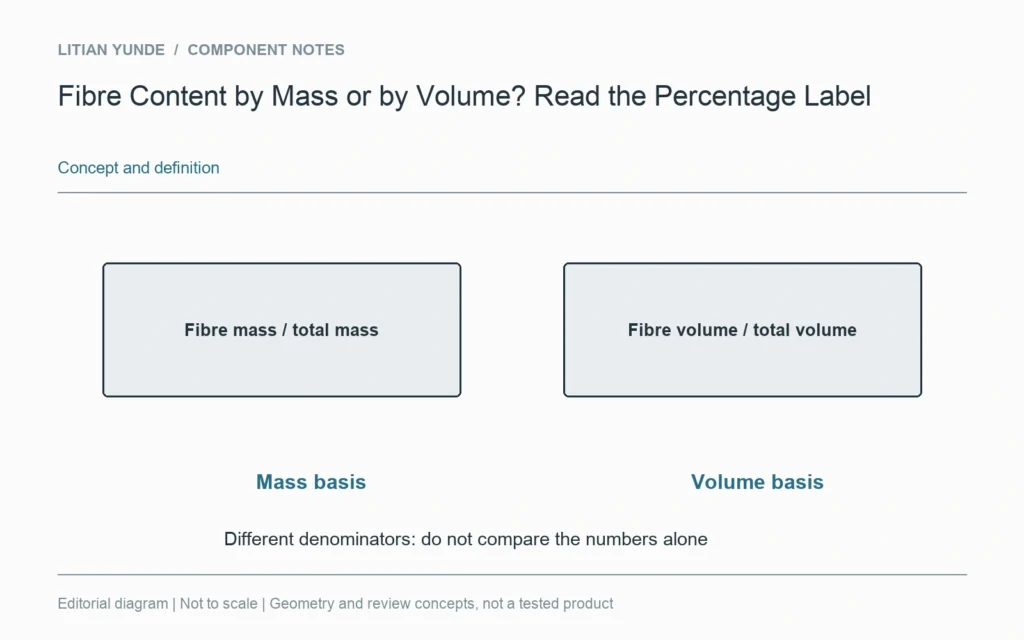
A fibre-content percentage is incomplete without its basis. Mass fraction compares fibre mass with total mass; volume fraction compares fibre volume with total volume. Equal percentages on those two bases do not describe the same composite.
The denominator changes the meaning
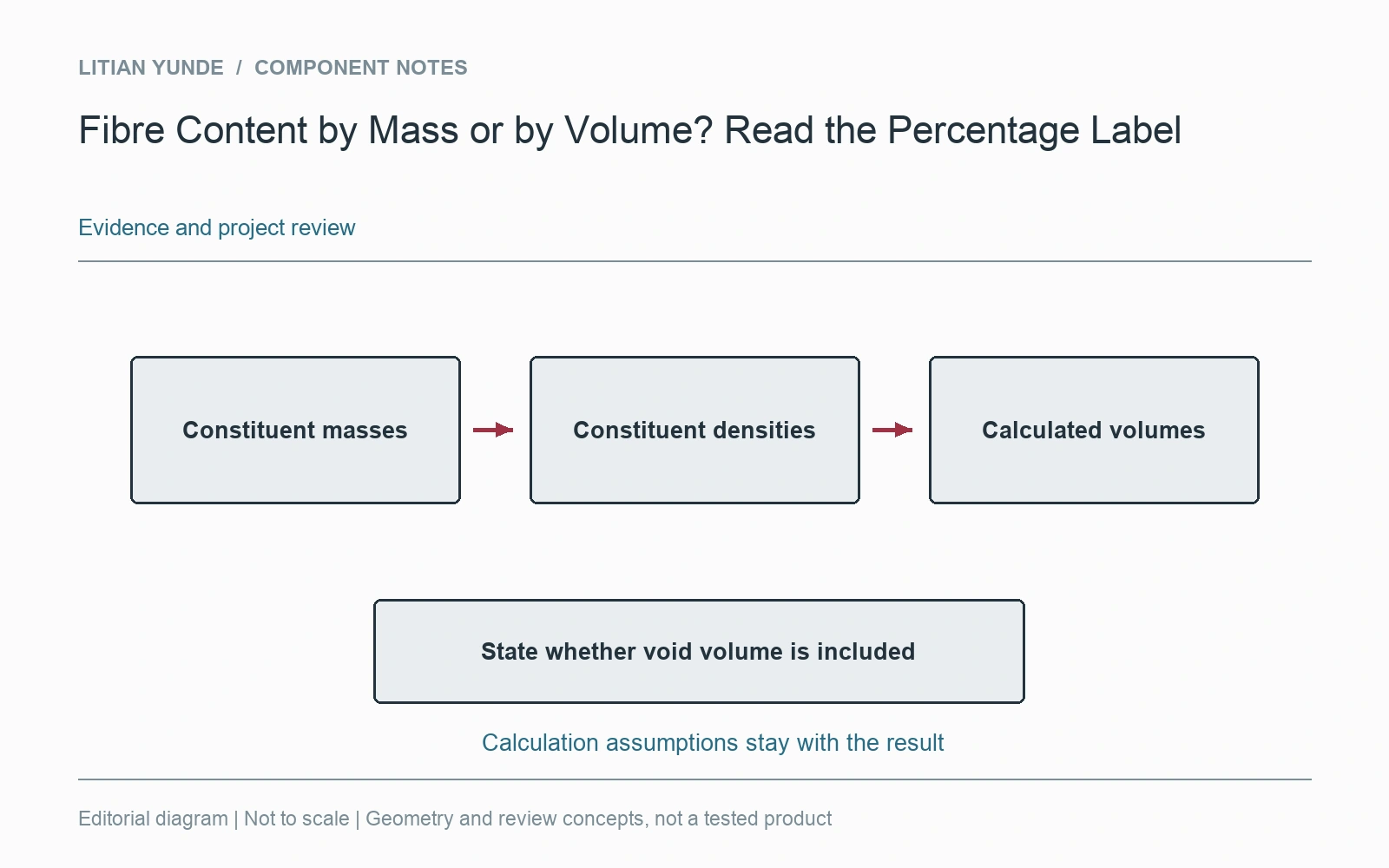
Fibre and resin have different densities. Converting between a mass-based and a volume-based description therefore requires constituent densities as well as the measured masses. For a simple two-constituent calculation, the inferred constituent volumes come from mass divided by density. That calculation needs additional treatment when other constituents or voids are included.
A calculation is not automatically a measurement
A nominal formulation, a calculated value and a tested result are different records. Ask which one a quotation or datasheet presents. For a tested result, identify the method, specimen and reporting basis. ASTM D3171 addresses constituent content of composite materials; an actual report still needs to state the method used and what was included in the result.
Compare like with like
Avoid ranking two proposed laminates by an unlabelled percentage. A useful comparison states the material system, specimen condition, basis of the fraction and whether the number is nominal or measured. The finished component also needs its own relevant requirements. A constituent fraction alone does not establish part strength, manufacturing quality or suitability for the application.
Further reading: ASTM D3171: constituent content of composite materials.