

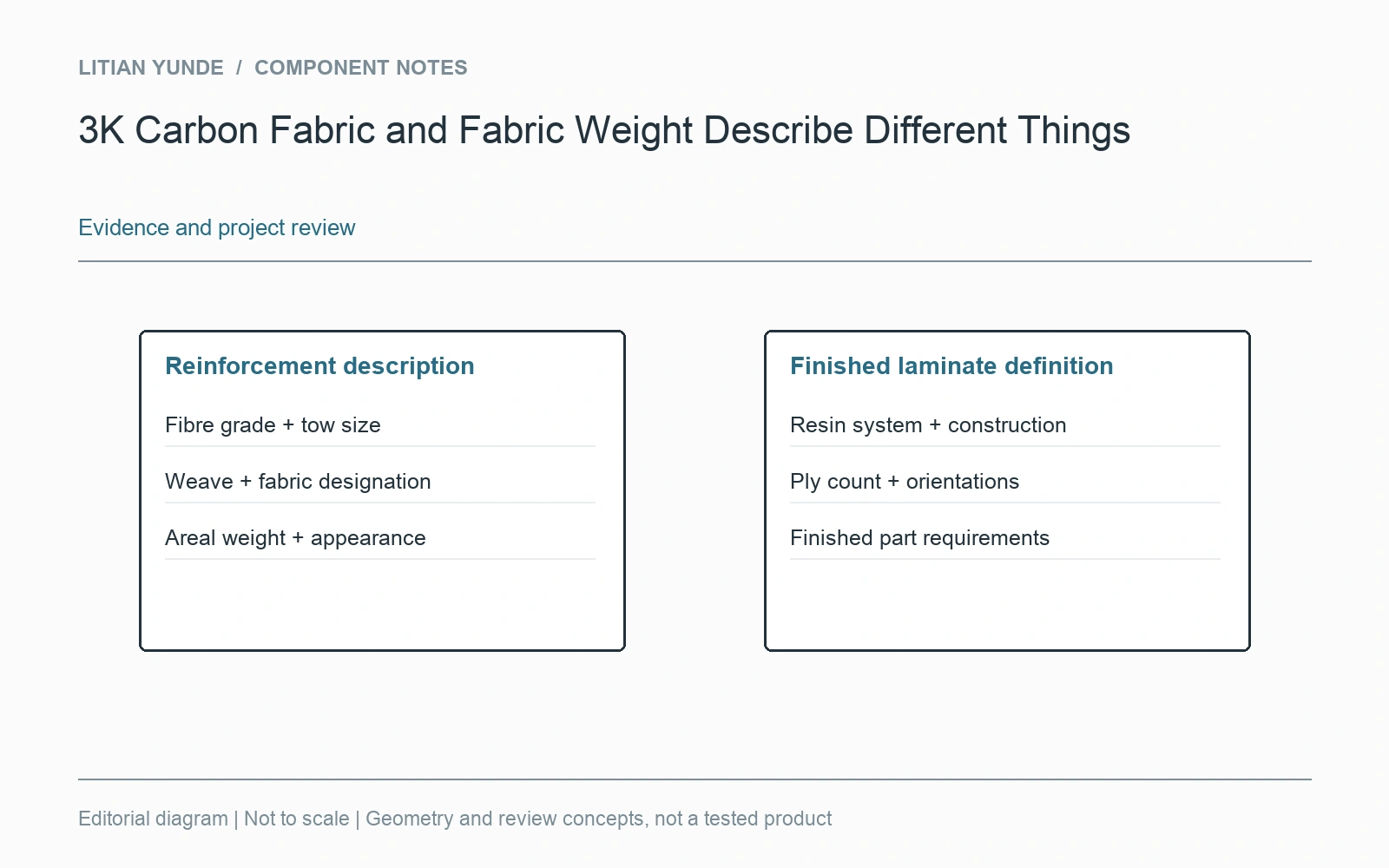
“3K” describes a bundle of 3,000 carbon filaments. Fabric weight describes the mass of fabric over a stated area, commonly in grams per square metre. One is a yarn description; the other describes the cloth. They should not be used as substitutes on an order.
Why a familiar weave label is incomplete
A fabric description also needs the fibre grade, weave style and relevant product designation. The same tow size can be used in different fabrics. Conversely, similar-looking fabrics need not have the same areal weight or construction. A photograph can help discuss appearance, but it cannot identify all those material details.
Keep the cloth separate from the finished laminate
Dry reinforcement is only one constituent of a cured composite. Resin, ply count, orientation and consolidation also contribute to the finished part. Choosing a visible 3K weave therefore does not fix the wall thickness or establish a strength value. A decorative outer ply may not describe the rest of the laminate at all.
What to ask for when comparing quotations
Compare a proposed material by its complete designation rather than by a shortened weave label. If appearance is important, retain a surface reference alongside the engineering definition. Those records have different jobs: one helps compare the visible finish, while the other identifies what is being supplied. Where a supplier offers an alternative fabric, ask which fields change and whether the finished construction needs another review.
Further reading: Hexcel: carbon fiber reinforcements.