
Inspection & Testing · Component review guide · Litian Yunde
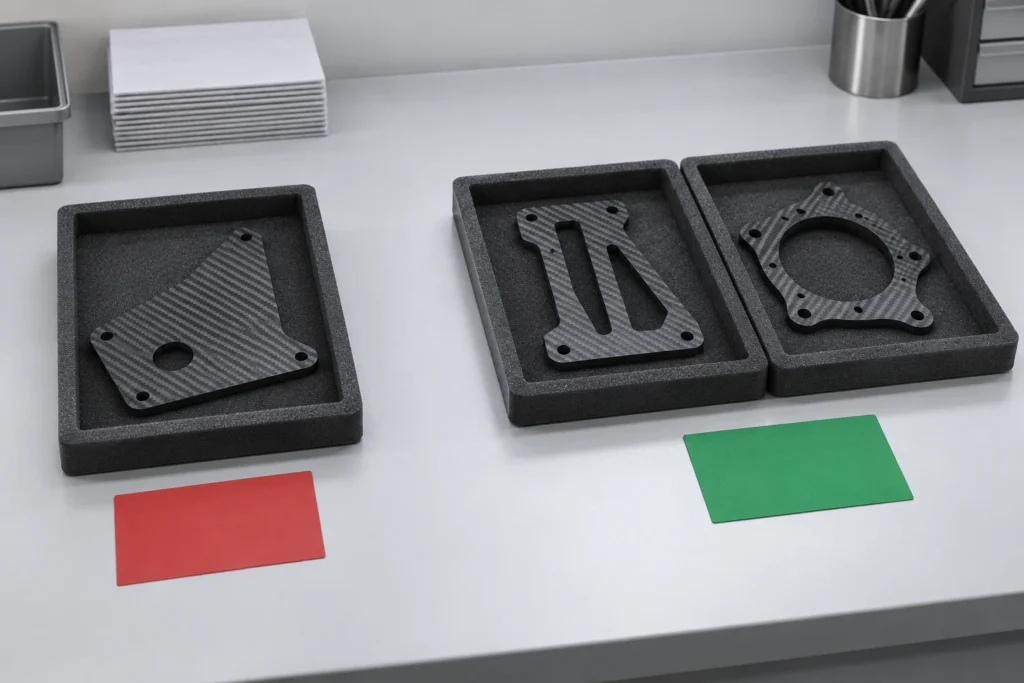
AI-generated explanatory concept; not a Litian Yunde product photograph or a validated design.
Incoming carbon fiber components should have a clear receiving status before they become available for assembly. Identify the shipment, separate items awaiting inspection or disposition, and record who can release them. A delivery note or visually tidy packaging does not itself establish that the ordered requirements have been met.
Identify the receipt before distributing parts
Record the order, shipment reference, component identities and quantities against the applicable requirement set. Keep lot or serial information where supplied and required. If a shipment contains different versions or components, preserve that distinction. A shared stock bin can erase the connection between a finding and the original receipt. Do not use an arrival date as a substitute for a supplier lot identity.
Give held items a controlled route
Separate items awaiting inspection, missing documentation or technical disposition from available stock. A physical area and a record can work together, but their status must agree. State what is missing and who resolves it. Avoid describing a hold as a final rejection when the question remains open. If a part is moved for assessment, maintain its identity and prevent that movement from silently releasing it.
Release only the scope supported by the record
Define the inspection and documentation checks required for the specific order. Record authorised acceptance, conditional disposition or rejection with the responsible person’s decision. If additional work is approved, preserve the original finding and the reinspection evidence. A partial release should identify exactly which quantities or identities are available. Close the receiving record without overwriting the audit trail of unresolved or returned items.
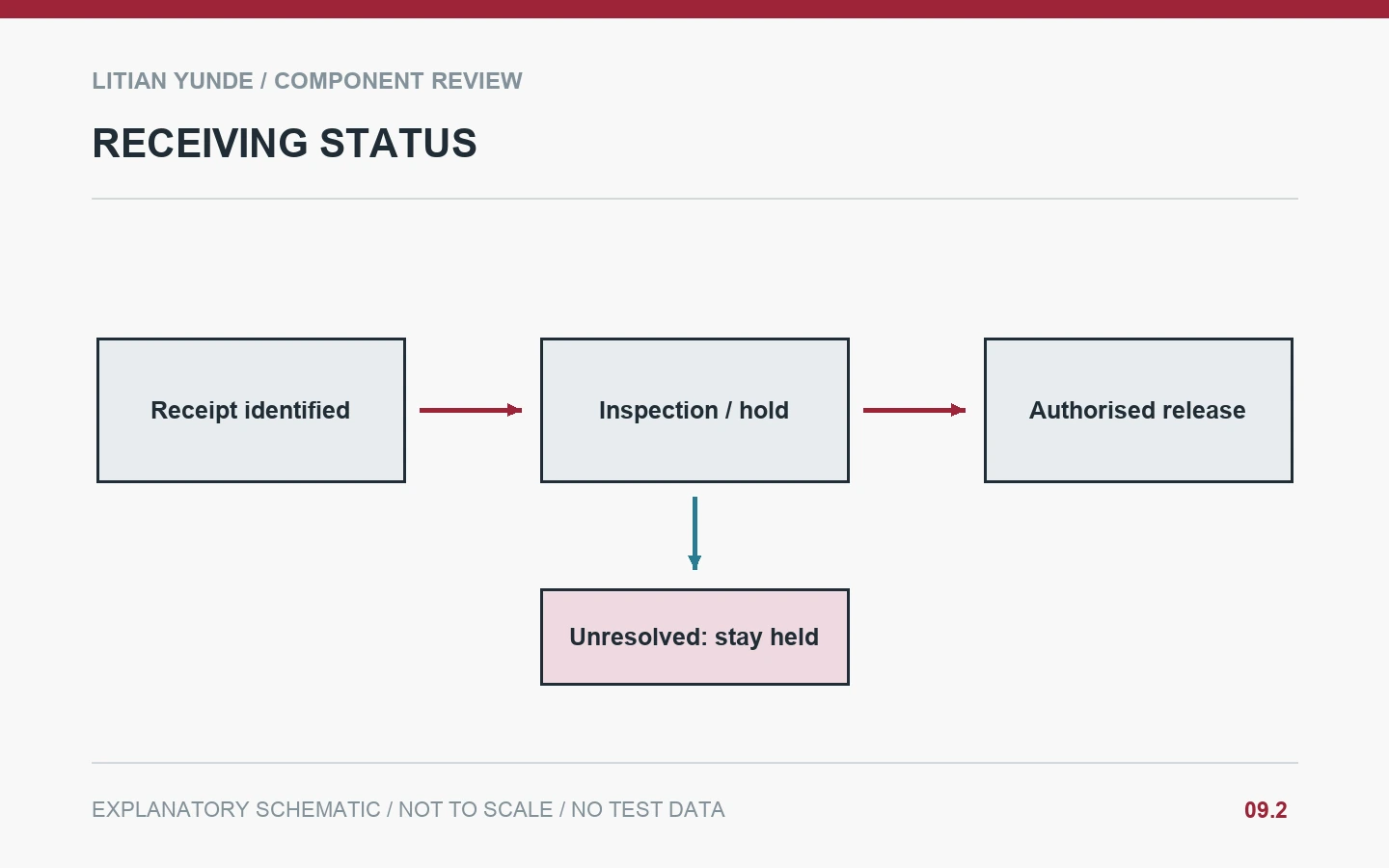
Example: parts arrive before the inspection report
The count and labels match the order, but an agreed inspection report is missing. The receiving team records the receipt and keeps the affected parts on hold. After the report is reviewed and the required checks are completed, an authorised release identifies the available quantity. The shipping arrival is not retrospectively described as the acceptance date.
Beispielszenario, kein Kundenfall und kein gemeldetes Produktionsergebnis.
Vor der Bestellung zu klärende Details
| Rezensionsobjekt | Zu Protokoll nehmen, um zuzustimmen |
|---|---|
| Receipt | Order, shipment, identities and quantities. |
| Status | Awaiting inspection, held or available. |
| Decision | Authorised scope and unresolved questions. |
| Closure | Release, return or approved rework history. |
Fragen, die Käufer stellen
Is a receiving hold the same as rejecting the supplier’s work?
No. It can mean inspection or documentation is incomplete. State the reason and the required next decision.
Can production use a held part to avoid delay?
Any conditional use needs an authorised, recorded disposition appropriate to the requirement.
Technischer Hintergrund und weiterführende Literatur
Hintergrundmaterial: ISO/TC 176: Documented Information Guidance (2015 edition). Background reading only; the project checklist is editorial guidance, and this reference does not establish supplier certification or part approval.
- Pilotchargen aus Kohlefaser: Fehler erfassen, ohne die Teilhistorie zu verlieren
- Customer-Supplied Hardware for Carbon Fiber Parts: Define the Handover
- Entdecken Sie das Wissenszentrum zum Thema Kohlefaser
Besprechen Sie Ihre Komponente mit Litian Yunde
Teilen Sie uns die überarbeitete Zeichnung, den vorgesehenen Einsatzzweck sowie die Frage zur Schnittstelle oder zur Abnahme mit, die Sie klären möchten. Die angegebenen Konstruktions- und Abnahmeanforderungen sind für das jeweilige Projekt bestätigt.