
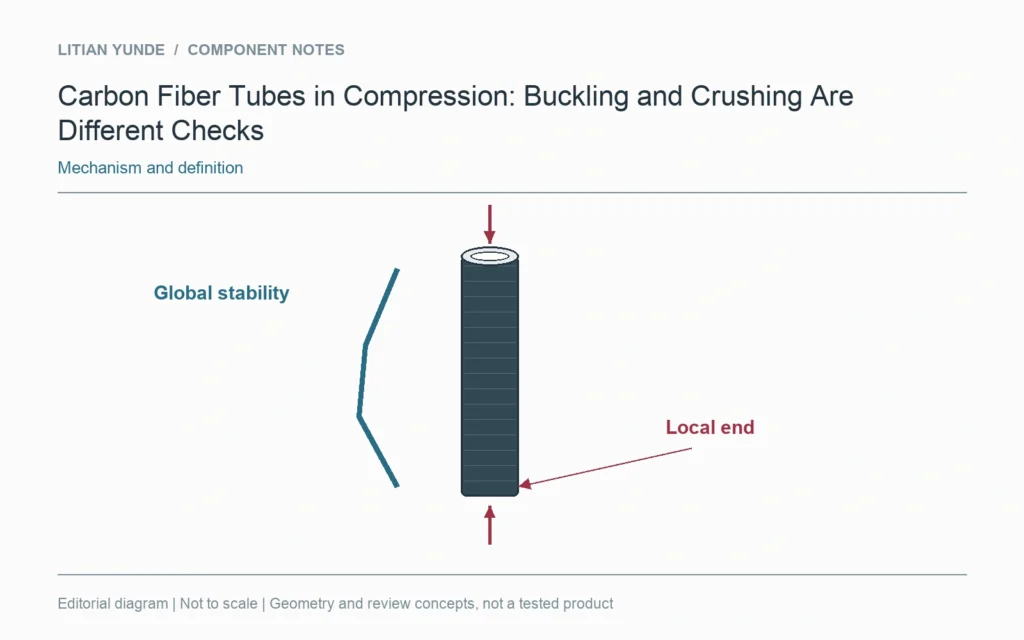
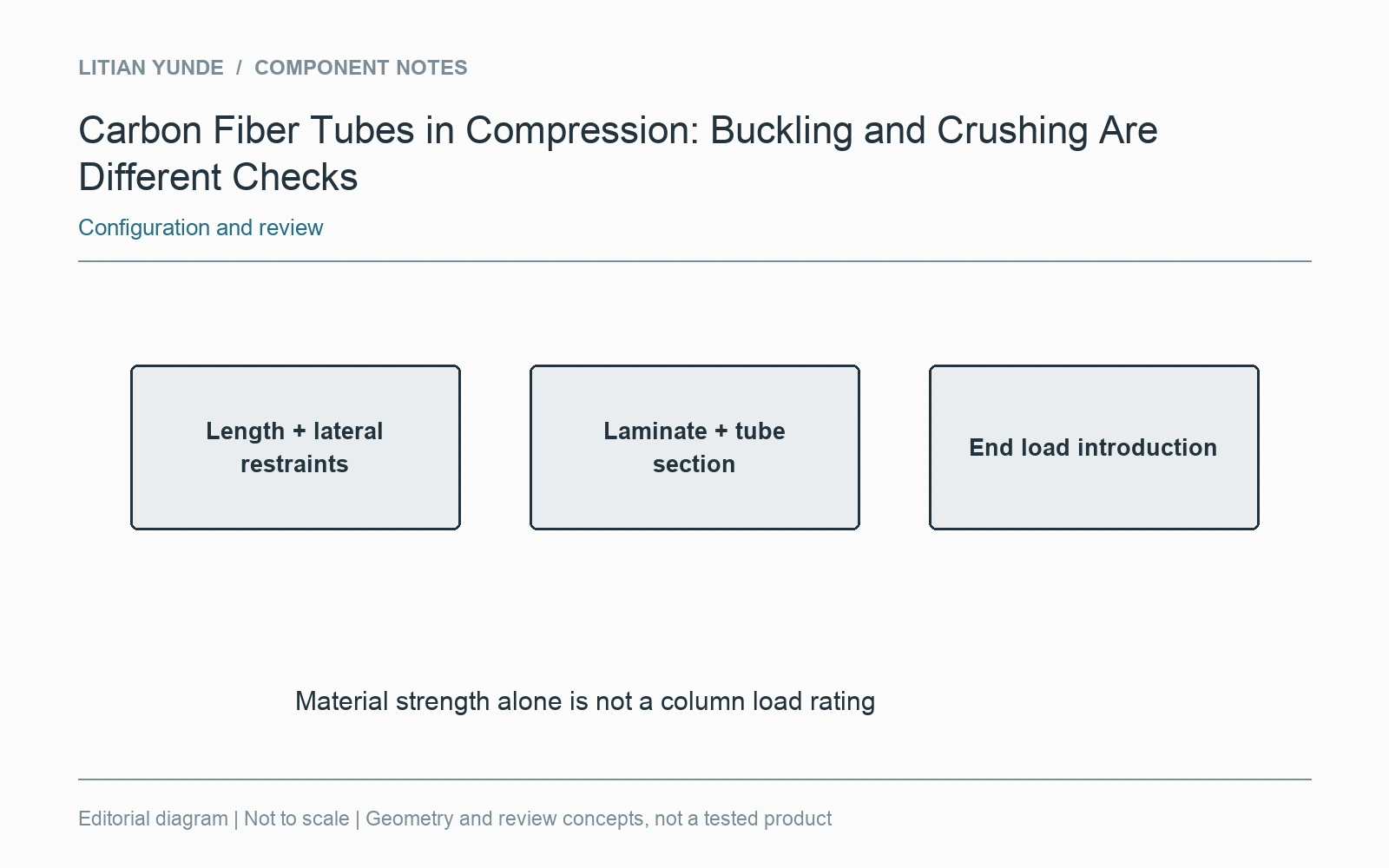
A tube under compression can be limited by instability as well as by local material failure. Tube length, section, construction, end restraint and load introduction belong in the assessment. A material compressive-strength value alone is not a column rating.
Give the unsupported length and identify the actual end connections. State whether other components restrain sideways movement. These details define the member that an engineer must assess; they cannot be recovered from outside diameter and wall thickness alone.
Separate global and local questions
Overall buckling concerns the member’s stability. Local wall or end damage is a different question, particularly where the load enters a fitting or contact face. Both may need review for the application. A sketch showing a straight tube between generic arrows should not be treated as evidence that either condition has been evaluated.
Agree what the result represents
If testing or analysis is required, identify the tube construction, end arrangement and acceptance basis. Keep those details with any reported load. A result from a short specimen or a different support arrangement should not silently become the allowed load for a longer installed tube. This article supplies no load limit or design clearance for a service-critical component.
Further reading: NASA: column buckling and vibration analysis.