

A fabric thickness listed before impregnation is not automatically the thickness one ply will occupy in a cured part. Cured ply thickness belongs to a defined material and processing condition. Keep that distinction when turning a ply count into a panel or wall dimension.
Dry fabric includes its own yarn arrangement and handling condition. After resin is introduced and the laminate is consolidated, the relationship between fibre, resin and thickness changes. Fabric areal weight is useful material information, but it does not by itself set the final thickness of each cured layer.
Use a nominal value for what it actually represents
A material supplier may provide nominal cured ply thickness or a relationship with fibre content. Hexcel’s prepreg guidance discusses that relationship. Check the specified material and the assumptions behind the value before multiplying it by a ply count. A nominal stack estimate is a design aid, not an inspection result for every point on a finished component.
Keep local build-ups visible
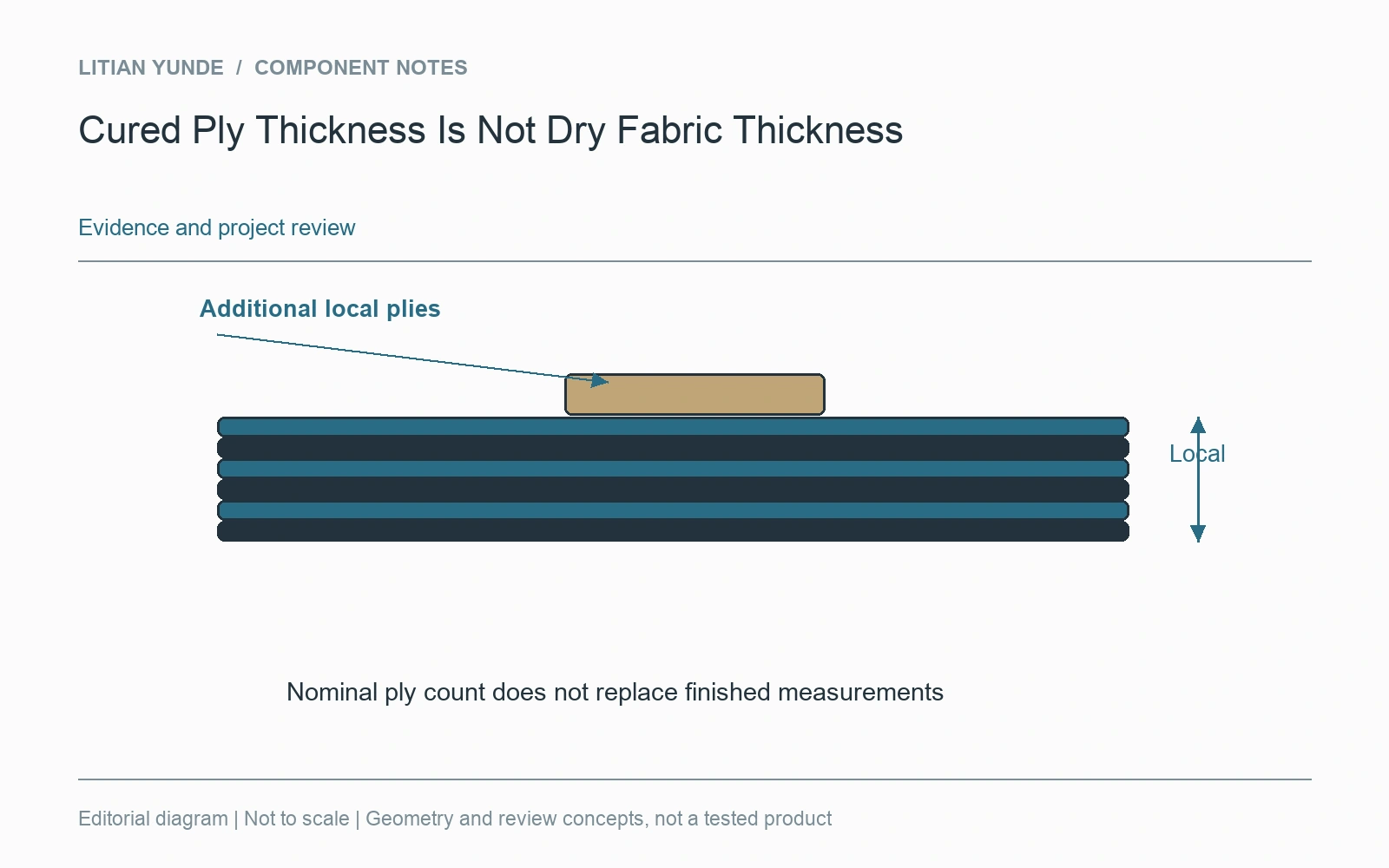
Overlaps, additional reinforcement and resin-rich regions can change the local section. A general ply-count note should not conceal these features. For an enquiry, supply the intended finished dimensions and identify locations where thickness matters to a fit. The supplier can then review the proposed construction against those locations instead of treating the stack estimate as a substitute for the component drawing.
Further reading: Hexcel: prepreg technology guide.