
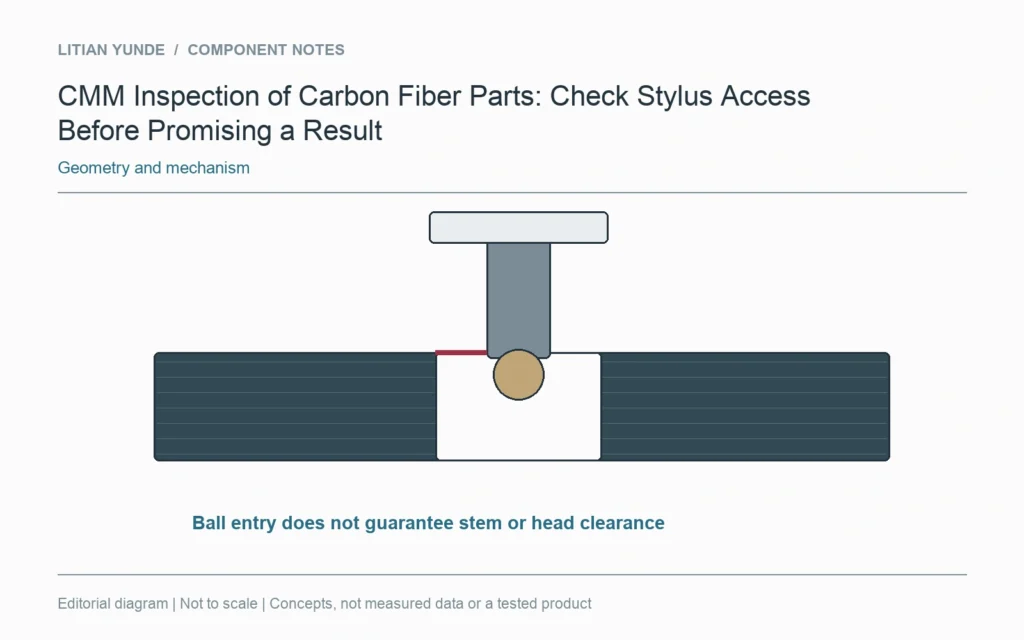
A feature shown on the drawing may be difficult to reach with the proposed CMM stylus. Review the contact point, approach route and surrounding geometry before agreeing the inspection method. Access for the ball alone does not establish clearance for the stem and probe head.
Show the complete approach
Mark the surfaces to be measured and the part orientation in the fixture. Include nearby walls, flanges and hardware that remain present during inspection. A narrow opening can admit the stylus tip yet block the stem before the intended contact is reached.
Identify the selected configuration
Renishaw’s stylus guidance relates successful gauging to feature access and measurement capability. A longer or cranked stylus is a configuration choice with its own qualification requirements. Do not assume an extension preserves the same performance as the short stylus used elsewhere.
Resolve the method while access can be planned
If the proposed contact route is unavailable, agree a suitable alternative or an earlier inspection stage with the responsible team. Record which condition the result represents. A CMM report should identify the measured feature and method rather than filling an inaccessible item with an estimate. The goal is a feasible inspection plan, not simply a list of drawing dimensions assigned to a machine.
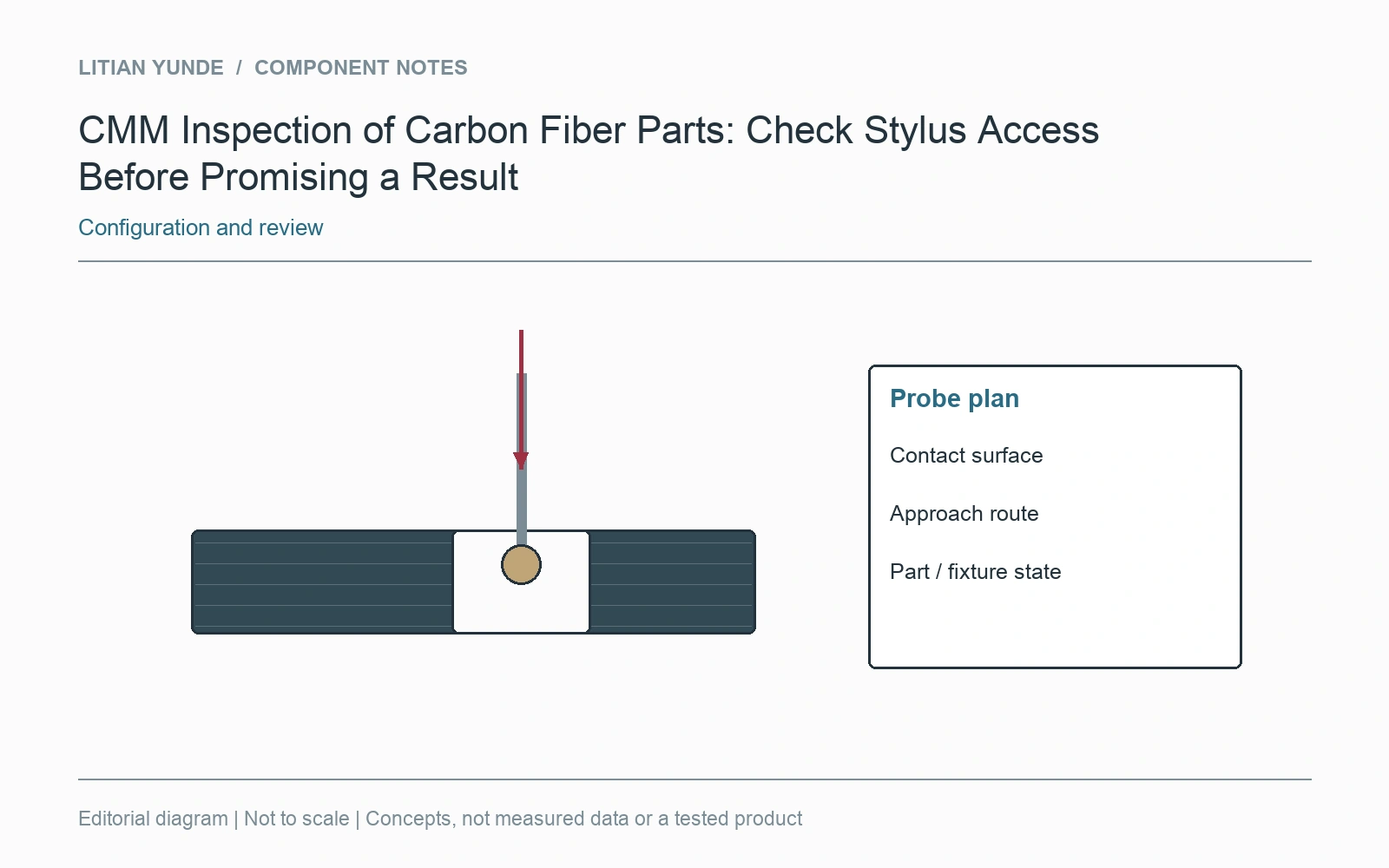
For the project review: intended contact points; ball, stem and head clearance; fixture orientation and stylus configuration; feasible method and represented stage.
Further reading: Renishaw: styli and feature access.