
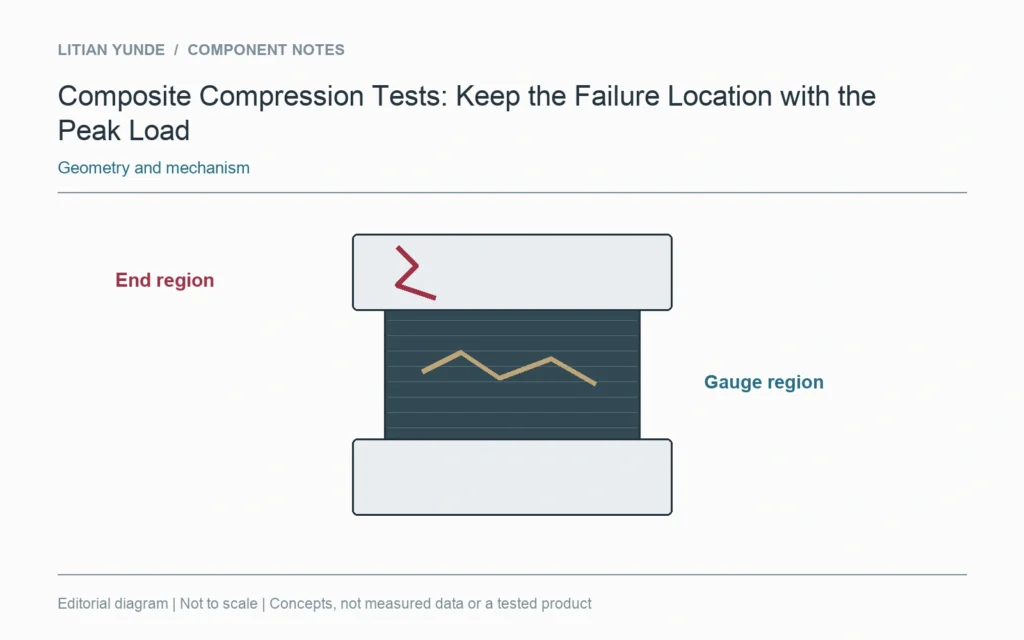
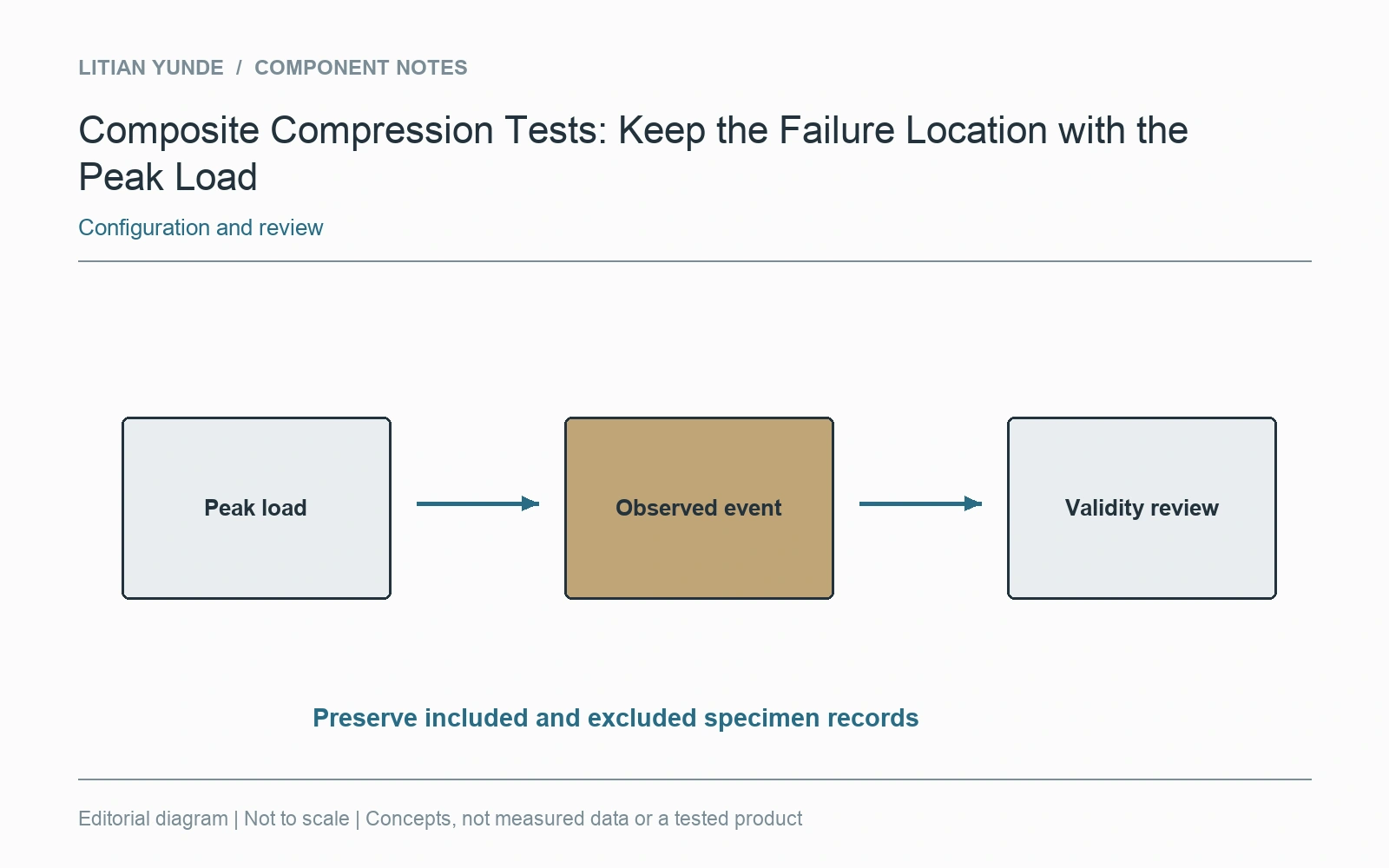
A peak compression load needs the specimen’s failure location and the test-validity review. An end crush, a gauge-section failure and a buckling event are different observations. Do not select a strength value from the highest number alone.
Locate the event on the specimen
Retain a full specimen view and close-up images of the affected region. Identify the supported and unsupported portions of the actual fixture arrangement. A cropped broken fragment may hide whether the event occurred at a loading end or inside the intended test region.
Use the selected method’s review
ZwickRoell’s combined-loading compression guidance discusses valid failure and bending assessment for that method. The laboratory should apply the relevant standard, edition and recorded setup. This general article does not supply a universal acceptance rule for every compression fixture.
Retain excluded results as records
If a result is excluded from a reported material property, preserve the observation and the reason under the laboratory’s reporting procedure. Do not silently remove a low result or promote an invalid high result. Keep specimen identity, construction and any replacement test connected, so a buyer can understand which evidence supports the final reported value.
Further reading: ZwickRoell: combined-loading compression and test validity.