
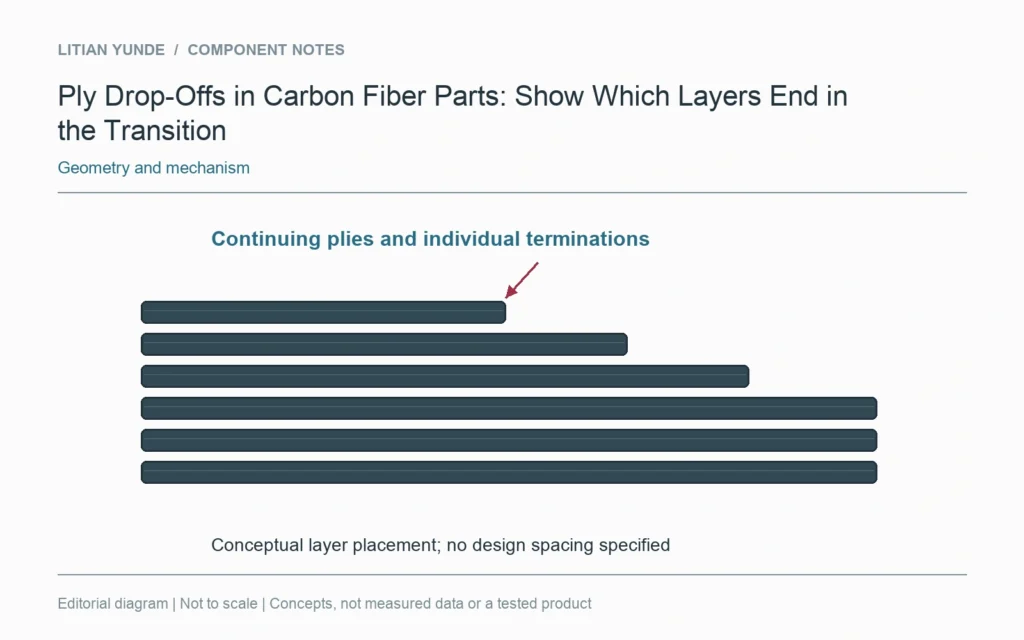
A laminate thickness transition needs more than a smooth outside outline. Show which plies continue and which terminate through the region. A ply drop-off changes the internal construction; it is not the same operation as machining material from a uniform cured plate.
Draw through the transition
Include a section that connects the thick and thin regions. Label the continuing plies and the terminated layers using the applicable layup reference. Keep any dimensions or placement requirements with that reference rather than relying on an unlabelled shaded taper.
Review the proposed sequence
COMSOL’s ply-drop example illustrates a laminate transition with individual layer terminations. It is a modelling example, not a universal design rule. The actual drop locations, sequence and manufacturing proposal need review for the component’s loads, materials and acceptance requirements.
Keep changes visible during sampling
If a supplier changes the transition to suit drape, tooling or processing, retain the revised layup proposal before evaluating the next sample. A matching outside profile does not establish the same layer arrangement. Inspection access and any required validation should be agreed while the internal definition is still available to the people planning the work.
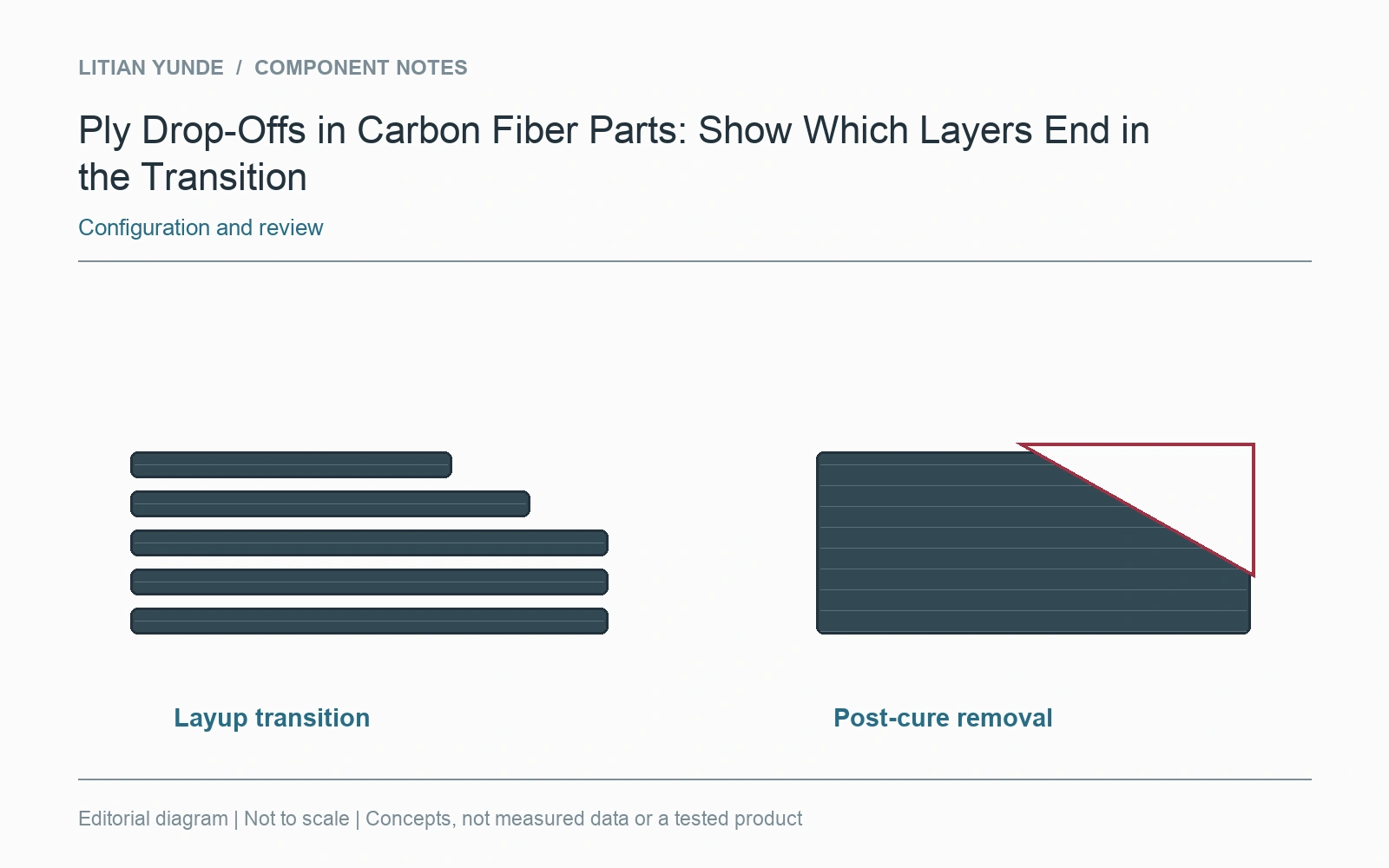
For the project review: thick and thin region references; continuing and terminated plies; reviewed transition sequence; sample construction and required evidence.
Further reading: COMSOL: ply drop-off in a composite panel.