
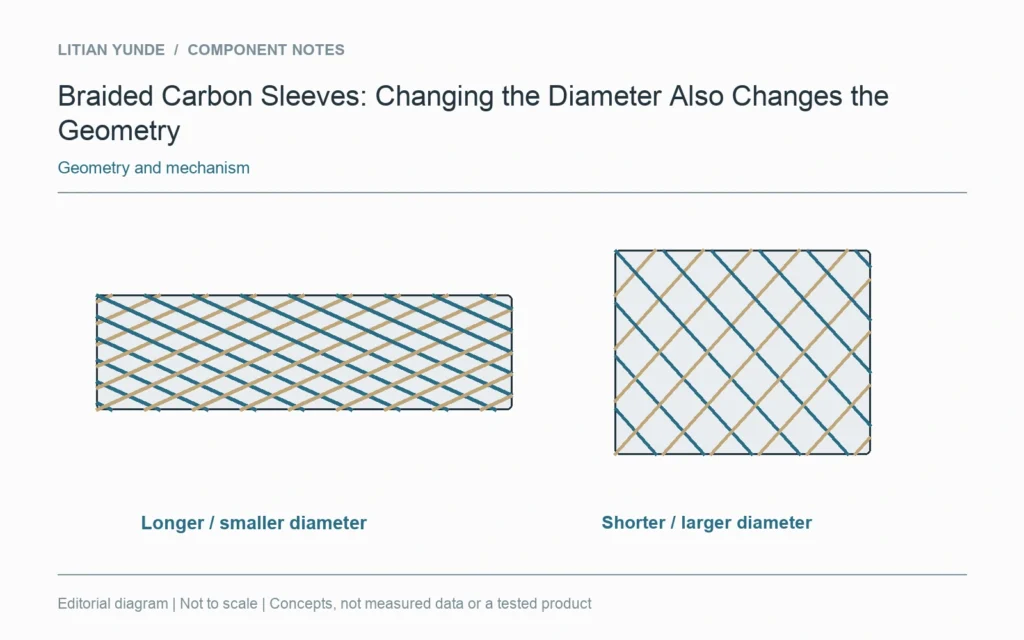
A dry braided sleeve can expand or contract to fit a shape, but its fiber angle and occupied length change with that adjustment. Specify the sleeve product and the geometry at layup. Its nominal selling diameter is not a complete description of the resulting reinforcement.
Start from the product’s reference condition
A&P Technology lists braid angle and diameter together for its carbon sleeving products. A catalogued condition is a reference for that product, not a promise that every expanded sleeve has the same angle or coverage. Keep the selected sleeve designation in the manufacturing proposal.
Review the sleeve on the intended form
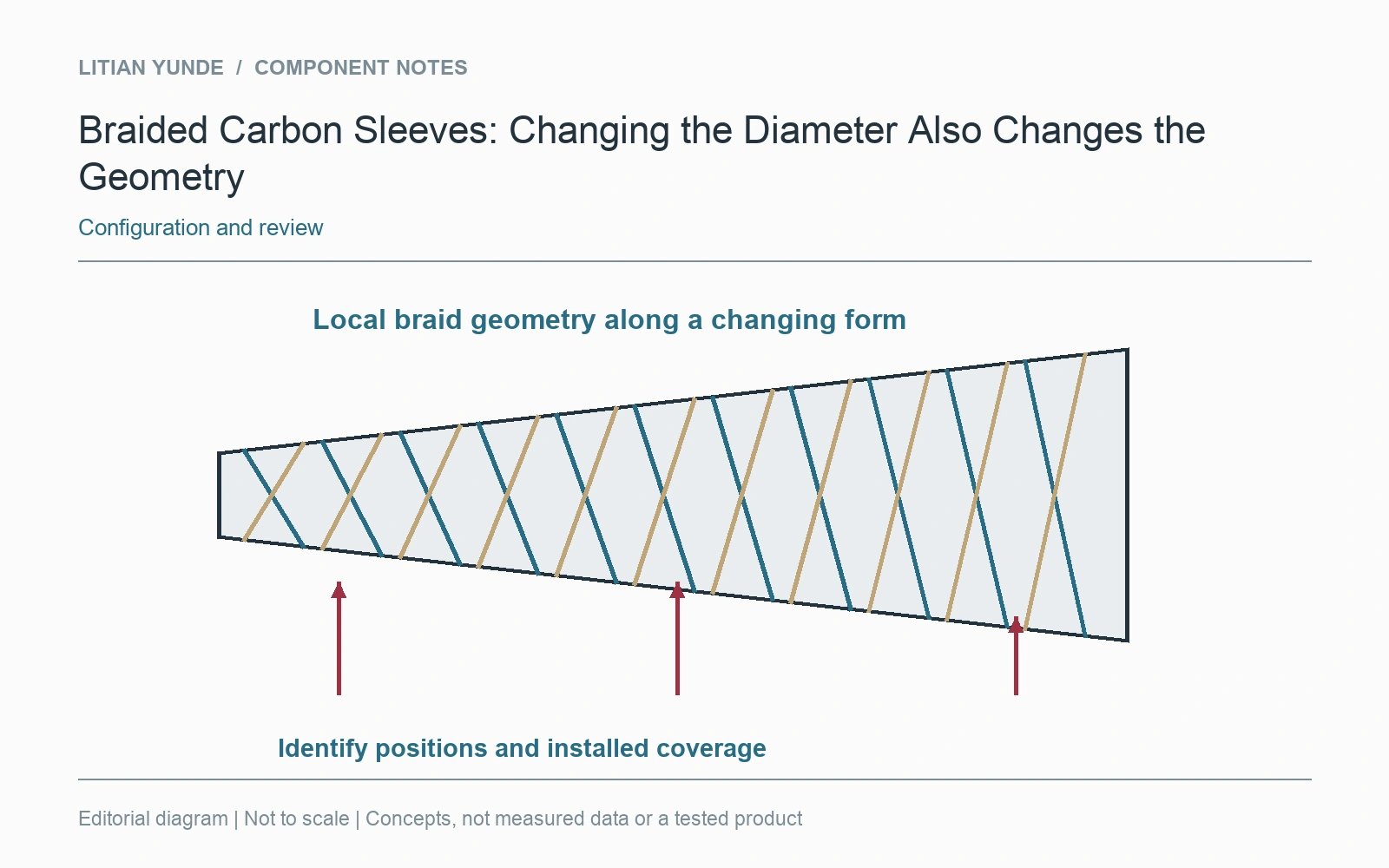
Show the diameter changes and the region the sleeve must cover. On a taper, the local braid geometry can differ along the part. Confirm how the supplier will identify the intended positions and whether extra length is required for handling and trimming.
Retain the represented arrangement
When reviewing a sample, record the installed sleeve geometry rather than only the length cut from the roll. Do not infer wall thickness or component strength from a loose sleeve photograph. If the form, sleeve or layup arrangement changes, review the affected reinforcement definition before treating the previous sample as the same construction.
Further reading: A&P Technology: biaxial carbon sleeving geometry.