
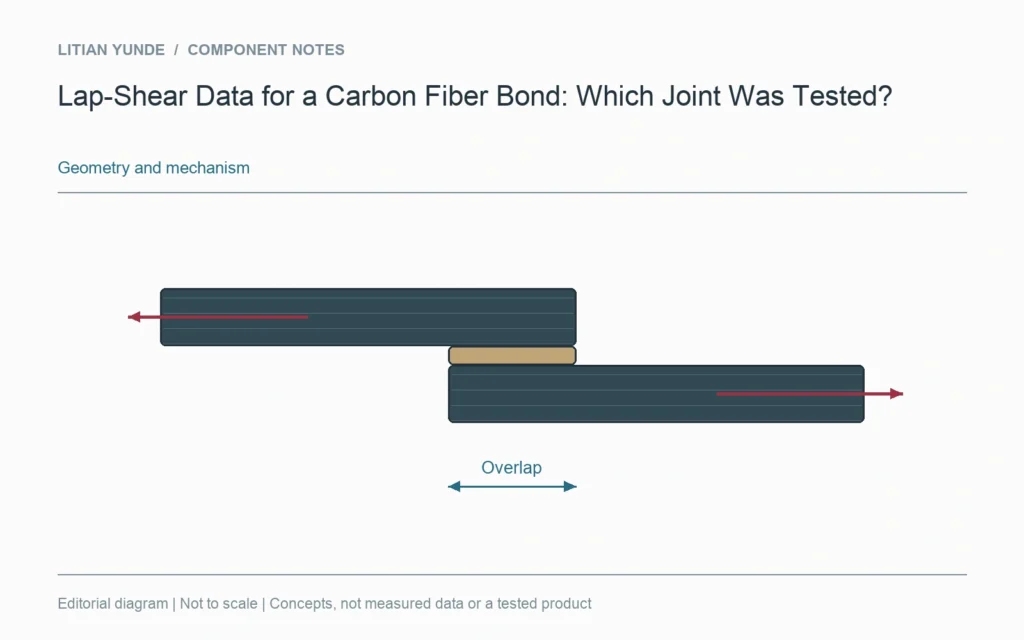
A lap-shear result belongs to the tested adhesive joint, including its adherends and preparation. It is not a stand-alone capacity for every joint using the same adhesive. Keep the specimen construction and observed failure with the reported result.
ASTM D5868 describes comparative apparent shear data for bonded FRP joints. Its scope includes FRP joined to itself or to metals. That makes the substrate identity part of the result rather than background information that can be removed from a datasheet comparison.
Retain the interface details
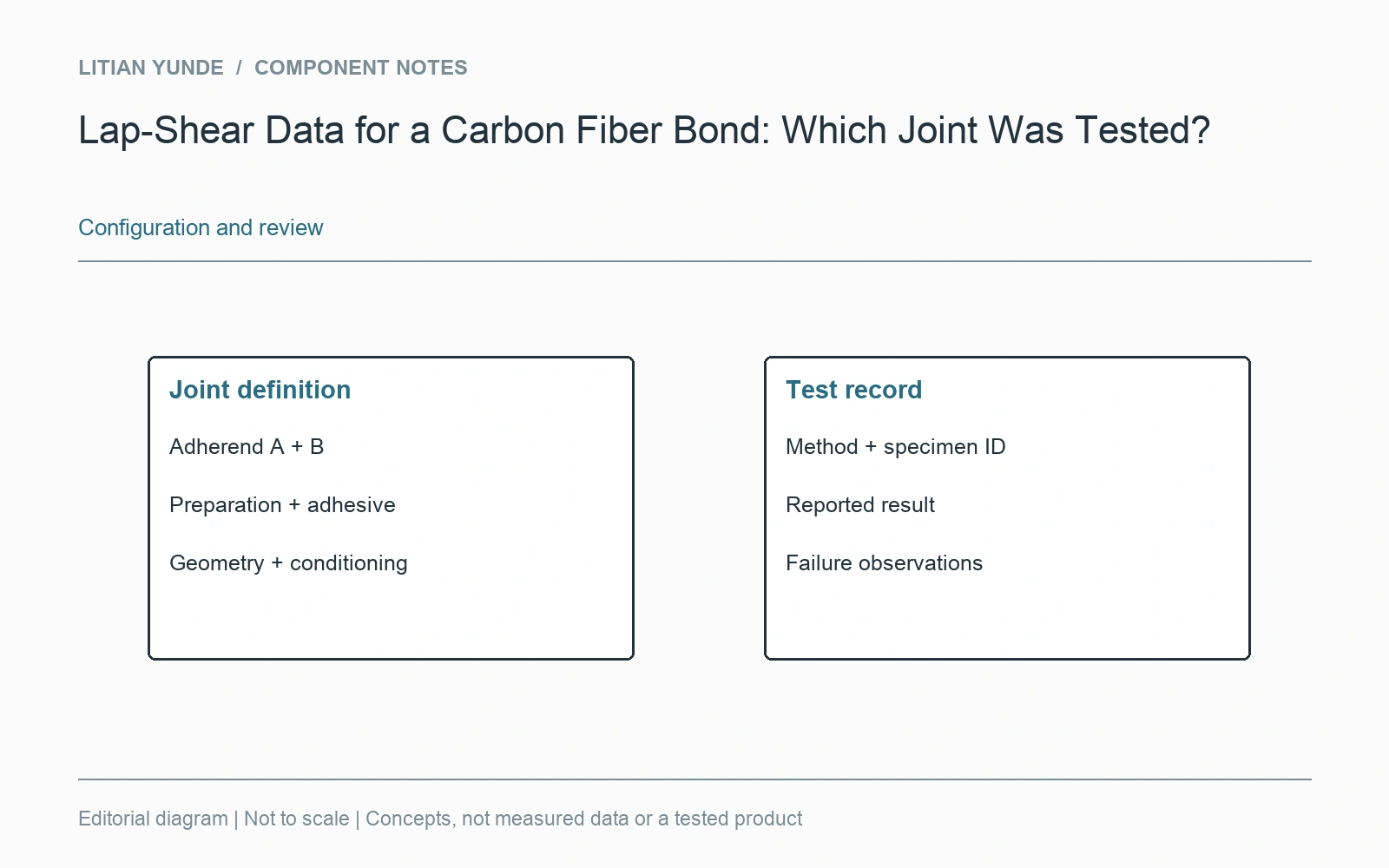
Identify both adherends, their surface condition, the adhesive, overlap definition and applicable cure record. Keep conditioning and the test method with the report. If one specimen uses a different laminate or surface preparation, make that difference visible before comparing its number with another result.
Connect the evidence to the proposed assembly
For a production joint, ask which aspects of the test specimen represent the actual design and which do not. Include the laboratory’s failure observations instead of retaining only maximum load. A representative coupon programme and a completed-assembly check answer different questions. Neither should be silently replaced by an adhesive brochure value that omits the joint configuration. Agree the required evidence before the bonding work is released.
Further reading: ASTM D5868: FRP lap-shear joint data scope.