
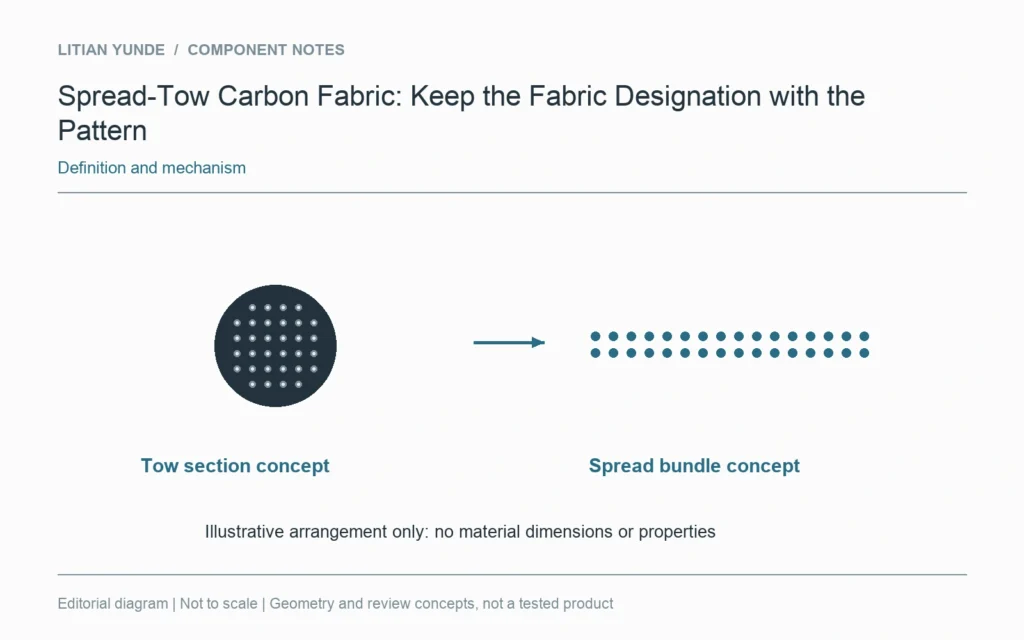
Spread-tow fabric uses spread fibre bundles in its reinforcement construction. A wide, flat-looking pattern can help discuss appearance, but the fabric designation still needs to identify the actual product. Do not infer the complete laminate from that pattern.
Hexcel’s PrimeTex information describes spreading filaments within the tow in a defined product family. That is useful background for understanding the construction. Its product statements are not a performance specification for every spread-tow material, or for a component made by another company.
Keep the remaining fields visible
Fibre grade, fabric weight, weave and resin construction still matter to a proposal. A wide visible pattern does not by itself establish cured ply thickness or finished part mass. If the fabric is used only as an outer layer, identify that position rather than describing the whole component as if every layer were identical.
Review the proposed comparison
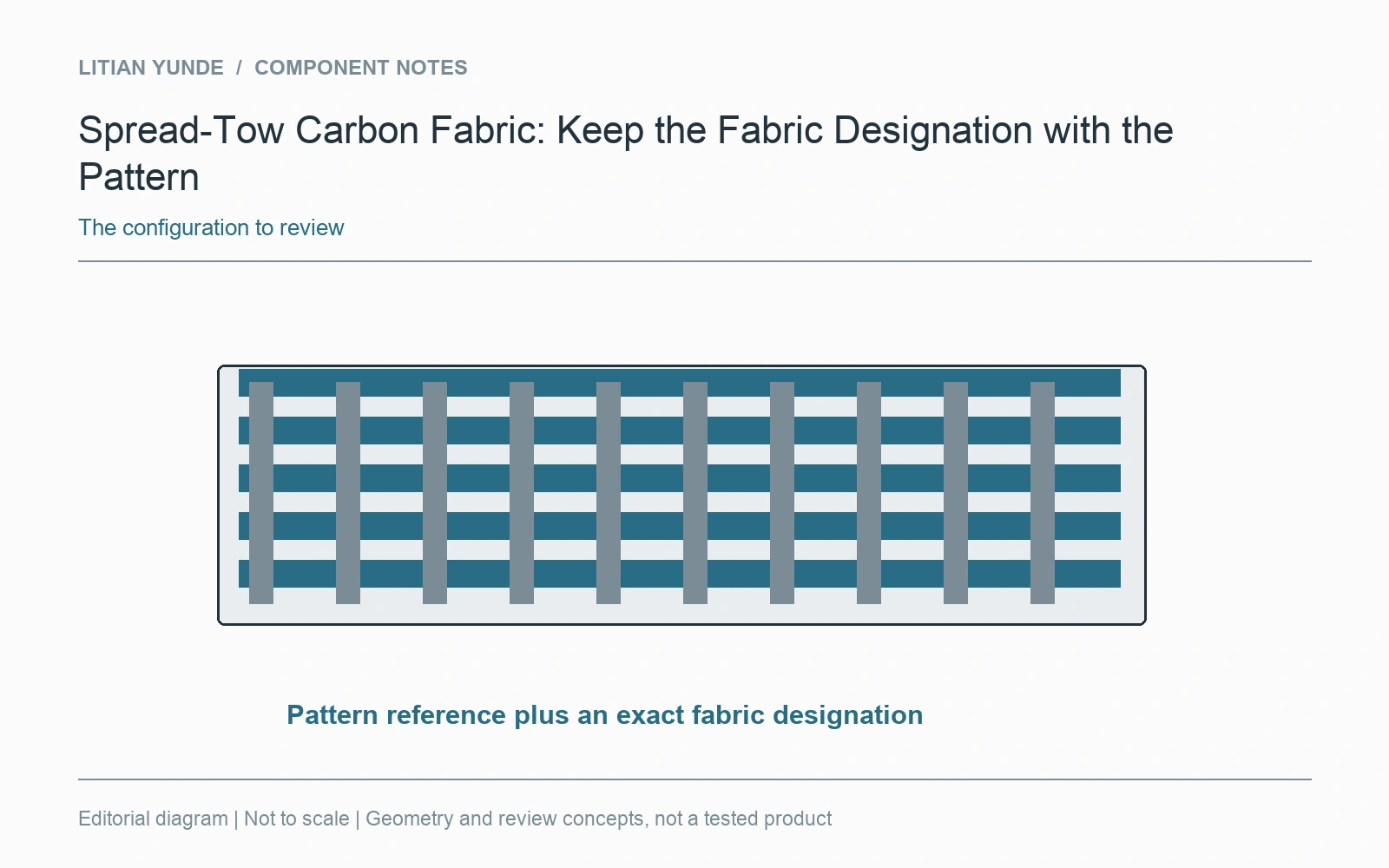
When an alternative reinforcement is offered, record which material fields and appearance references change. The relevant engineering and sample review should address the actual laminate and application. A retained surface sample can support a pattern discussion, while material documentation supports the construction definition. Keeping those roles separate makes the fabric name useful without turning it into an unsupported claim of superior finished-part performance.
Further reading: Hexcel: PrimeTex spread reinforcement construction.