
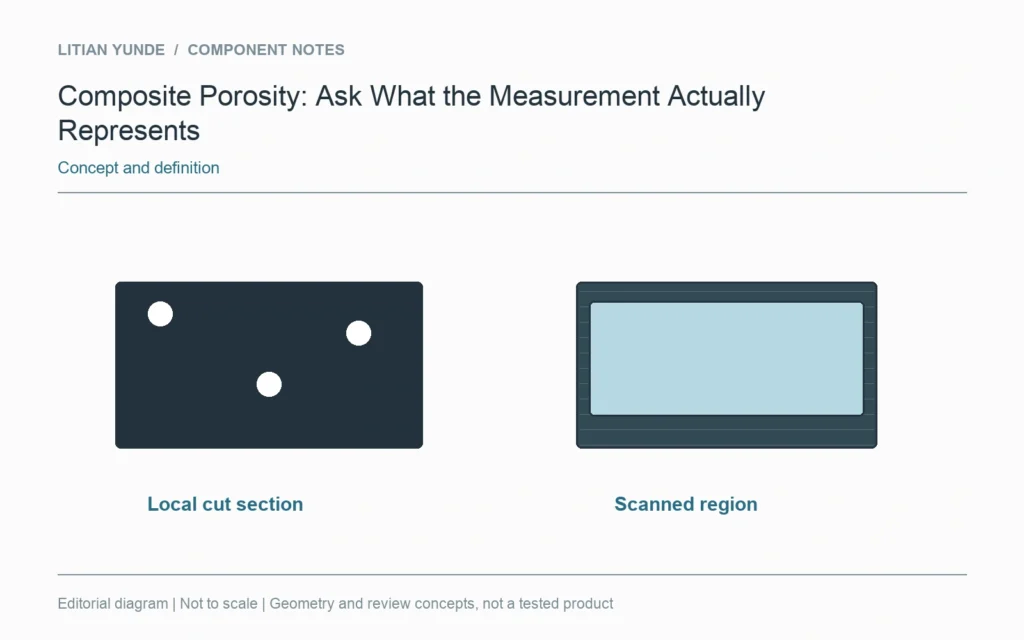
A porosity result needs a method and a defined sample. A surface photograph, a local section and a non-destructive scan do not describe the same evidence. Before comparing two reported values, check what material was examined and how the result was obtained.
Start with the sampled region
A small cut section describes the region it crosses. A scan covers a different area and can depend on calibration, geometry and interpretation. Neither should silently be treated as a direct measurement of every part in a delivery. The NASA composite NDE handbook discusses these method-dependent inspection questions; it is background reading, not an acceptance standard for your order.
Keep the reported basis with the number
Ask for the method reference, specimen identification, preparation where applicable, the assessed area or volume and the result units. If the result is derived indirectly, retain the stated assumptions and reference material. A percentage without this context may look precise while being unsuitable for comparison with another report.
Agree a requirement before the result arrives
There is no single acceptance limit established by the phrase “carbon fiber part.” The applicable construction, service requirement and agreed inspection plan matter. If a purchaser needs a particular assessment, include it in the enquiry so specimen allocation, access and reporting are discussed in advance. Surface appearance can still have its own acceptance reference, but it should remain a separate requirement.

Further reading: NASA: composite non-destructive evaluation handbook.