
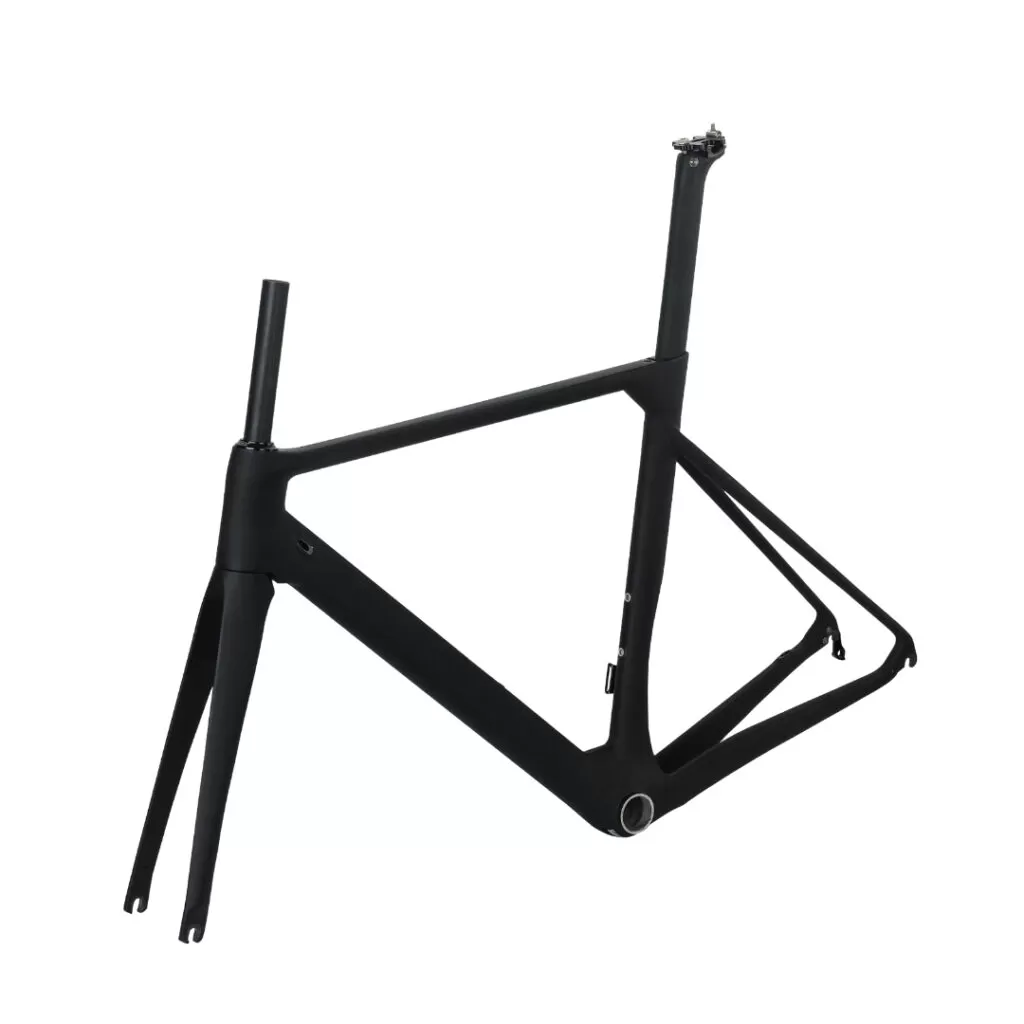
Carbon fiber bicycle frame showing its tube arrangement.
Two bicycle tubes can have similar outer shapes while using different internal constructions. A surface photograph is useful for appearance, but it cannot specify the laminate or prove its mechanical performance.
Separate geometry from construction
Use drawings to describe the outer envelope and interfaces. Keep material and laminate requirements in a controlled specification appropriate to the design. The visible weave should not be used as a shortcut for wall construction, fibre grade or the direction of hidden plies.
Ask for evidence at the relevant level
A material certificate concerns the identified material; a component evaluation concerns a particular part and condition. When a construction changes, record the change and the required review rather than assuming the previous result still applies. Avoid choosing an unverified wall thickness from an online photograph.
Example scenario
The visible woven face is retained while the internal construction changes. An appearance sample can still match, but the material definition is different. Keep surface approval separate from acceptance of the revised construction and its supporting evidence.
Points to record
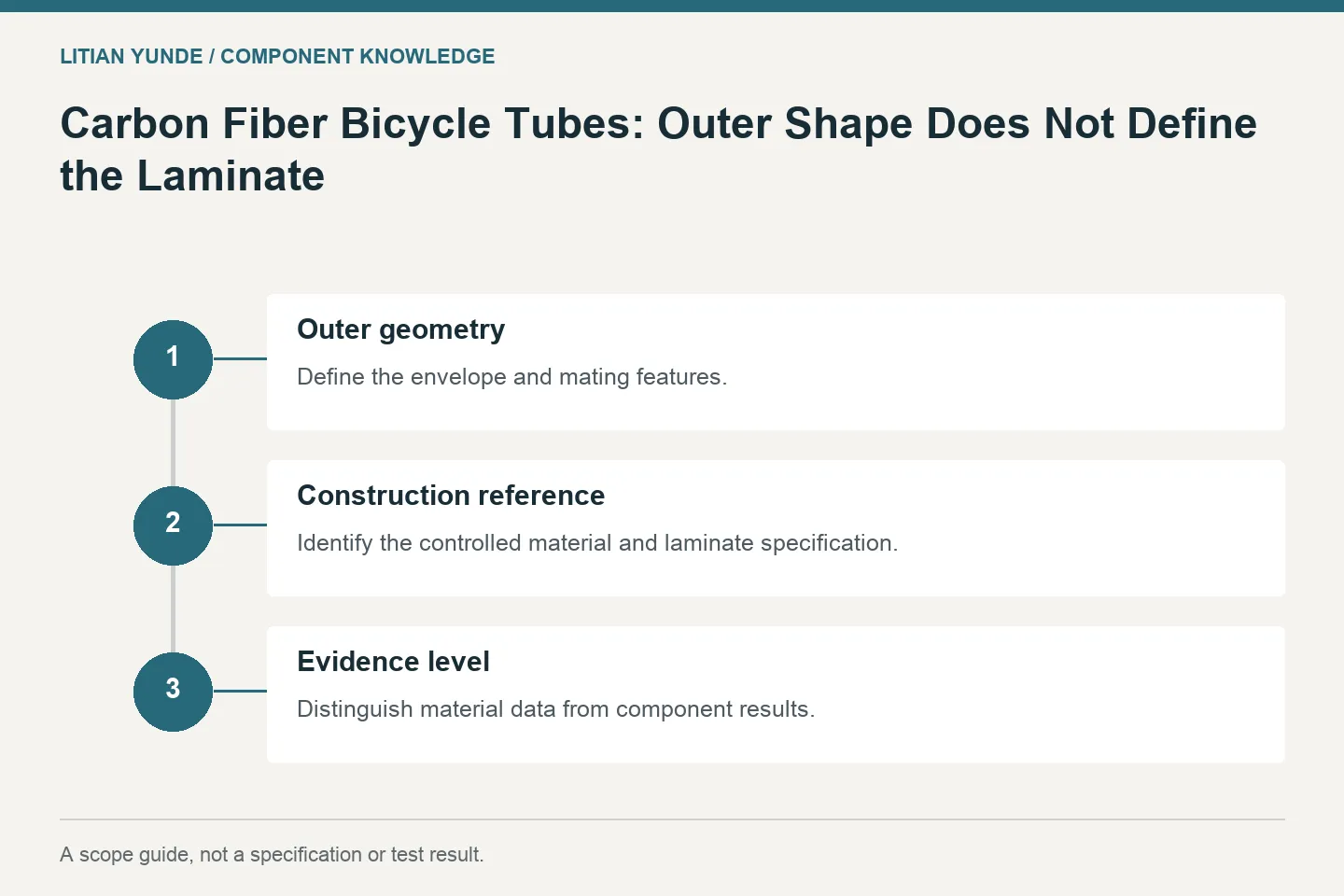
| Outer geometry | Define the envelope and mating features. |
|---|---|
| Construction reference | Identify the controlled material and laminate specification. |
| Evidence level | Distinguish material data from component results. |
Related reading
- Buying Carbon Fiber Tubes: Ask About Construction, Not Just Weave
- Carbon Fiber Bicycle Frame Enquiries: Organise the Interface Data
Background reference: Gurit — Composite Materials.
Discuss the component requirements
Send the part drawing and the requirements relevant to this guide for a scope review.
Contact Litian Yunde