
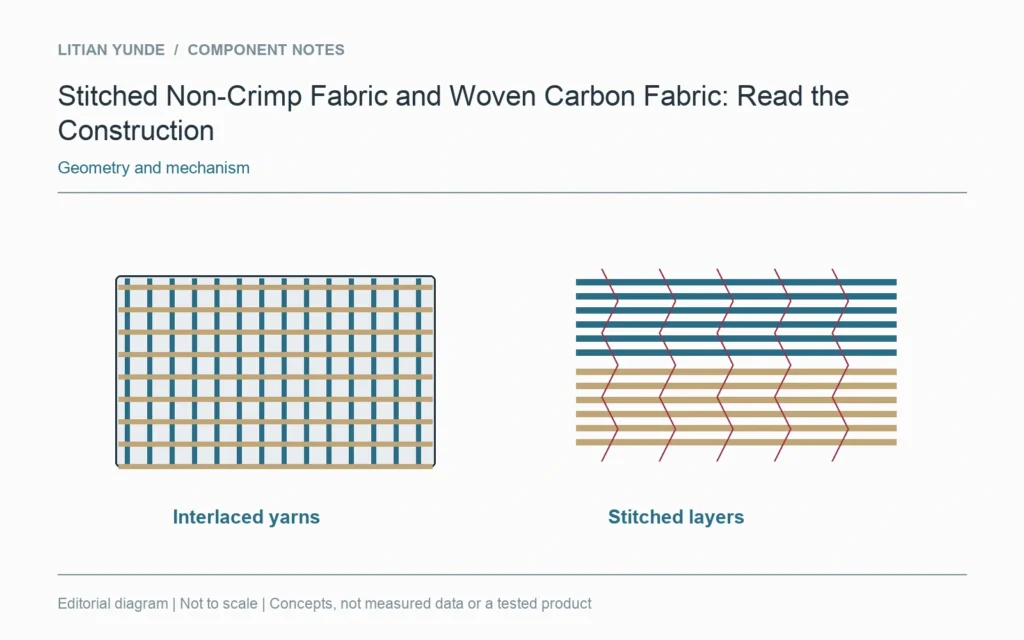
Stitched non-crimp fabric and woven fabric describe different reinforcement constructions. A stitch line is not the same feature as interlaced warp and weft. Specify the construction and its directional layers before using a fabric weight or a surface photograph to compare materials.
Look past the common word fabric
Hexcel describes its HiMax non-crimp reinforcements as directional fiber layers held by stitching. Woven fabric instead interlaces yarn systems. These descriptions help identify what is being quoted; they do not establish a universal performance advantage for either construction.
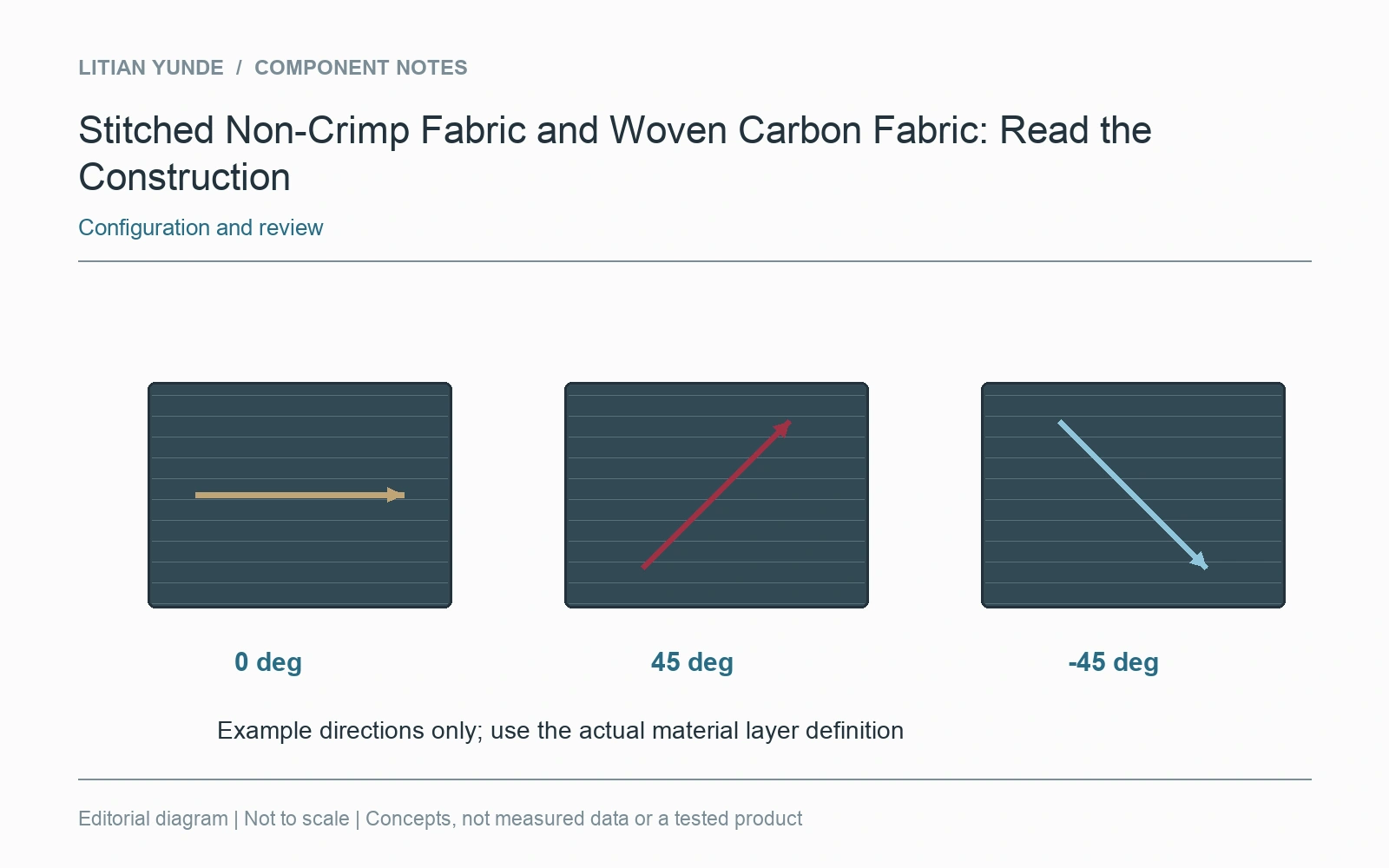
Keep the directional build-up visible
For a proposed stitched material, retain its actual directional arrangement, layer weights and product designation. For a woven material, retain the relevant weave and yarn information. One total areal weight cannot describe all of those details. A material with several directional layers also needs a clear relationship to the part’s layup definition.
Compare at the component level
If a supplier proposes one construction in place of another, review the laminate and manufacturing proposal together. Appearance, handling and the required component evidence may all enter that review. Do not approve the substitution by matching the number printed beside gsm. The controlled definition should make the selected product and its orientation readable to the people preparing the material, inspecting the sample and placing the next order.
Further reading: Hexcel: stitched non-crimp reinforcement construction.