
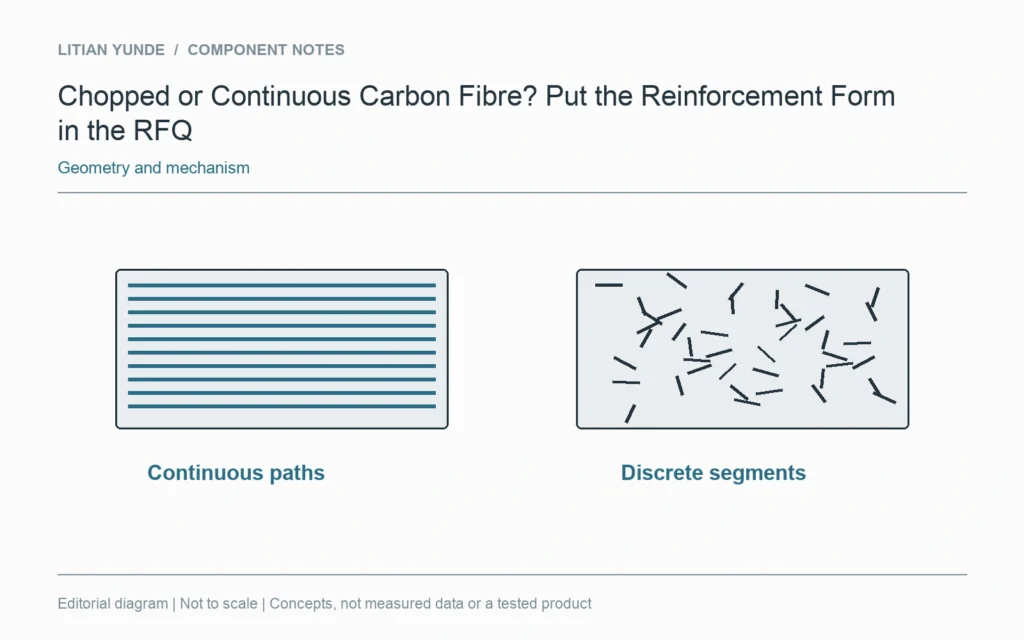
Chopped carbon fibre and continuous reinforcement describe different material constructions. A dark, patterned surface does not establish which construction is inside a component. Name the proposed reinforcement form before comparing a moulded part with one made from fabric or tape.
Start with what is being supplied
A purchase description such as “carbon composite bracket” leaves the material form open. Ask whether the proposal uses continuous fabric, unidirectional reinforcement, chopped-fibre moulding compound or another identified feedstock. Record the resin system as well. This is a material-definition question, not a ranking of all chopped and continuous composites.
Compare the complete proposal
Toray lists chopped-fibre bulk moulding compounds separately from its tape and prepreg products. That distinction is useful when discussing a complex shape. It does not make a value measured on one material transferable to another. Geometry, fibre arrangement and processing remain part of the comparison.
Keep the reference attached
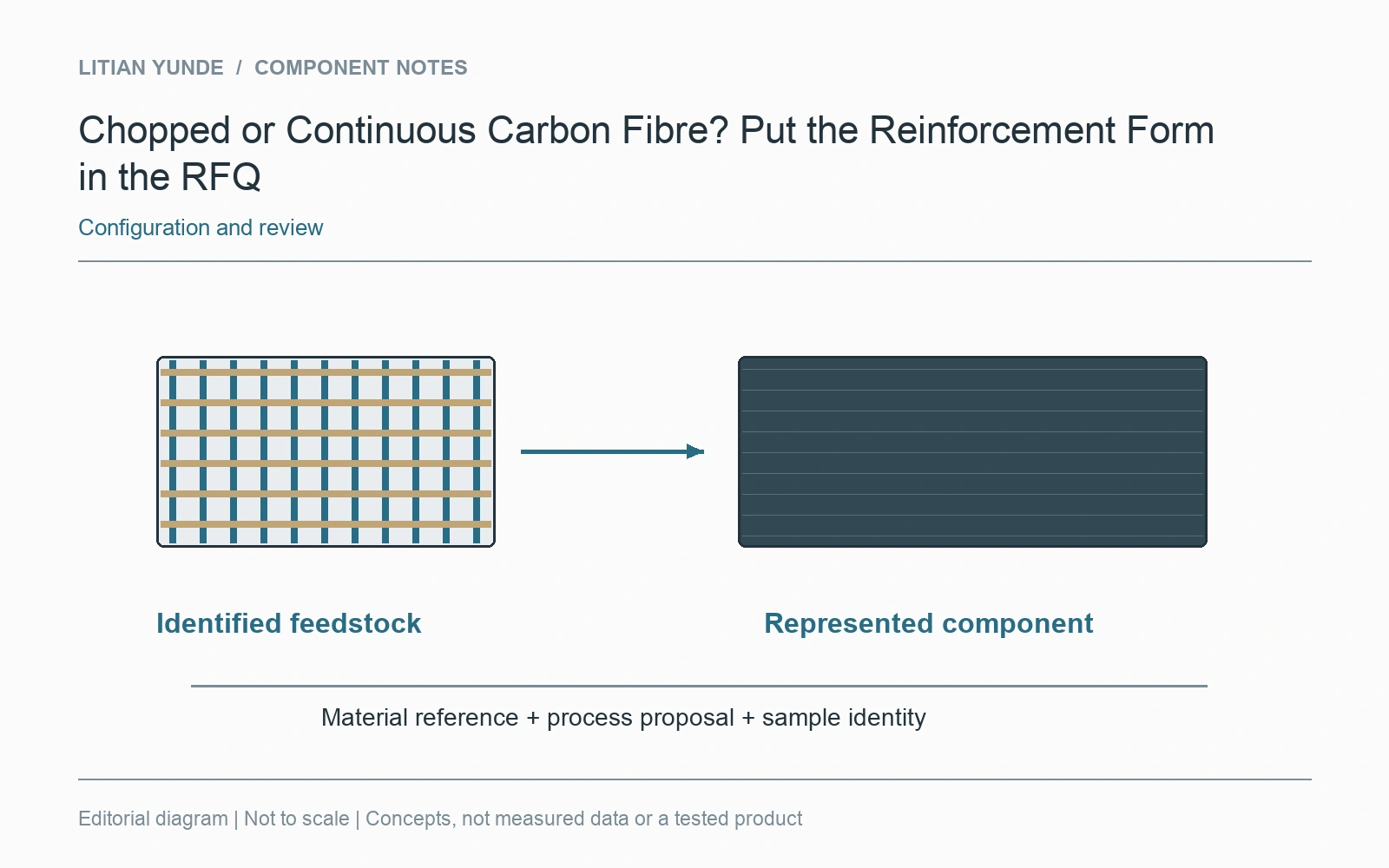
If a sample is supplied, connect its identity to the proposed production construction. A photograph can describe the visible appearance, while the material reference describes the feedstock. If the supplier proposes a different form to make the geometry practical, record that change before approving the part. A familiar carbon appearance is not approval of a hidden construction change.
Further reading: Toray: chopped-fibre bulk moulding compounds.