
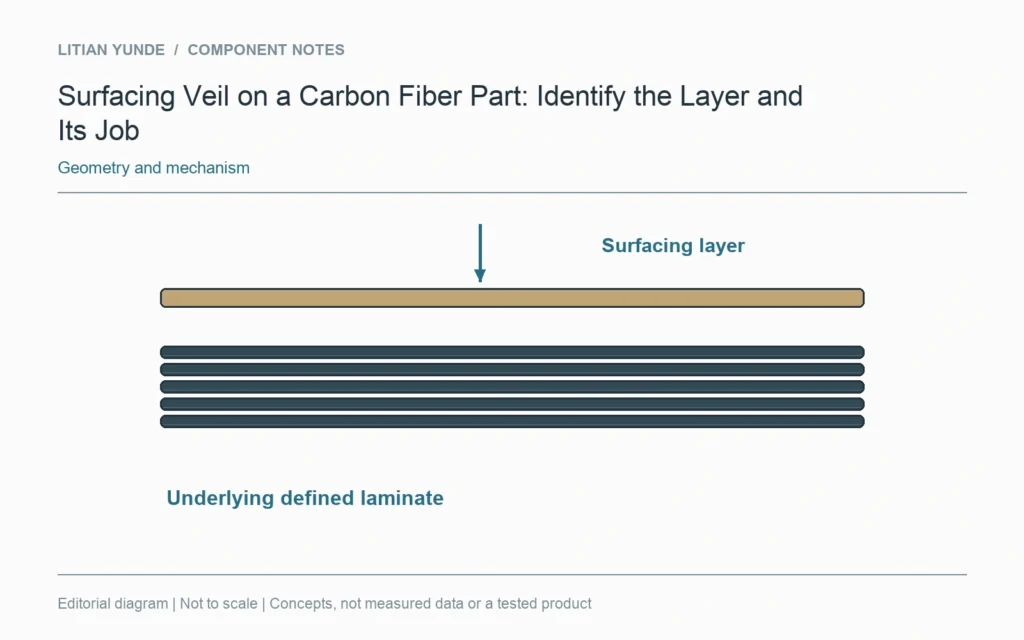
A surfacing veil is a specified layer near the laminate surface. It should not be counted as a replacement for an unidentified structural fabric ply. In an enquiry, identify the actual veil material, its location and the function proposed for it.
A surface layer can be a different material
A carbon composite can include a surfacing product made from another fiber type. FiberLink, for example, describes glass surfacing veils for laminate surface applications. That product category illustrates why the visible face and the underlying reinforcement need separate descriptions. It does not establish the construction of a particular supplier’s part.
Show where the layer belongs
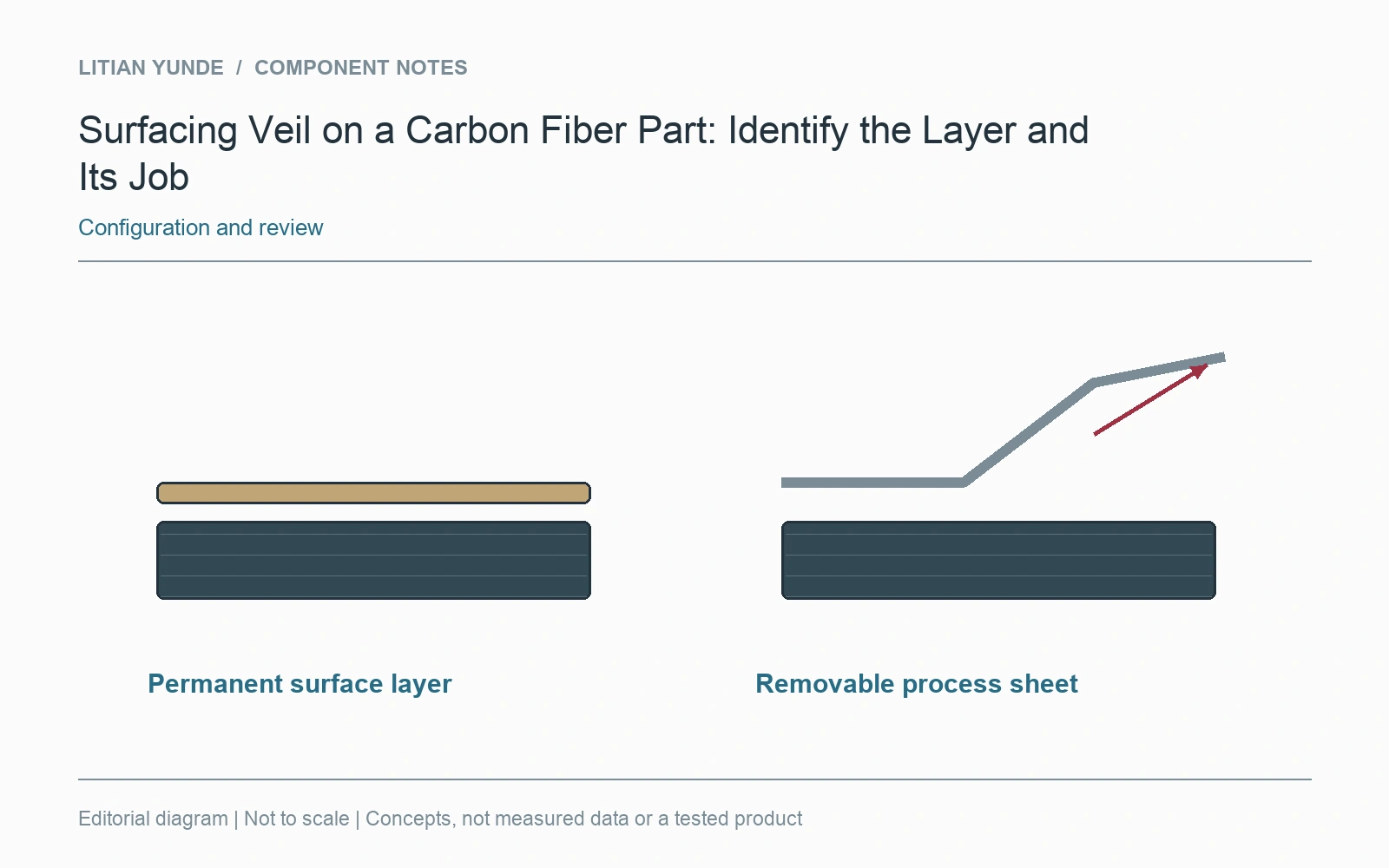
Include the veil in the layup or surface definition used for the sample. Distinguish a layer that remains in the component from a removable process material. If a coating or bonding operation follows, identify which delivered surface that operation will receive.
Approve the represented construction
Ask the supplier to state any proposed change to the veil, resin or underlying layup. A surface sample can help compare appearance, but it cannot establish structural equivalence between different constructions. Keep the approved surface reference connected to its material and process description. This avoids a later order being judged only by whether its outer face looks familiar, while the layer behind that appearance has changed.
Further reading: FiberLink: glass surfacing veil product description.