
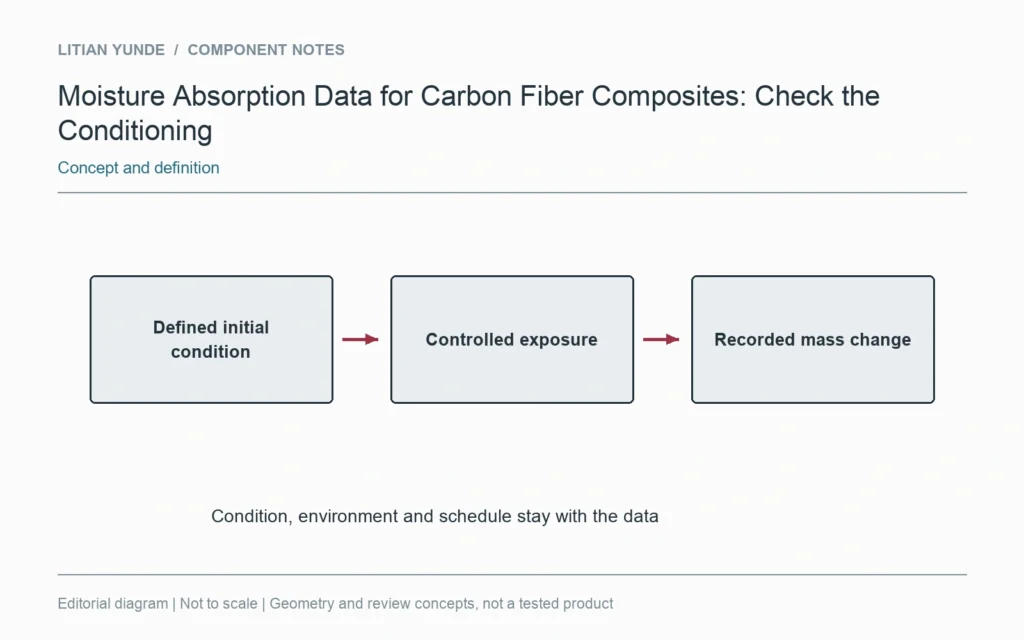
A moisture absorption value belongs to a specimen and a conditioning history. It is not a stand-alone promise that a finished component will behave the same way in every environment. Ask how the initial state, exposure and final measurement were defined.
The initial state affects the comparison
The mass used as a baseline needs an identified preparation and conditioning state. Record the specimen construction and dimensions along with the method. A thin coupon and a thick finished assembly do not necessarily reach the same condition on the same schedule. Coatings, exposed edges and attached materials also change what is included in a reported component mass.
Keep the environment and schedule visible
ASTM D5229/D5229M addresses moisture absorption and equilibrium conditioning of polymer matrix composite materials. When that method is required, specify the applicable edition and procedure in the project documents. Do not substitute a casual immersion observation for a controlled test, or omit the exposure conditions when sharing the result.
Separate a material test from a service decision
Useful reporting includes the exposure environment, measurement intervals, specimen identification and the stated basis for ending conditioning. A service assessment may need additional evidence for the actual part and environment. For an enquiry, describe the intended exposure and ask what evaluation is appropriate. Avoid converting a single material number into an unsupported claim of universal water resistance or long-term dimensional stability.
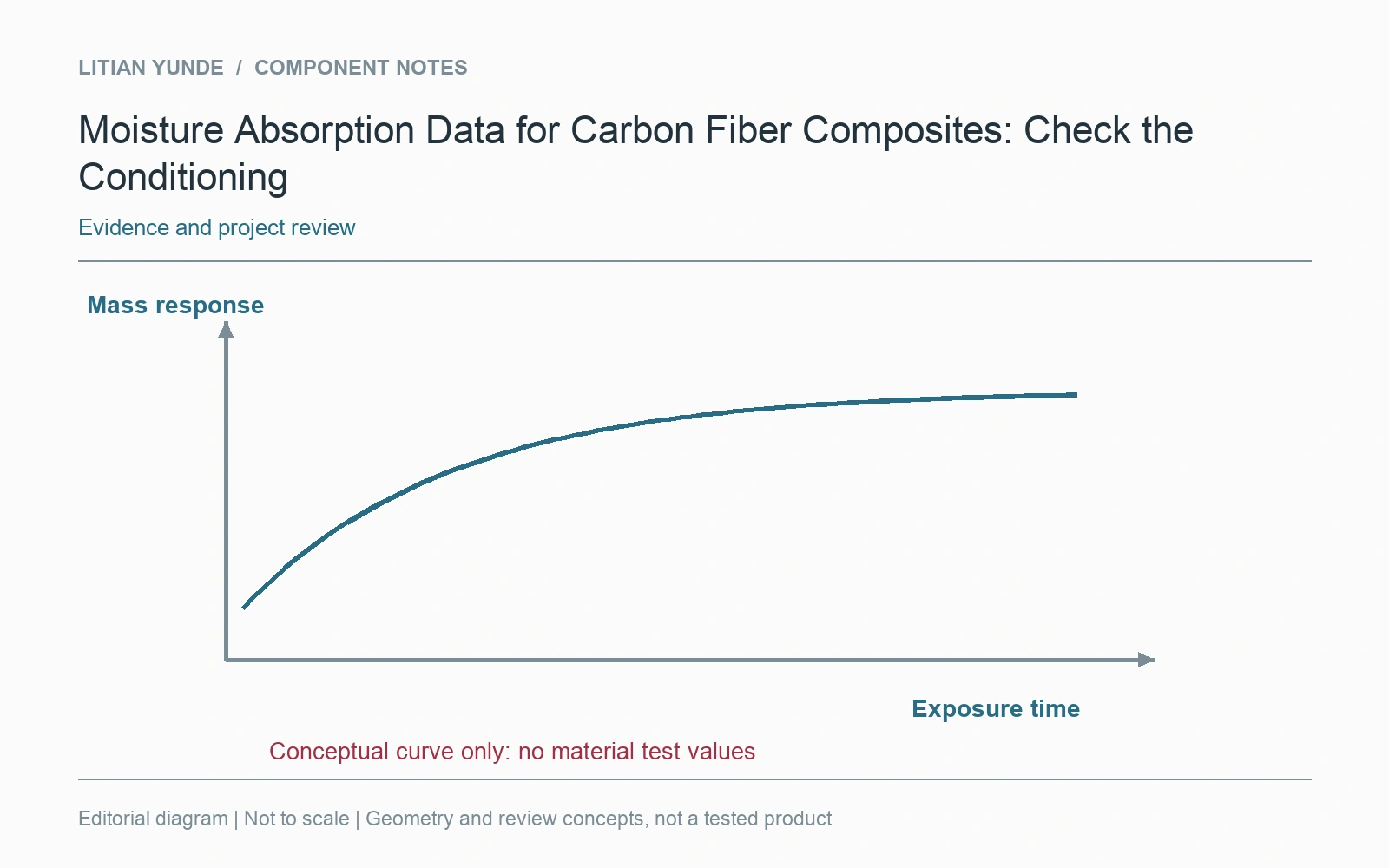
Further reading: ASTM D5229/D5229M: moisture absorption and conditioning.