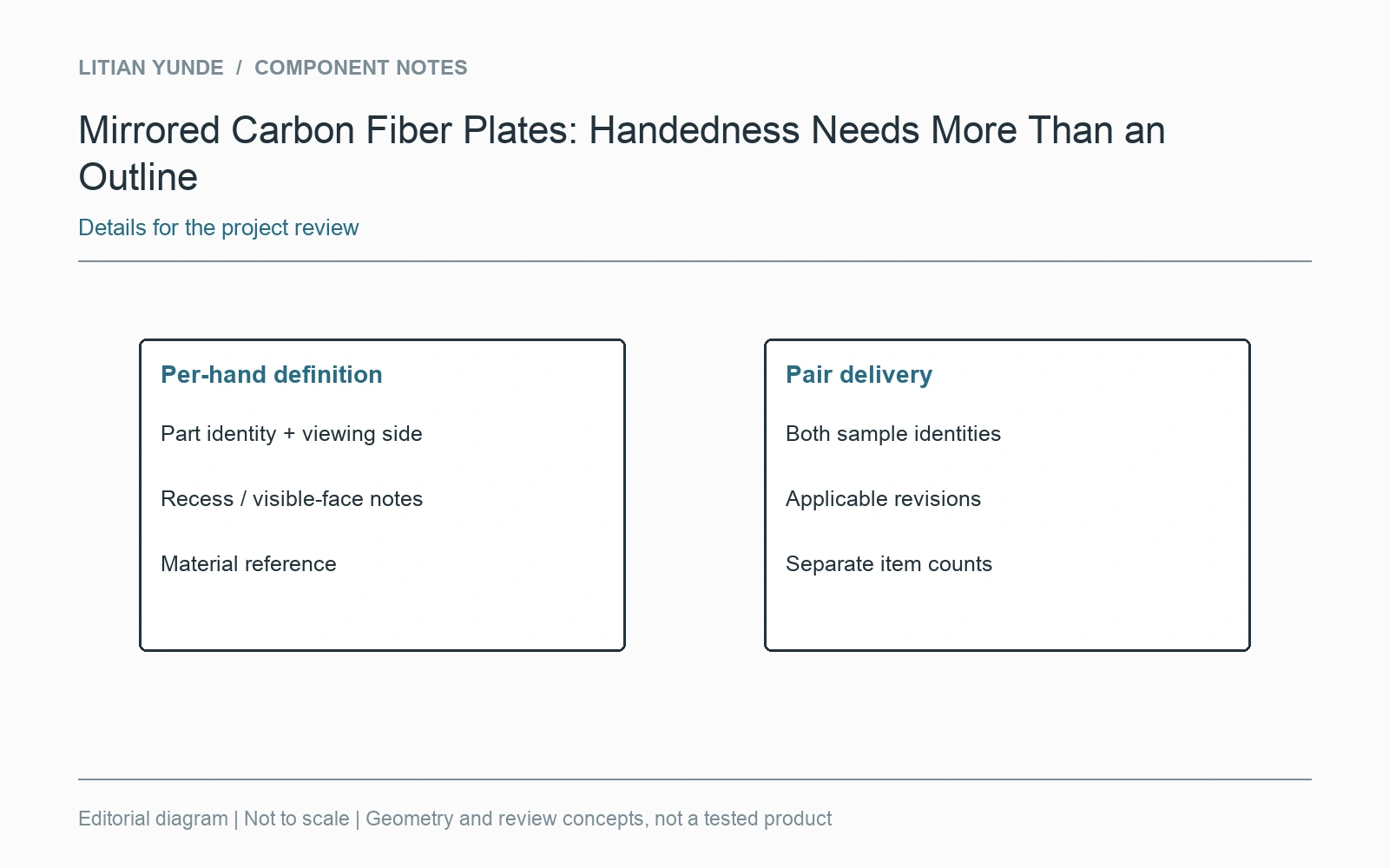
Two carbon fiber plates can share a mirrored outline while differing in visible face, counterside features or material direction. Identify the left-hand and right-hand definitions explicitly. A mirrored CAD operation should not silently determine every manufacturing requirement.
Define each supplied item
Use distinct part identities or another agreed controlled convention for the pair. Show the installation reference and identify the face from which the drawing is viewed. “Same but opposite” can hide a feature that should remain on the same functional side of both components.
Review face and direction notes
Locate machined recesses, cosmetic zones, markings and any specified laminate reference. A nesting plan must preserve the intended definition for each hand. The relevant material direction should not be inferred from a screen preview or from the visible weave alone.
Check the pair in its assembly context
Agree whether sample review includes both hands and the required mating interfaces. At delivery, identify and count each item separately so two copies of one hand do not become an apparently complete pair. If a change is approved for one part, record whether it also applies to its partner rather than assuming every revision is symmetric.