
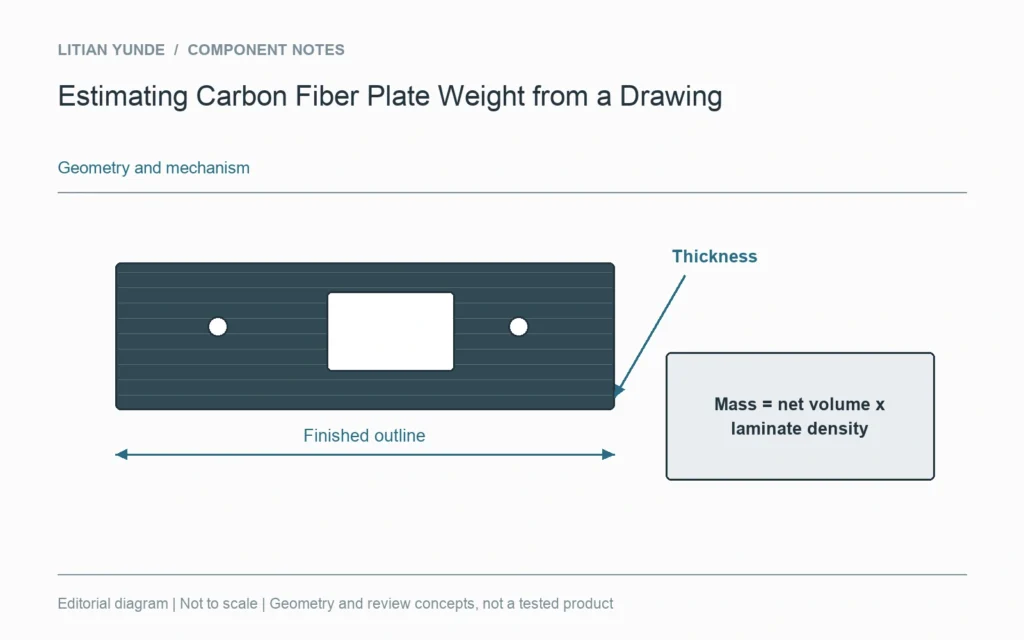
A plate weight estimate starts with the finished material volume and a density for the proposed laminate. The weight of a sheet bought for machining answers a different question: how much material is purchased, rather than how much remains in the component.
A small calculation worth keeping on the drawing
For a constant-thickness plate, multiply the net plan area by thickness to obtain volume. Subtract through-holes and open cutouts. Use consistent units throughout: square millimetres multiplied by millimetres gives cubic millimetres, which must be converted before using a density expressed in kilograms per cubic metre. A CAD volume is useful when the plate has pockets or stepped regions, provided the model describes the finished part.
Which density belongs in the estimate?
Use a density associated with the proposed cured laminate, not the density of carbon fibre alone. The resin and any other constituent remain in the part. If the construction has not been selected, keep density as an explicit assumption and report a range rather than an apparently precise mass. Sandwich panels need separate volumes for the skins, core and local closeouts; treating them as one solid carbon block defeats the purpose of the estimate.
From bare plate to delivered component
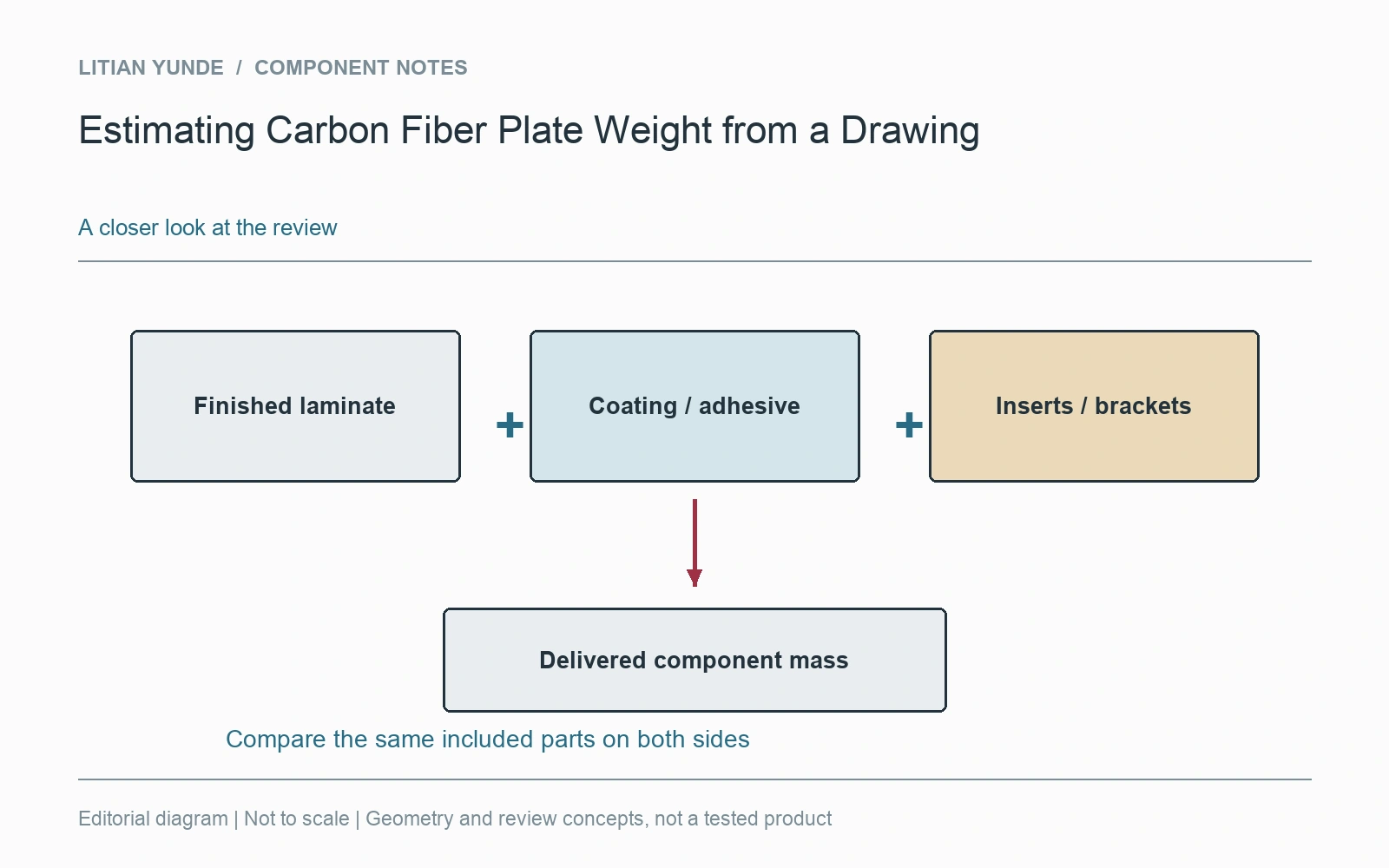
A quoted bare-plate mass may exclude coating, adhesive, inserts, edge closeouts and brackets. List those items separately. A small part with several metal fittings can have a different mass balance from a large plain panel, so a percentage allowance copied from another project is rarely helpful. Keep an estimated value separate from a sample weight measured on a scale.
Making the comparison useful
Compare alternatives at the same finished scope. If one estimate includes bolts and another does not, the lighter result is not yet a meaningful comparison. For a sample review, record the part revision, delivered configuration and scale resolution next to the measured mass. An agreed weighing condition also makes repeat orders easier to compare without confusing packaging or loose accessories with the product itself.