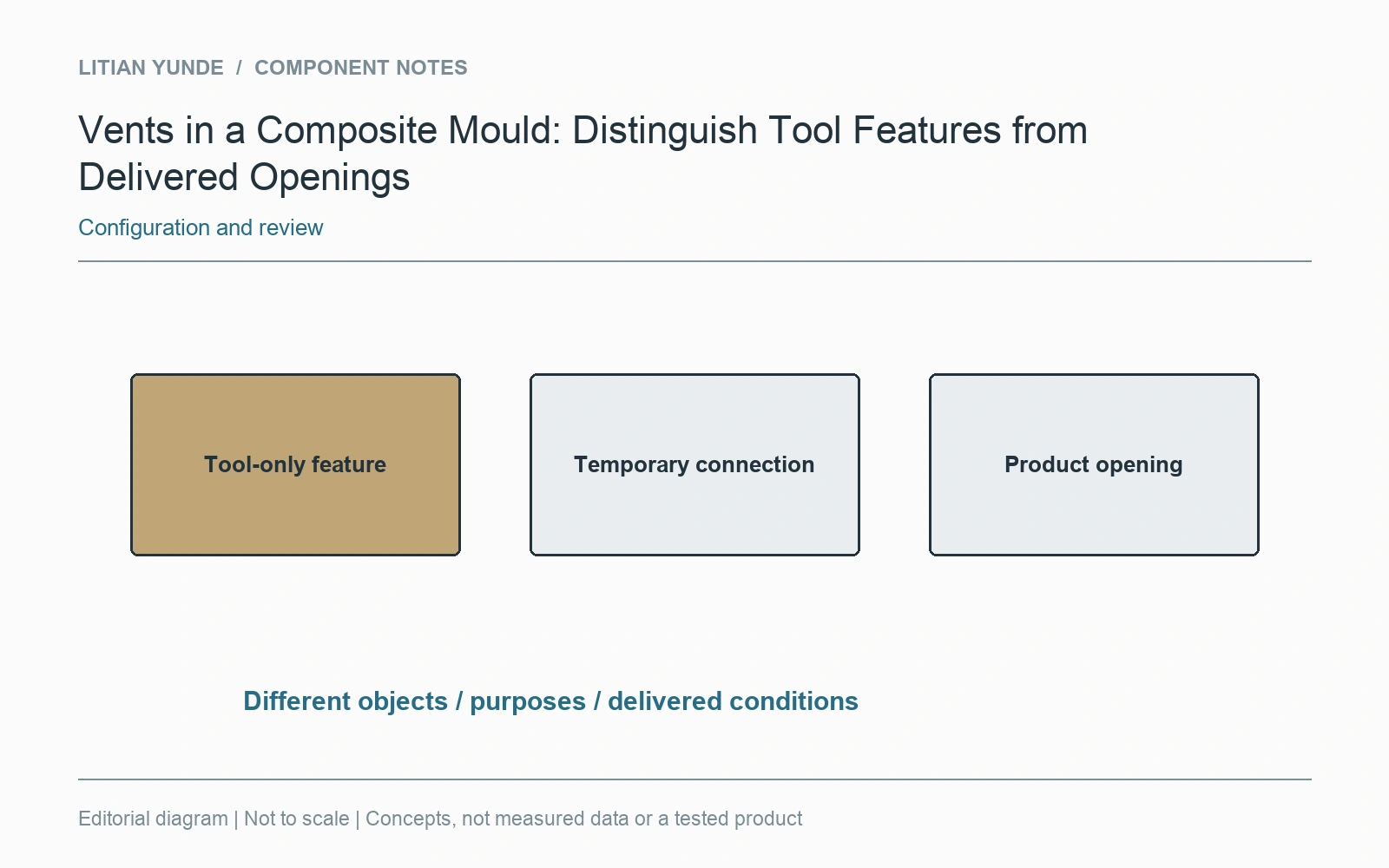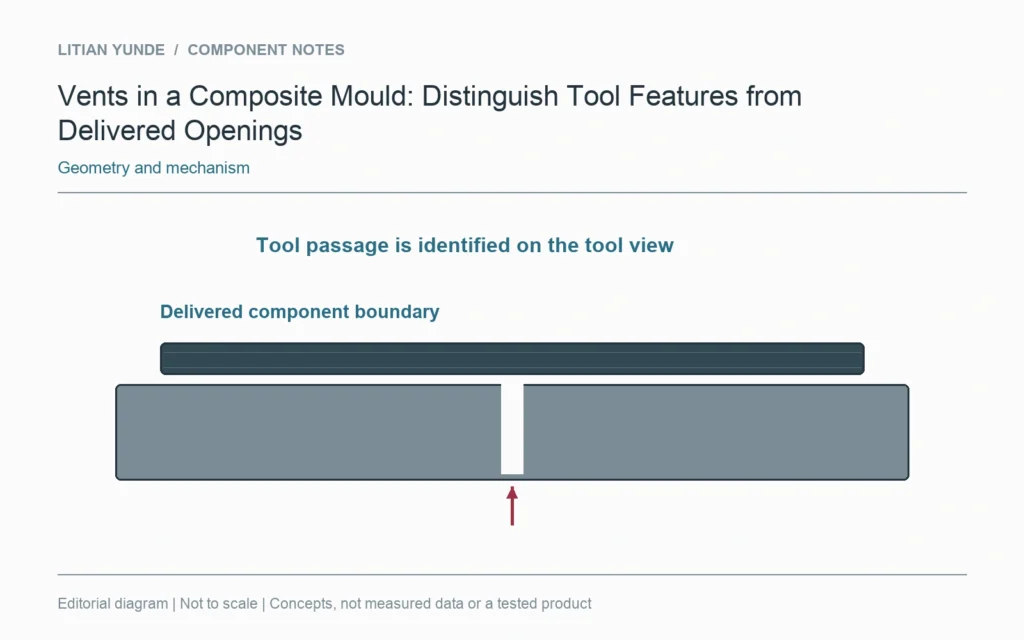
A vent in the manufacturing tool and an opening required in the delivered carbon fiber part have different purposes. Label them separately in the process review. A hole drawn on a tooling sketch should not silently become an opening on the product drawing.
Identify which object contains the feature
Use separate views or clear labels for the mould and the finished component. Show whether a proposed passage belongs only to the tool, to a process connection, or to the supplied part. Keep any connection to a disposable process material identifiable too.
Define the intended delivered condition
Ask what remains at the corresponding part location after demoulding and finishing. If the route produces local material that must be removed, include that operation and its boundary in the proposal. Do not assume the customer will remove a process-related feature that the quote never mentions.
Agree the review before tooling release
Resolve differences between the tooling proposal and the product definition while both can still be changed deliberately. A tool vent is not a substitute for a specified drainage or ventilation opening in the installed product. Conversely, closing a delivered opening cannot be treated as a harmless tooling adjustment when it changes the required component.