
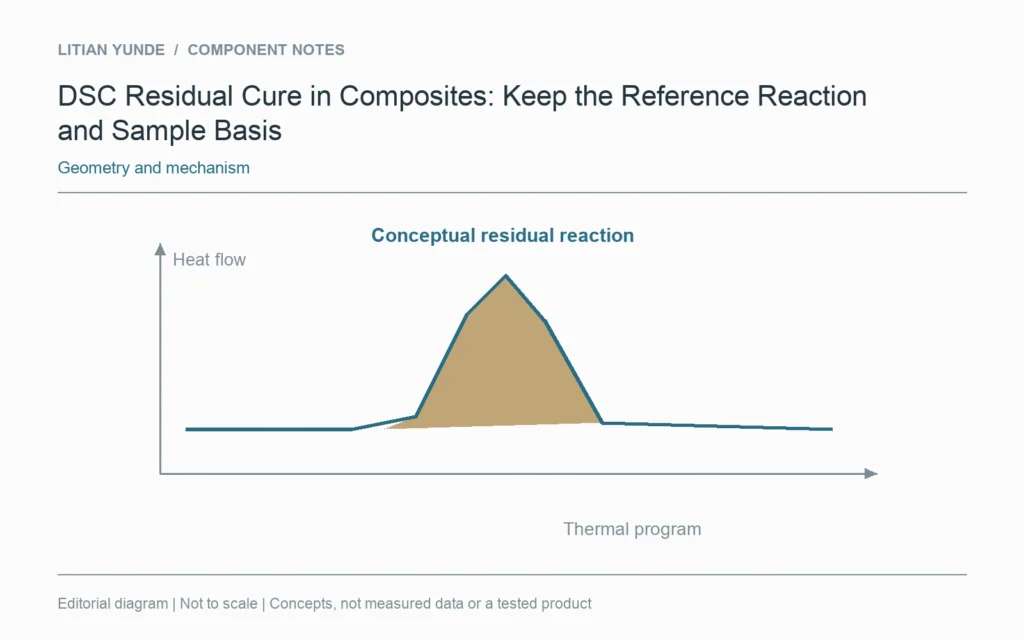
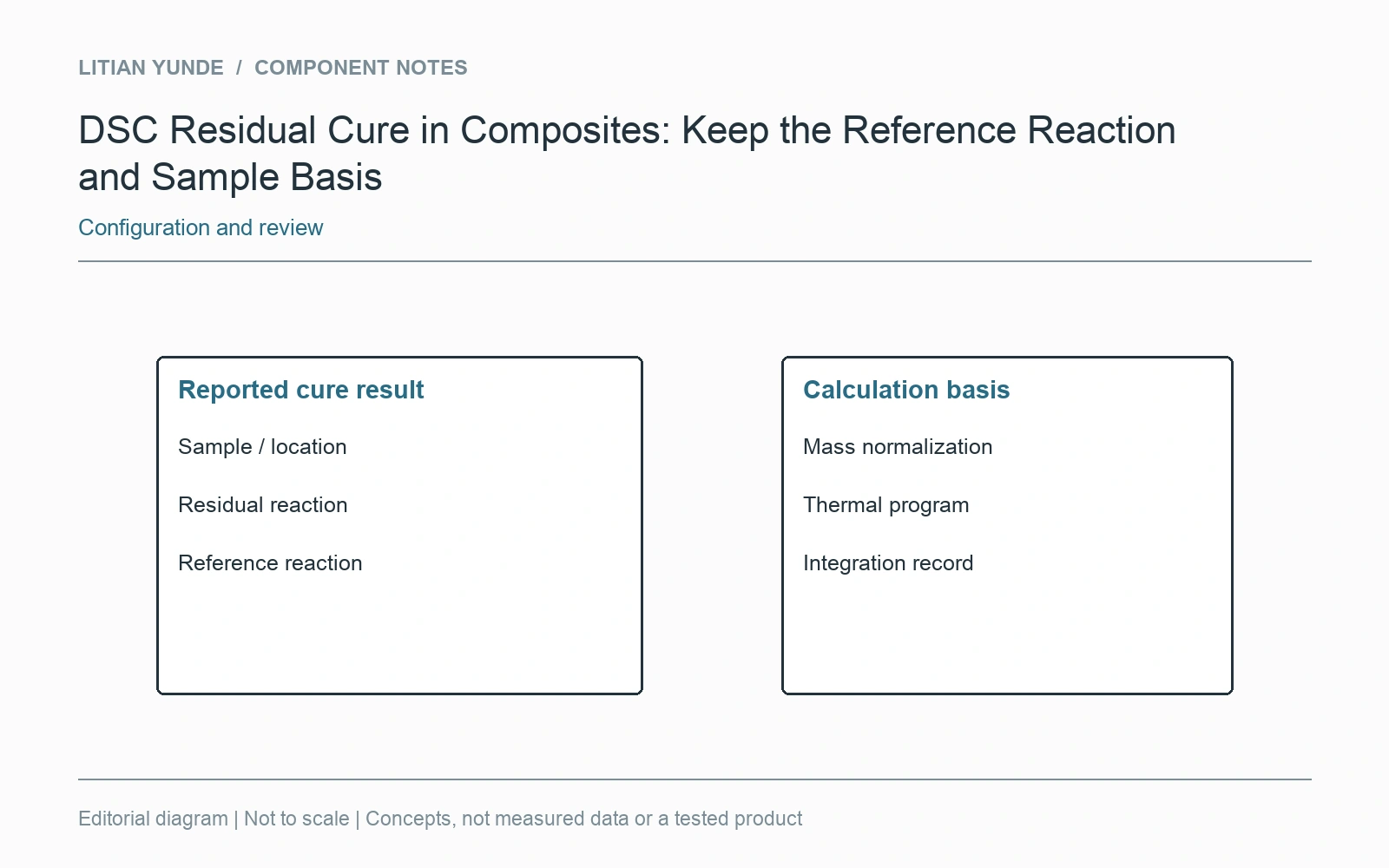
A residual-cure result from differential scanning calorimetry needs the sample identity, thermal program and calculation basis. A small remaining exotherm does not explain itself. Keep the reference used to calculate a degree of cure with the reported value.
Identify what entered the instrument
State whether the sample is resin, prepreg or a piece of the cured laminate, and retain its relevant history. Reinforcement and resin are different contributions to the sample mass. The laboratory should identify the normalization basis used when results from different material forms are compared.
Read the reference behind a percentage
TA Instruments describes residual heat of reaction as one route to assessing cure. A degree-of-cure calculation needs the appropriate reaction reference, not only the remaining peak area. Preserve the processing and integration information needed to interpret the reported result.
Use the result within its scope
Retain which location and batch the specimen represents. A local thermal-analysis result is different evidence from a visual surface check, a glass-transition value or a complete structural qualification. If the sample preparation or thermal program changes, keep the output tied to that changed analysis. This makes a percentage useful without presenting it as a universal acceptance rule for every carbon fiber part.
Further reading: TA Instruments: DSC residual cure and reaction reference.