
Machining & Assembly · Component review guide · Litian Yunde
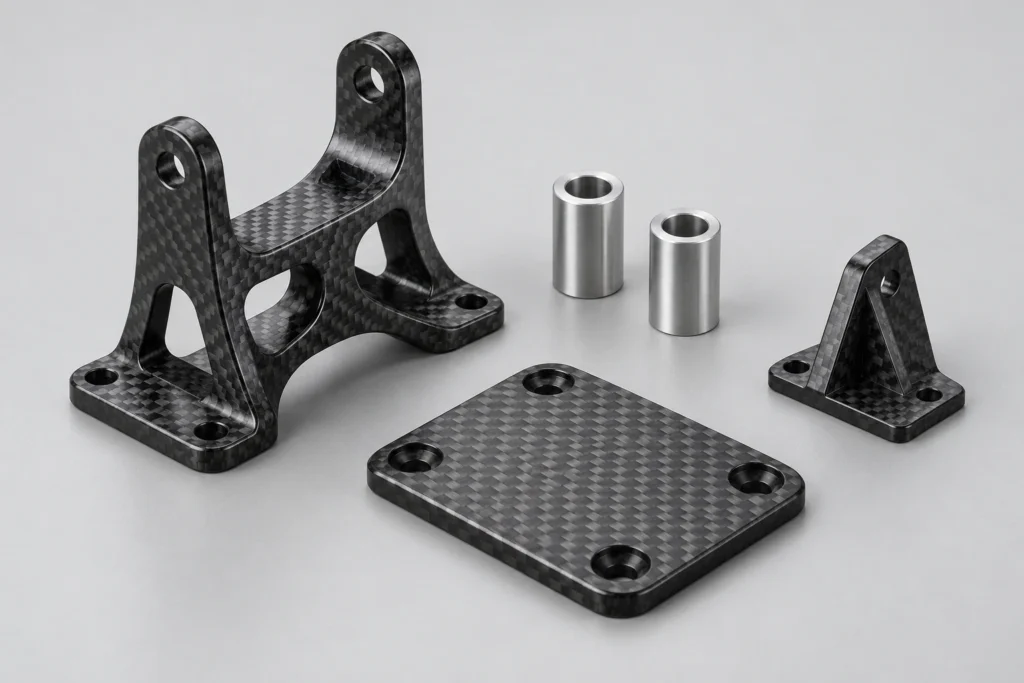
AI-generated explanatory concept; not a Litian Yunde product photograph or a validated design.
An assembly can fit in its completed state yet be impossible to build in the proposed order. Review the sequence for the carbon component, hardware, cables and neighbouring parts before freezing the design. Identify captive items and access that disappears as the assembly progresses.
Break the build into identifiable states
List the major installation steps and show what is present at each one. Include inserts, nuts, spacers or connectors that become inaccessible after another component is fitted. A single exploded view may suggest an order without establishing that it works. Name the controlled component versions and the interfaces checked at each state. Do not rely on a person discovering the sequence while building the production unit.
Check the transition between states
Review the approach path, tool envelope and movement needed to reach the next state. A part that can sit in its final location might not pass through the available opening. Consider connectors already attached to cables and hardware that must be held from the opposite side. If the sequence requires temporary movement or restraint, define an approved method instead of assuming the carbon component can be flexed arbitrarily.
Reconcile the sequence with service requirements
Determine whether the sequence can be reversed for the intended service action, and what must be removed first. A permanent bonded step can make a later component non-replaceable; this should be a documented design decision. Record the confirmed sequence and any unresolved interference in the handover package. A successful build trial establishes the configuration and method tried, not every future variant.
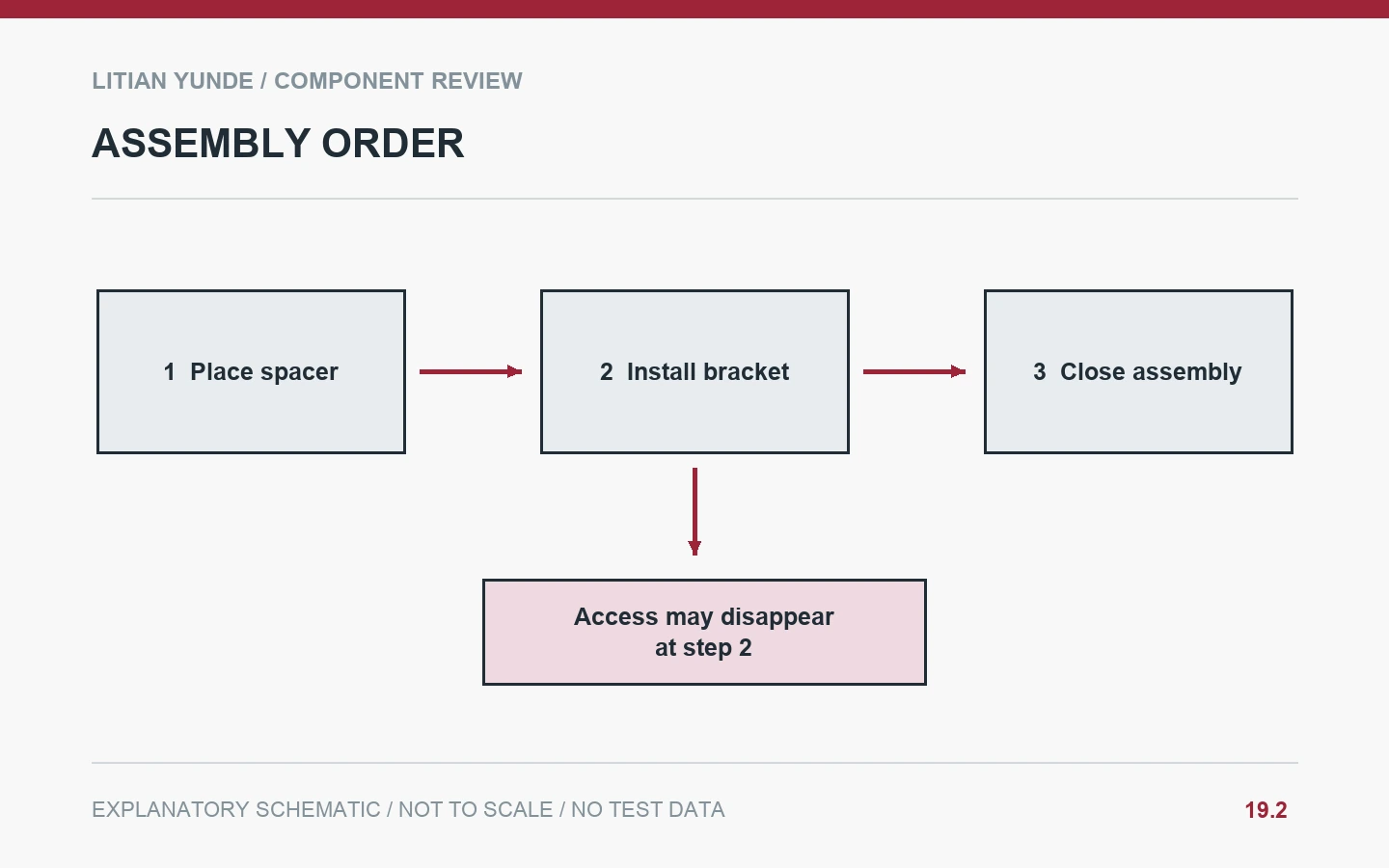
Example: a spacer behind a bonded bracket
The final CAD assembly shows a spacer behind a bracket, but the spacer cannot be inserted after the bracket is bonded. The project reviews the order and the controlled bonding step before release. The work instruction identifies the spacer at the correct stage and the inspection confirms it is present before access is lost.
Illustrative scenario, not a customer case or reported production result.
Details to agree before ordering
| Artículo de reseña | Record to agree |
|---|---|
| States | Installed items at each build step. |
| Access | Approach, tools and captive hardware. |
| Permanent steps | Bonding or closure that prevents later access. |
| Handover | Confirmed sequence and reverse-service route. |
Questions buyers ask
Does a completed CAD model prove assembly feasibility?
No. The transitions and tool access between build states still need review.
Can the installer drill another hole to reach trapped hardware?
That is a design change requiring the agreed approval route, not an assumed assembly option.
Technical background and related reading
Background resource: Hexcel: Composite Engineering Resources. Background reading only; the project checklist is editorial guidance, and this reference does not establish supplier certification or part approval.
- Paneles de acceso de fibra de carbono: comprueba la vía de extracción, no solo el ajuste cuando están cerrados
- Bridas con carcasa de fibra de carbono: comprueba el acceso a la parte trasera del elemento de fijación
- Browse the carbon fiber knowledge centre
Review your component with Litian Yunde
Share the drawing revision, intended application and the interface or inspection question you need to resolve. The quoted construction and acceptance requirements are confirmed for the specific project.