
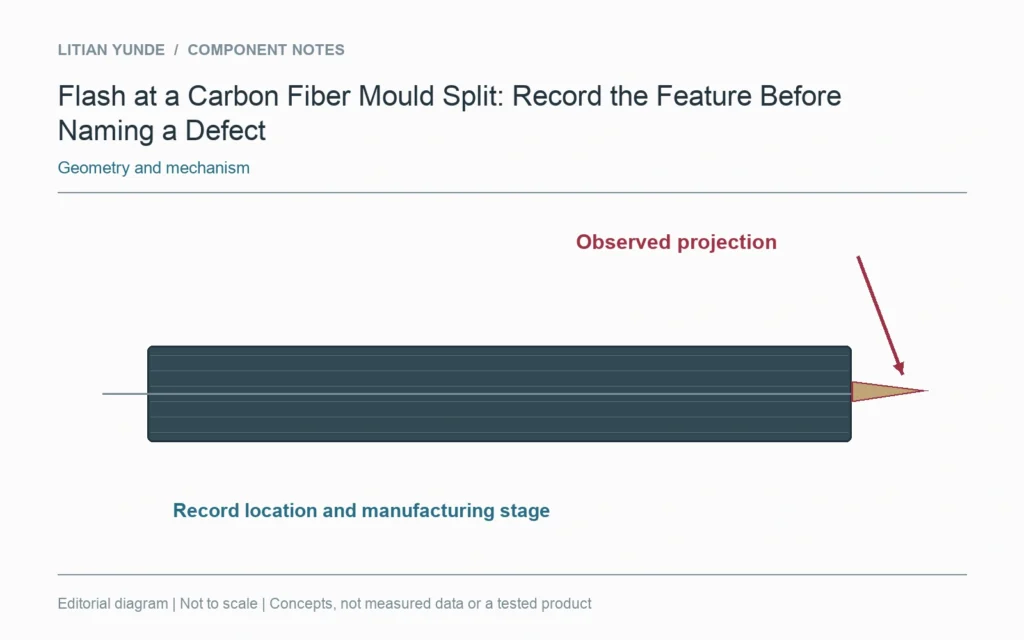
A thin projection at a mould split needs a location and a clear description. Do not label every edge projection delamination from a photograph. Identify the intended finished boundary, the manufacturing stage and the observation before deciding what review or disposition is required.
Locate the observed material
Photograph the feature in context and close up, with the part reference and the relevant split line visible. State whether the part is as moulded, partly trimmed or presented as finished. An intermediate edge condition and a delivered edge requirement are different things.
Separate observation from explanation
A projection may prompt questions about material beyond the intended boundary; a separation between laminate layers prompts a different question. Neither explanation should be assumed from an unclear image. Ask the responsible supplier to review the affected region against the part definition and its production records.
Keep the disposition traceable
If removal or further inspection is proposed, retain the affected part identity, agreed action and subsequent result. Removing the visible projection does not by itself settle a question about the laminate behind it. The final record should show what was observed and what evidence supported release, without turning a general edge sketch into an acceptance criterion.
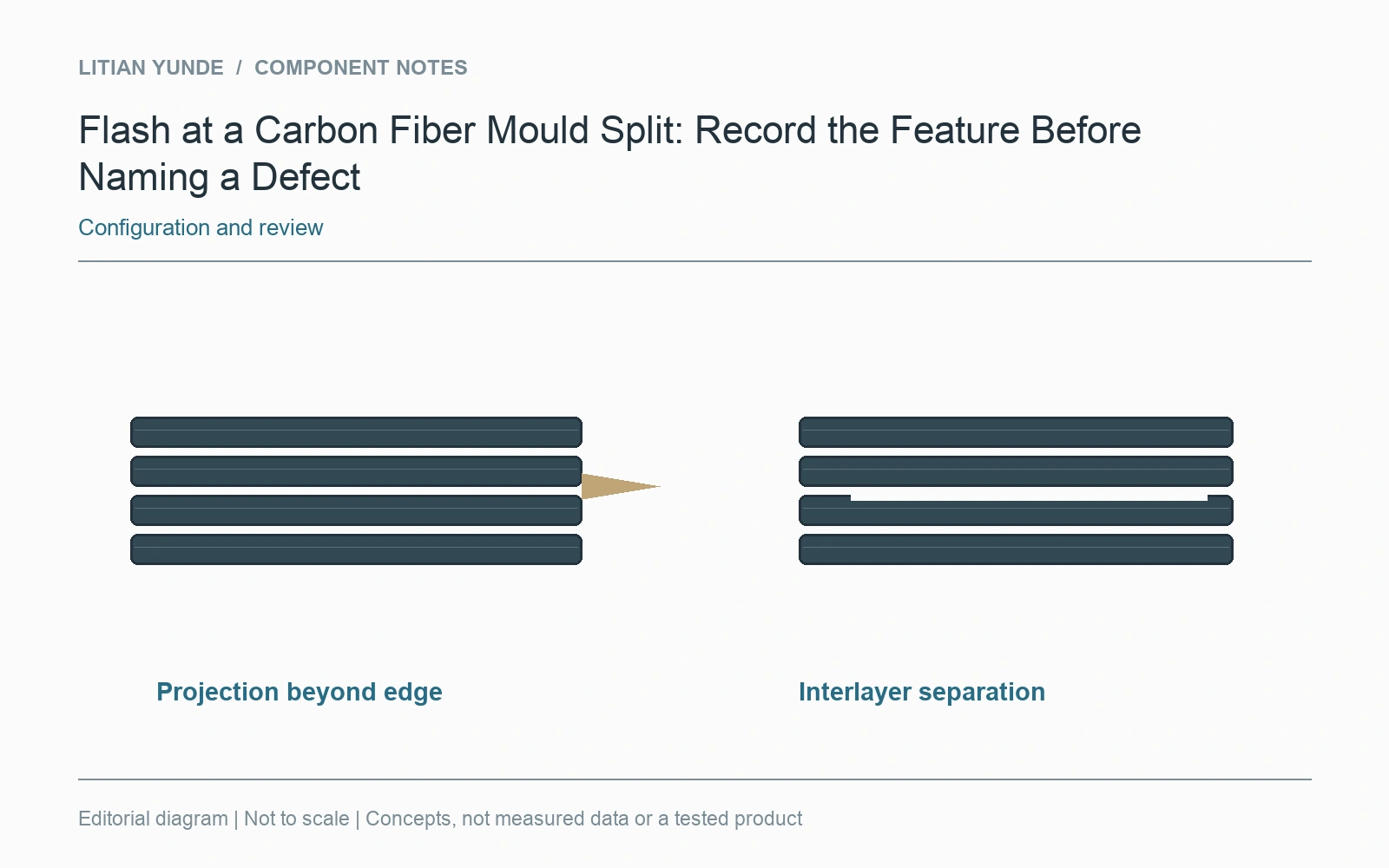
For the project review: part and observed location; as-moulded or finished stage; applicable boundary and edge requirement; review, disposition and resulting evidence.