
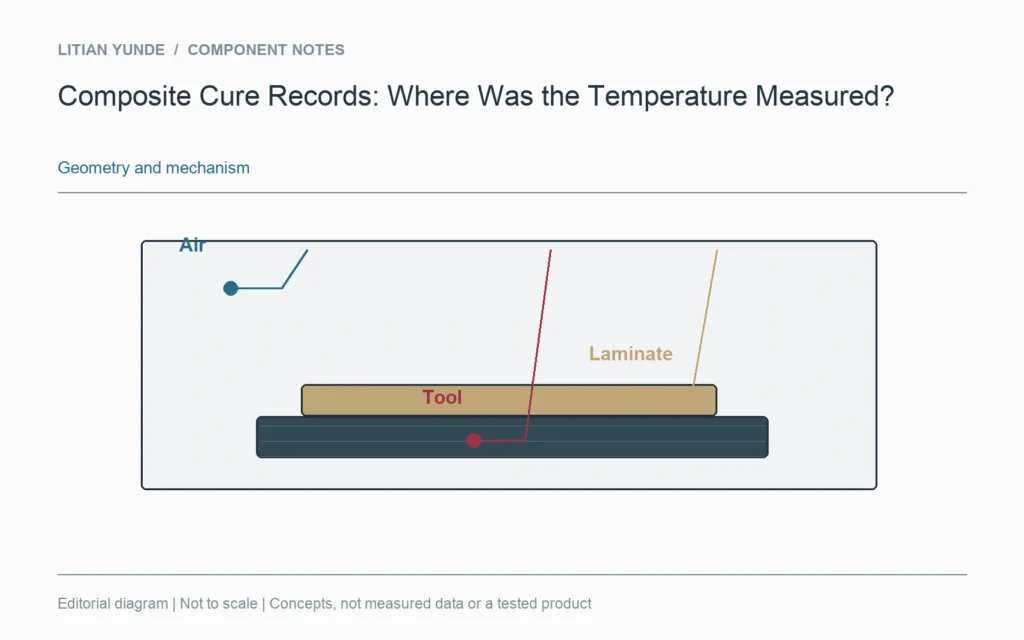
A temperature trace needs a sensor location. An oven-air reading, a tool reading and a reading associated with the laminate describe different locations. Keep the channel map with the cure record so the reviewer can understand what the plotted temperatures represent.
Identify the channel before reading the curve
A chart labelled only with channel numbers is hard to interpret after the job has left the workshop. Connect each channel to a location sketch or recorded setup. State whether a reading represents air, tooling or a defined component location. Preserve that description when the trace is exported.
Use the material-specific instruction
Toray’s RS-1 processing sheet discusses part and oven thermocouples and the use of a lagging reading for that particular system. This illustrates why location matters; its temperatures and timing are not a recipe for another resin, tool or component. The applicable processing instruction must belong to the actual material and configuration.
Retain the evidence behind the summary
A statement such as “cycle completed” should point back to the identified run, material and recorded channels when a cure record is part of the agreed delivery. If a sensor was relocated or a channel was unavailable, retain that event with the record rather than quietly relabelling the curve. A clear trace supports a process review; it does not replace the agreed finished-part inspection.
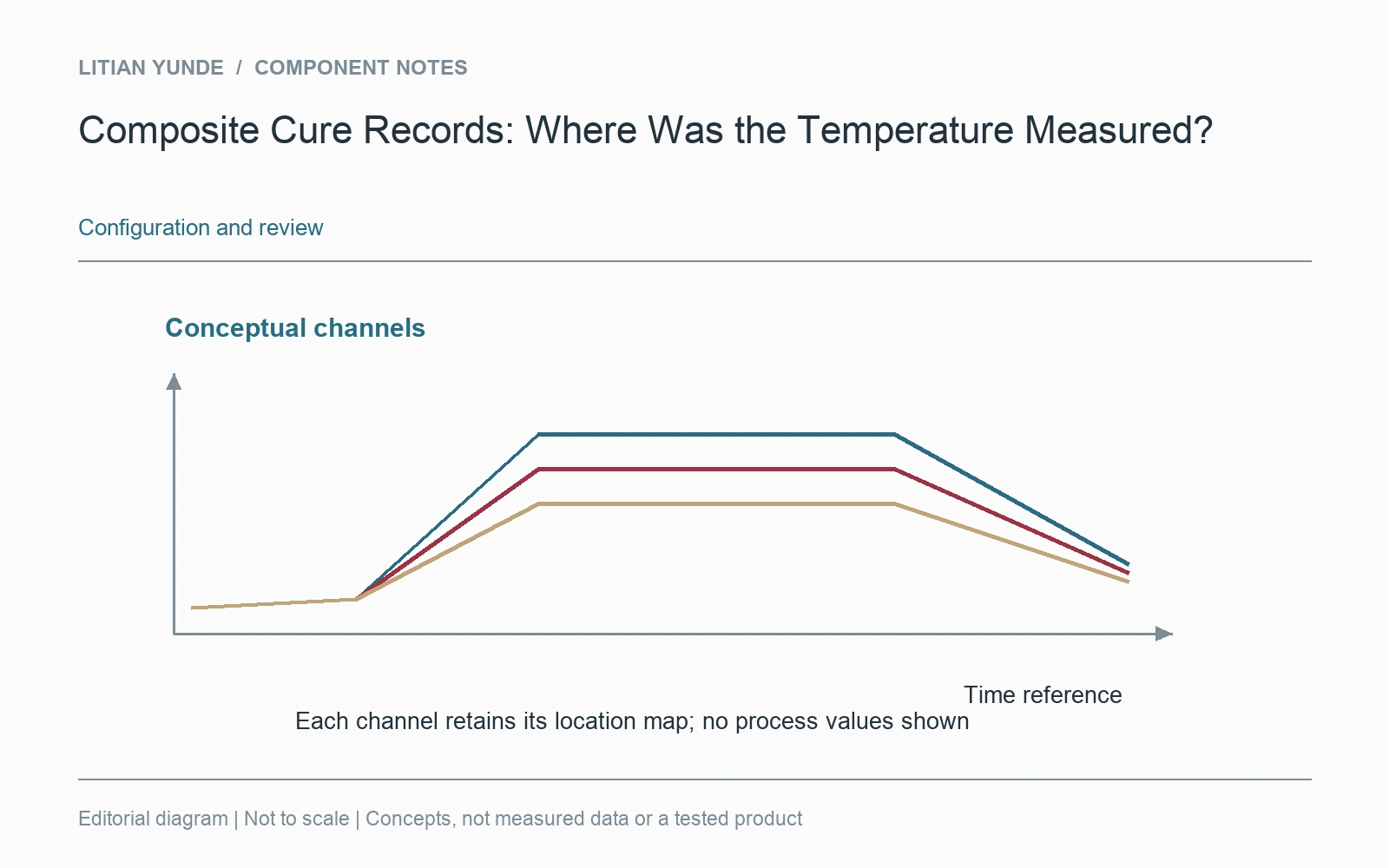
For the project review: material and applicable processing instruction; run identity and channel-location map; recorded trace and relevant sensor events; agreed process and finished-part acceptance records.
Further reading: Toray: RS-1 material-specific processing information.