
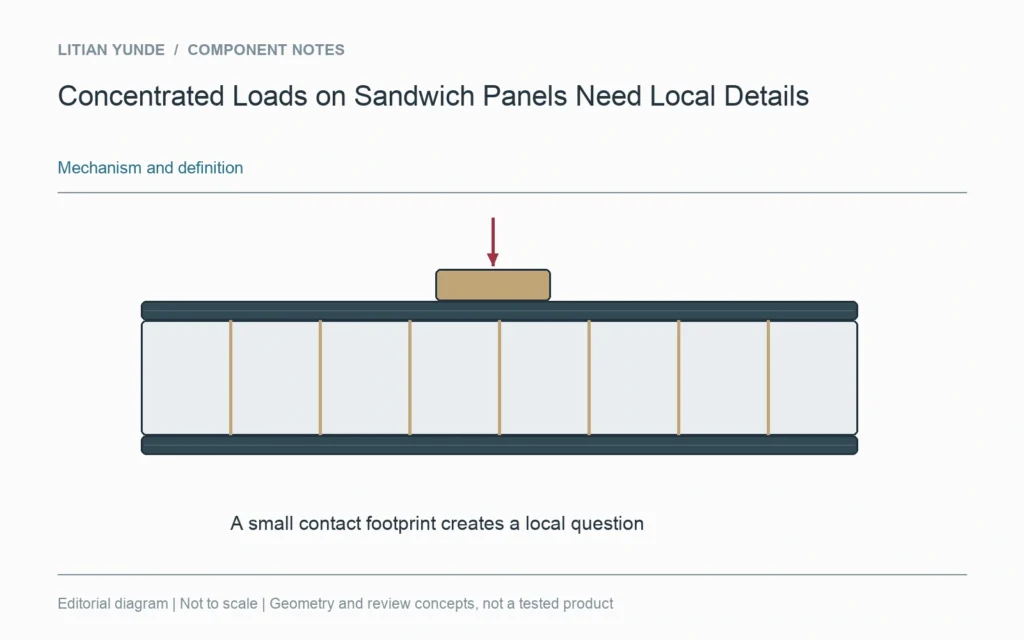
A sandwich panel that spans an area still needs a local design for a foot, bracket or fastening point. Describe where the force enters the panel and how the local construction carries it. A general skin-and-core specification does not settle every attachment.
Show the actual contact area, its position and the direction of the applied force. A broad support pad and a small fitting can load the same panel differently. Include the arrangement on both faces where it affects the load path, rather than showing only a bolt centre.
Identify the local construction
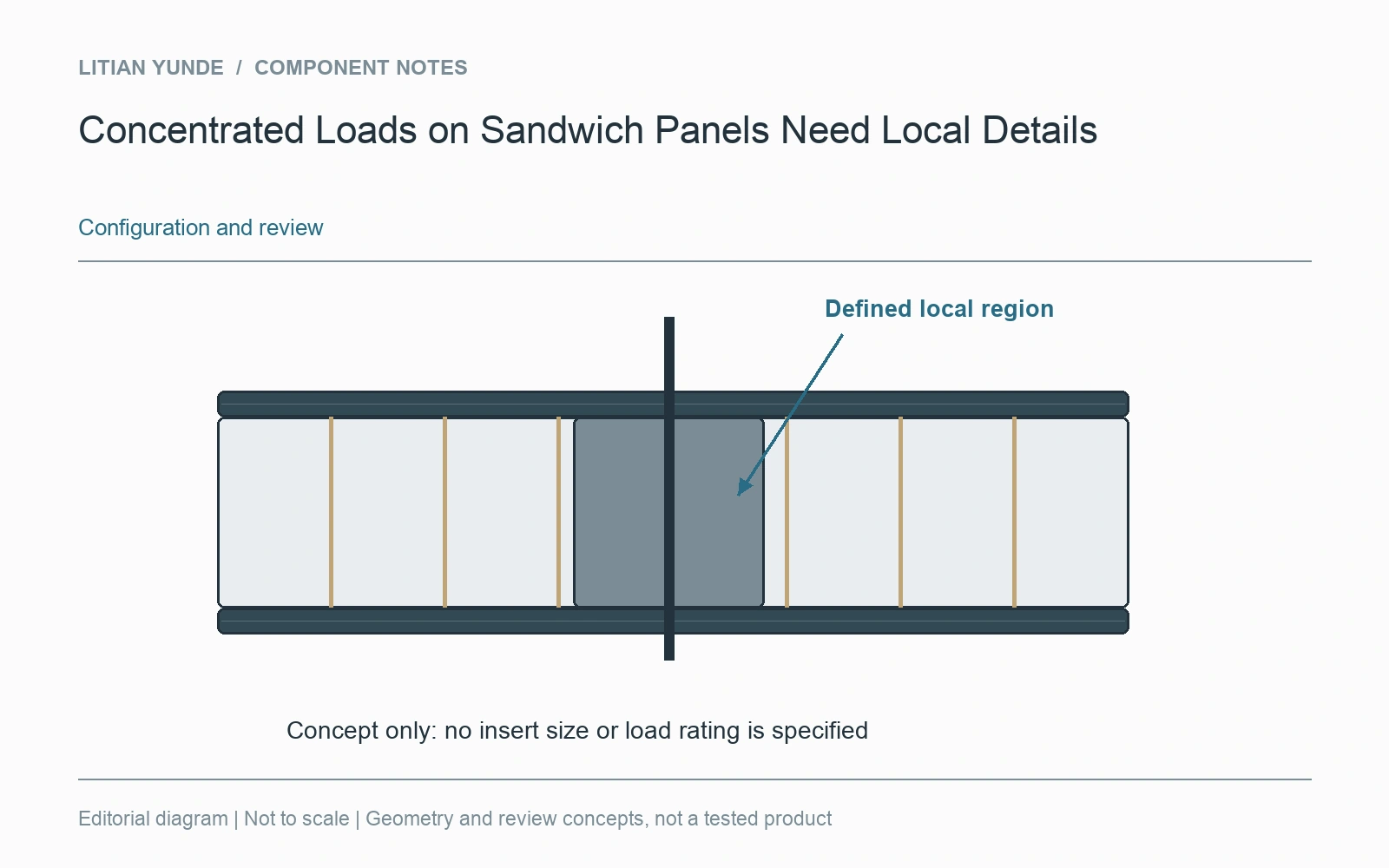
An insert, closeout or reinforced region needs its own controlled definition. These are possible design features to assess, not interchangeable fixes or universal requirements. The supplier needs enough information to distinguish the ordinary sandwich section from the local attachment region.
Plan the evidence around the joint
A panel bending test may not answer whether a particular attachment is suitable. Agree which local dimensions, assembly conditions and evaluations are required. If a prototype is being reviewed, retain the fitting and installation configuration with the result. This keeps an accepted broad-panel behaviour from being used as unsupported evidence for a different concentrated load.
Further reading: Hexcel: honeycomb sandwich design guidance.