

Tensile modulus and flexural modulus come from different loading arrangements. A carbon fiber datasheet should retain those labels, the laminate direction and the test method. Similar units do not make the reported values interchangeable.
A shared unit is not a shared test
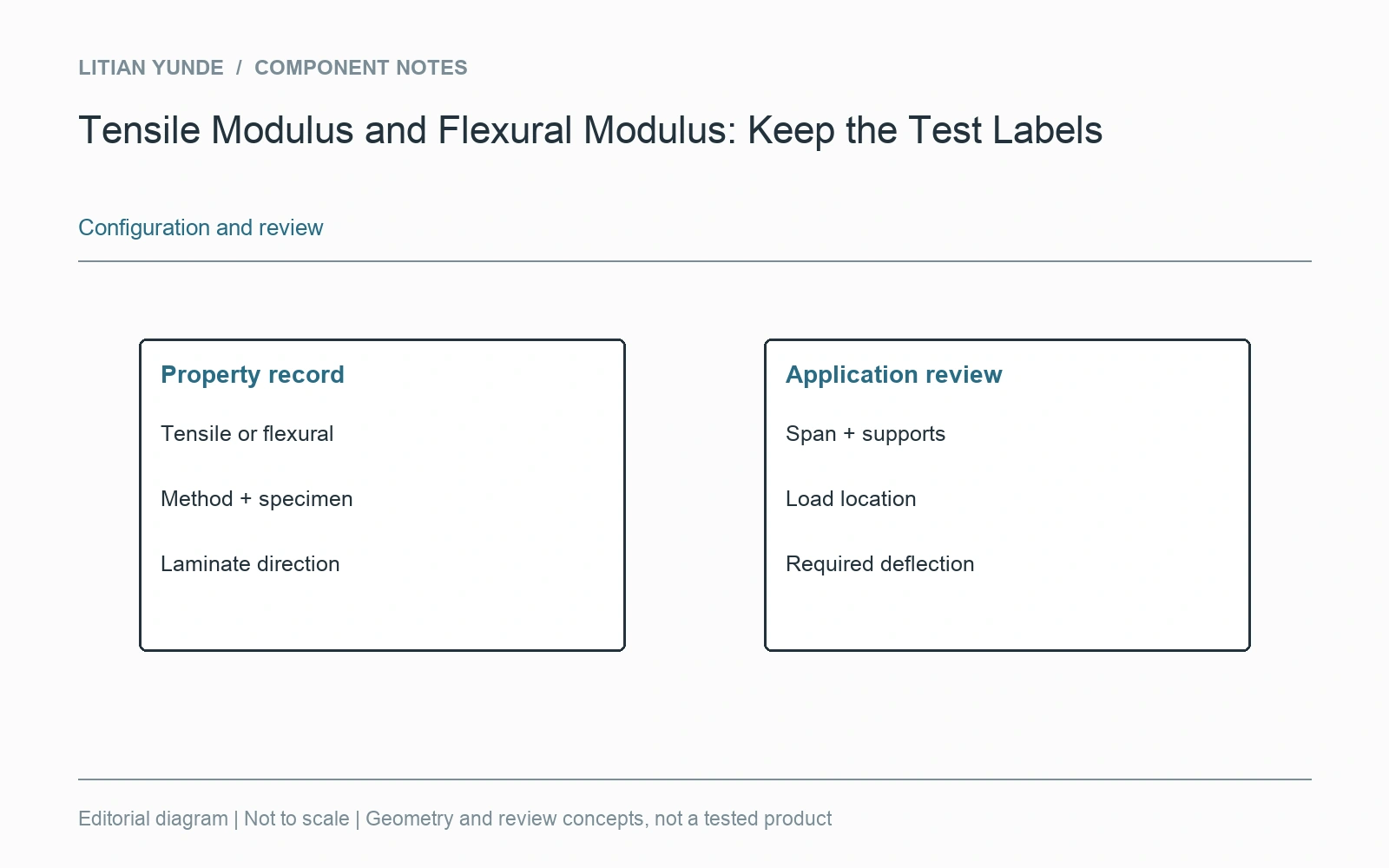
A tensile test loads a specimen along its length. A bending test evaluates its response in a supported loading arrangement. The reported modulus depends on the method and the specimen definition. Do not remove “tensile” or “flexural” when transferring values into a comparison table.
Compare the construction and direction
The fibre form, laminate stack and tested axis matter. A value for a unidirectional laminate along its fibres is not automatically the value for a woven panel or a tube. Keep the original designation beside the number so an engineering reviewer can identify which comparison is justified.
Tie the enquiry to the required behaviour
If the concern is an installed panel deflecting, describe the panel span, supports and applied load instead of specifying a generic “high modulus.” The supplier can review the construction against the actual task. Where testing is required, agree the specimen, direction, procedure and reporting basis before comparing quotations. These details make a modulus useful without presenting it as a complete component performance rating.
Further reading: Instron: composite test fixtures.