
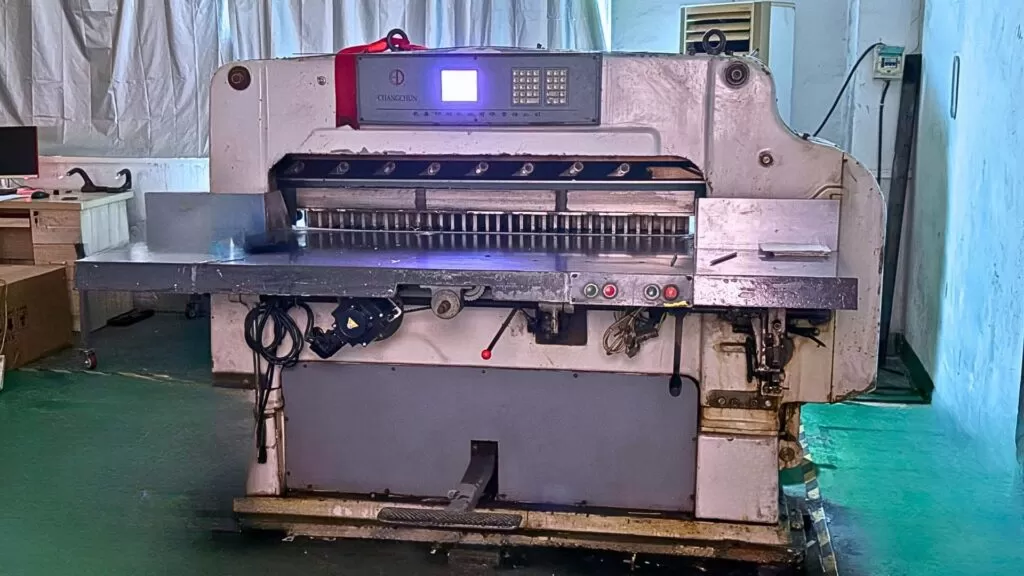
Existing workshop photograph of reinforcement cutting equipment.
Composite scrap should be described by its actual form. Dry reinforcement offcuts, uncured prepreg and cured laminate are different waste streams, and a recovery route that accepts one may not accept the others.
Make an inventory before choosing a route
Record the material form, known resin or coating and contamination such as metal inserts or packaging. Keep material identification linked to the collection container. A photograph helps illustrate the stream but should be accompanied by a written description and quantity estimate.
Confirm acceptance with the receiving organisation
Ask what the recycler accepts, how the material must be prepared and which records accompany collection. Composites UK distinguishes several recovery and disposal routes rather than treating all composite waste as one material. Local availability and acceptance need checking for the actual site; this article does not promise a recycling service.
Example scenario
A scrap container contains cured parts, dry fabric and metal inserts. A recycler’s acceptance of dry fibre does not confirm acceptance of the whole container. Describe the streams separately and obtain the receiving criteria for each proposed collection.
Points to record
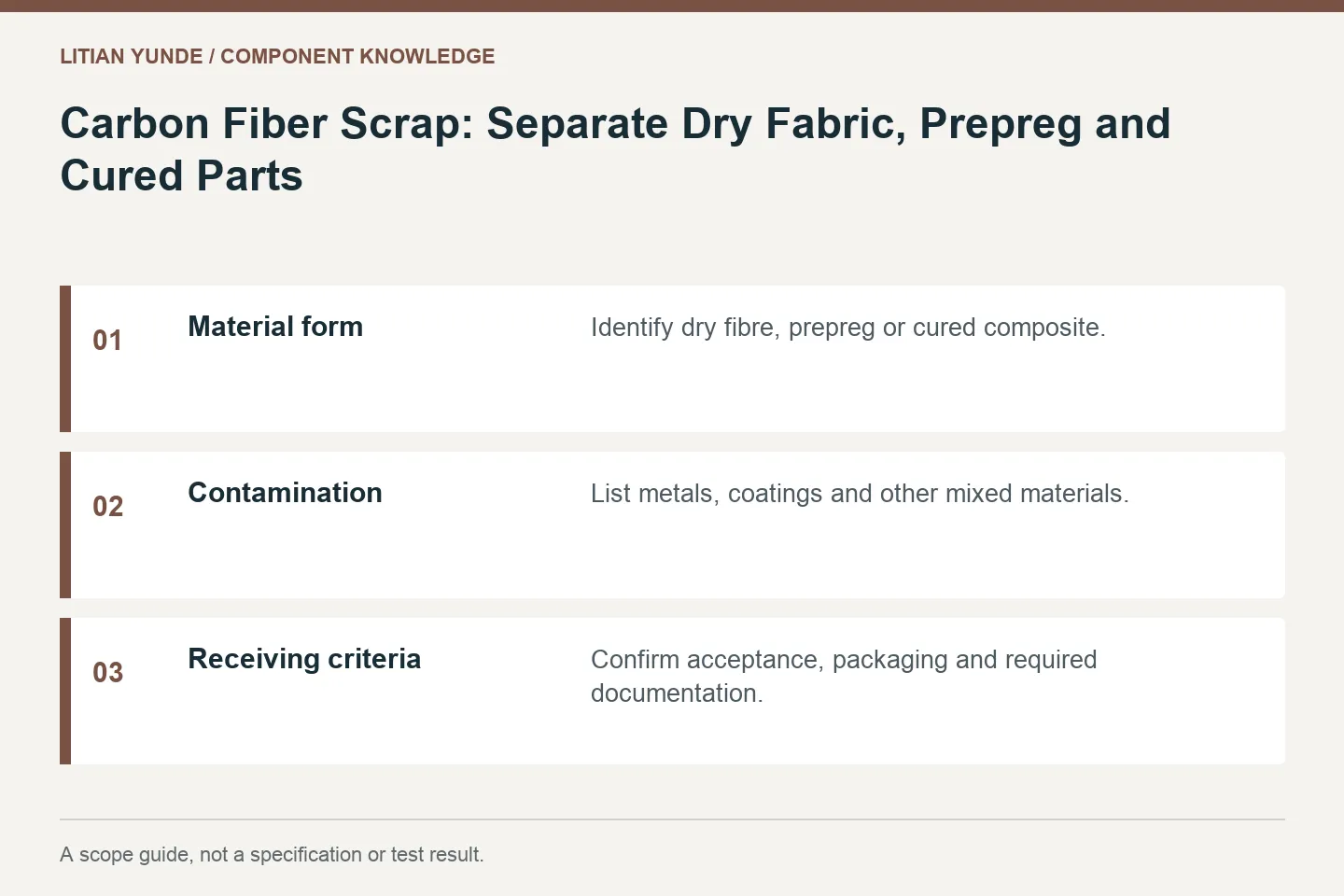
| Material form | Identify dry fibre, prepreg or cured composite. |
|---|---|
| Contamination | List metals, coatings and other mixed materials. |
| Receiving criteria | Confirm acceptance, packaging and required documentation. |
Related reading
- Afirmaciones sobre la sostenibilidad de la fibra de carbono: pregunta cuál es la base de comparación
- Fin de la vida útil de la fibra de carbono: diseño de la información de traspaso
Background reference: Composites UK — What Can I Do with My Waste?.
Discuss the component requirements
Send the part drawing and the requirements relevant to this guide for a scope review.
Ponte en contacto con Litian Yunde