
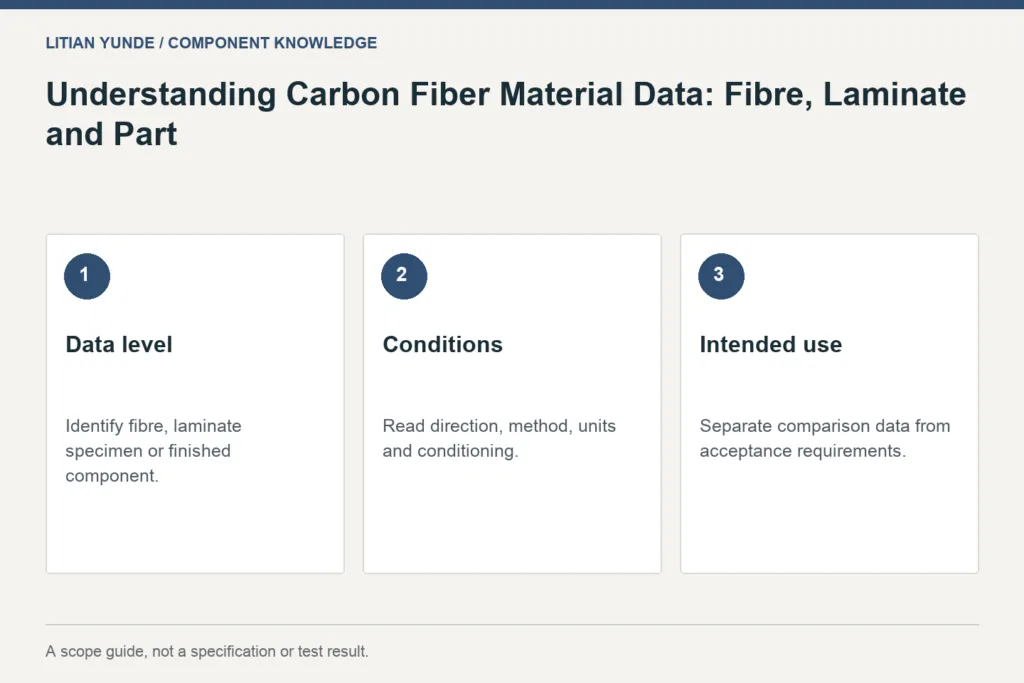
Editorial scope guide. The points are also available as readable text below.
Before comparing carbon fiber values, check whether they describe the fibre, a laminate specimen or a finished component. Numbers at these three levels answer different questions.
Read the specimen and condition
Record the material designation, test method, direction and conditioning stated in the document. A value without this context is difficult to apply. Keep units intact and distinguish typical supplier data from a controlled acceptance requirement in the purchase specification.
Use the data within its stated scope
Ask the responsible designer which data is appropriate to the actual part. Do not transfer a raw-fibre value to an assembled component or label the resulting estimate as a test result. If the supplier provides a different material or process, record that difference before relying on the original data.
Example scenario
Two data sheets both list strength but use different specimen directions or conditions. Preserve those details in the comparison and ask which values apply to the engineering question. Do not average the headline numbers or treat them as directly interchangeable.
Points to record
| Data level | Identify fibre, laminate specimen or finished component. |
|---|---|
| Conditions | Read direction, method, units and conditioning. |
| Intended use | Separate comparison data from acceptance requirements. |
Related reading
- Cómo leer una ficha técnica de un material de fibra de carbono sin exagerar sus propiedades
- Fibra de carbono, tejido y laminado: tres cosas diferentes
Background reference: Gurit — Composite Materials.
Discuss the component requirements
Send the part drawing and the requirements relevant to this guide for a scope review.
Ponte en contacto con Litian Yunde