
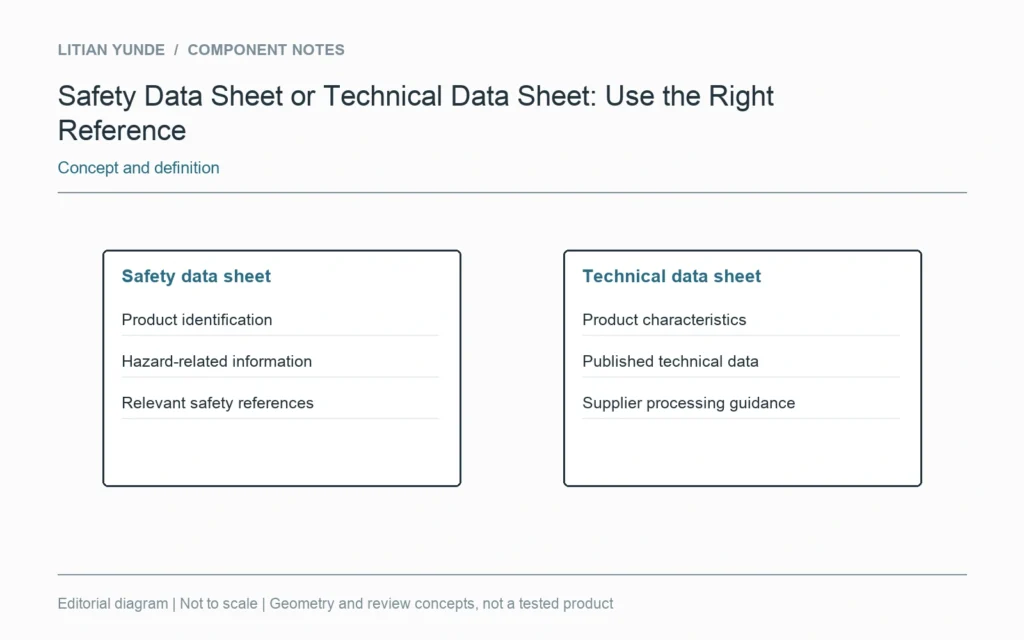
A safety data sheet explains hazard-related information for an identified material. A technical data sheet describes product characteristics and, where supplied, processing or application information. They should not be treated as interchangeable attachments to an enquiry.
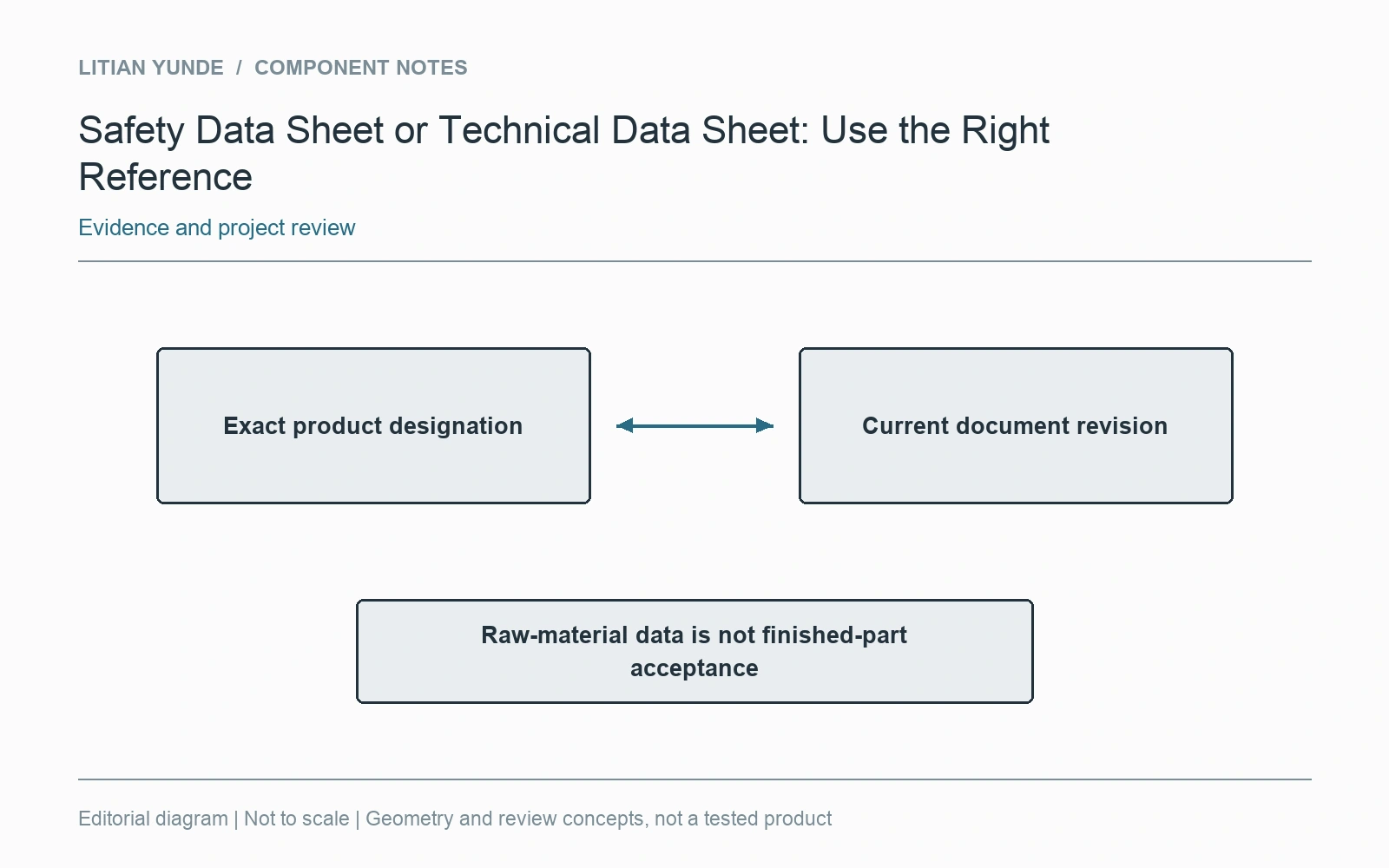
Use the exact product designation and relevant revision. For a multi-component system, make sure the documents correspond to the supplied components. A sheet for another resin family or an earlier formulation may look familiar while failing to describe the material in the project record.
Read each document for its purpose
OSHA’s safety data sheet appendix describes sections covering identification, hazards and other safety information. It is a useful reference for understanding document structure. Product performance figures, processing information and supplier recommendations need the appropriate technical documentation. Neither document automatically proves the performance of a finished part made using that material.
Resolve gaps with the supplier
Request the missing or current document rather than filling a record with a similar product’s file. Keep technical evaluation and workplace safety review with the people responsible for those tasks. The enquiry can identify the intended application and ask for clarification, but should not convert a generic sheet into a process approval. For component delivery, also distinguish raw-material documentation from the inspection and conformity records agreed for the finished item.
Further reading: OSHA: safety data sheet information structure.