
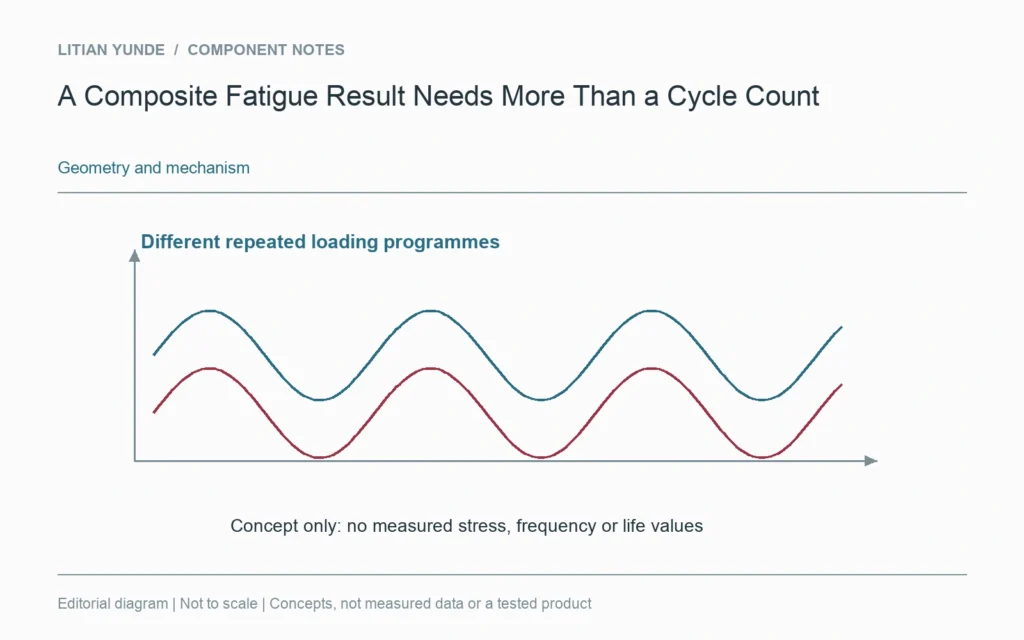
A cycle count is incomplete without the applied loading and test conditions. For a carbon composite fatigue result, retain the loading mode, stress or load range, stress ratio, frequency and specimen condition. Also distinguish a failure from a specimen that reached a planned stopping point.
Ask what was repeated
A million repetitions of one loading programme are not equivalent to a million repetitions of another. Identify the specimen, its orientation and the control mode used. Keep the applied limits and waveform with the result. If a stress value is calculated from load, retain the geometry and calculation basis.
Temperature can belong in the record
Instron discusses specimen self-heating during composite fatigue testing and its relationship to loading frequency. A stated chamber temperature alone may not explain the specimen condition. Ask how temperature was monitored or controlled where it matters to the agreed method. This does not establish a universal test frequency.
Read the outcome correctly
A test stopped without an observed failure is not a measured failure life at that count. Preserve the stop criterion and the laboratory’s outcome label. When comparing two plots, check the full loading and specimen definitions before interpreting a higher cycle count as better part performance. Material coupon results also need a separate engineering basis before being applied to a finished component.
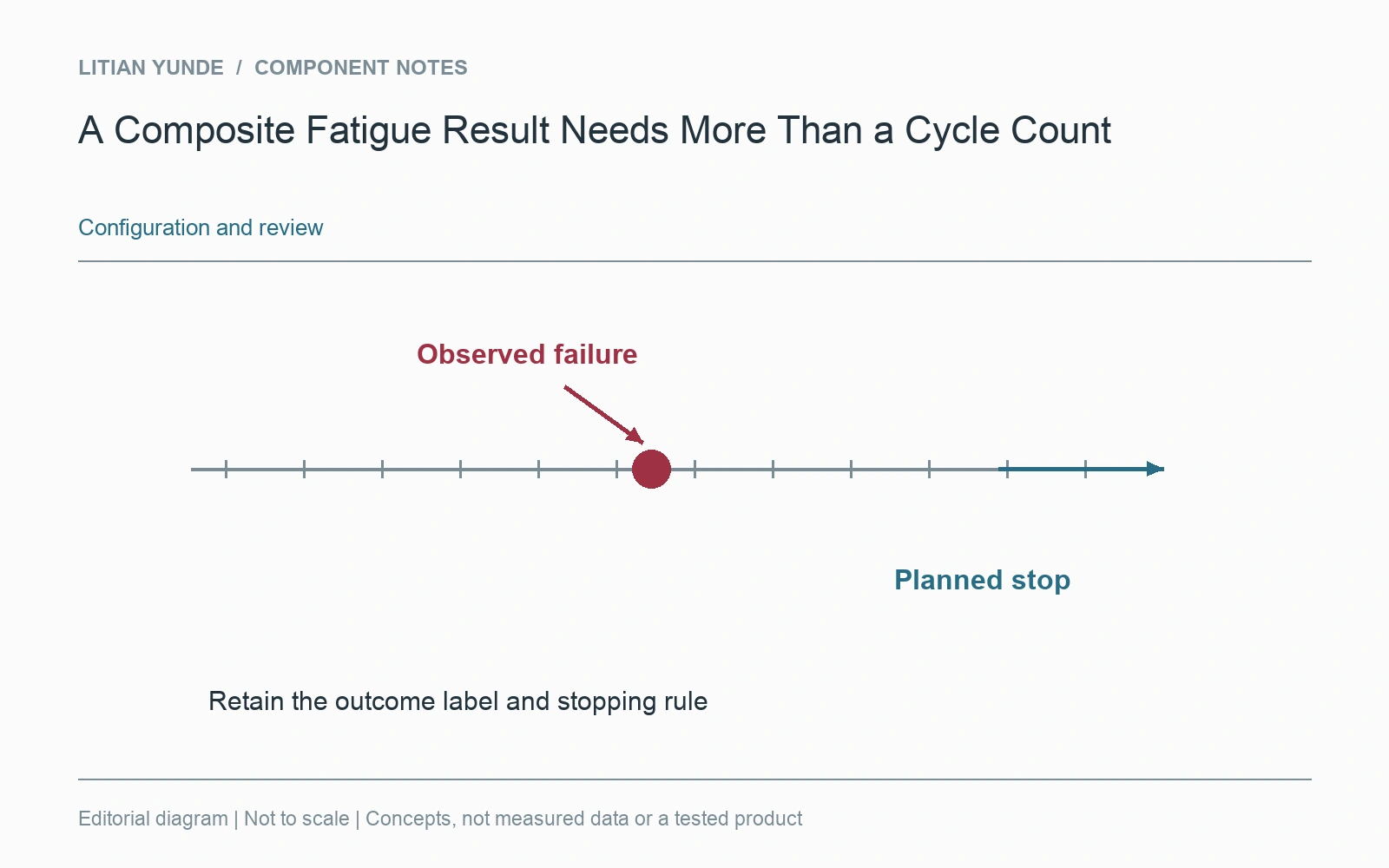
For the project review: specimen, orientation and conditioning; loading limits, mode, ratio and frequency; temperature monitoring and test method; failure or run-out outcome and stopping rule.
Further reading: Instron: composite fatigue testing and specimen temperature.