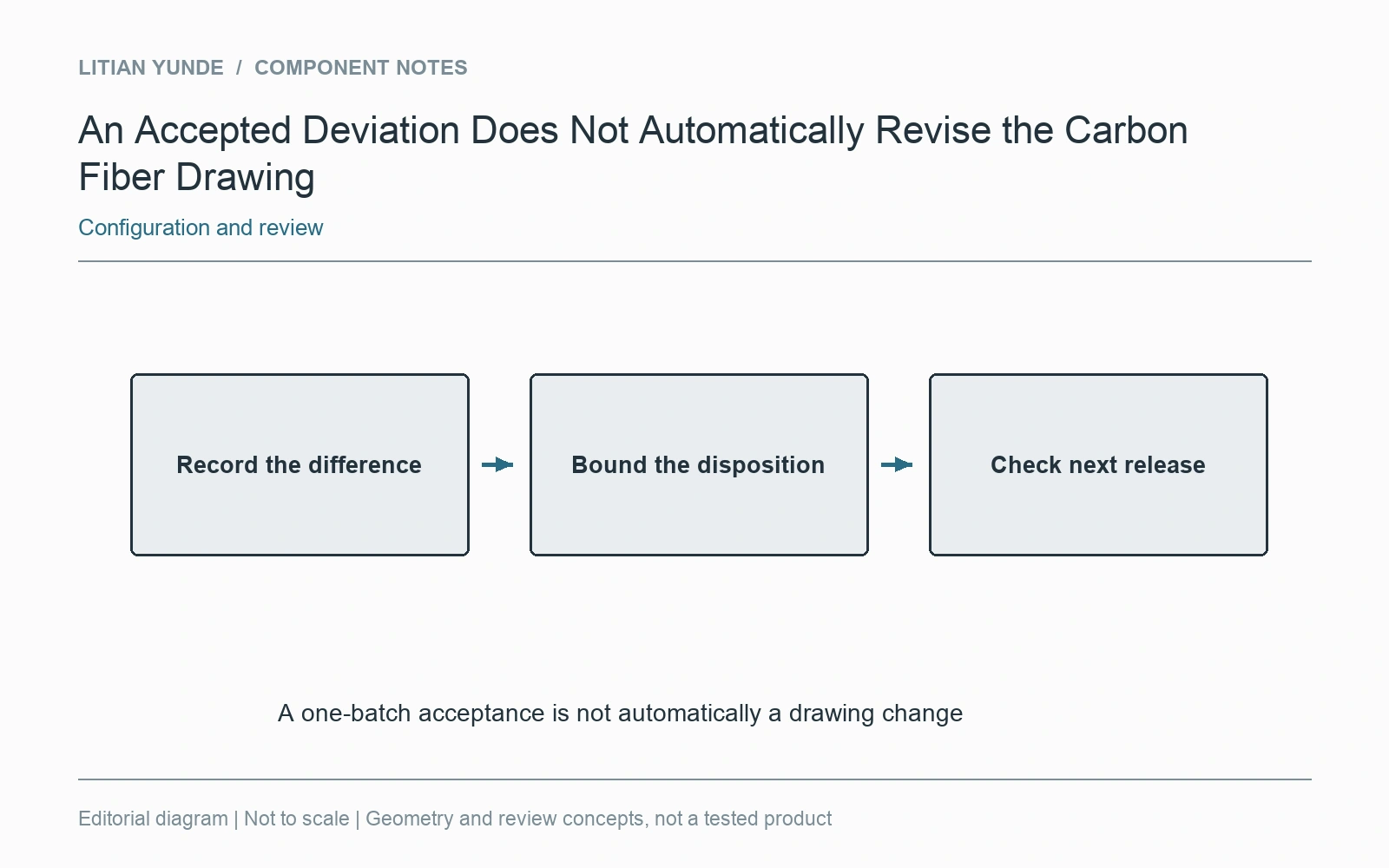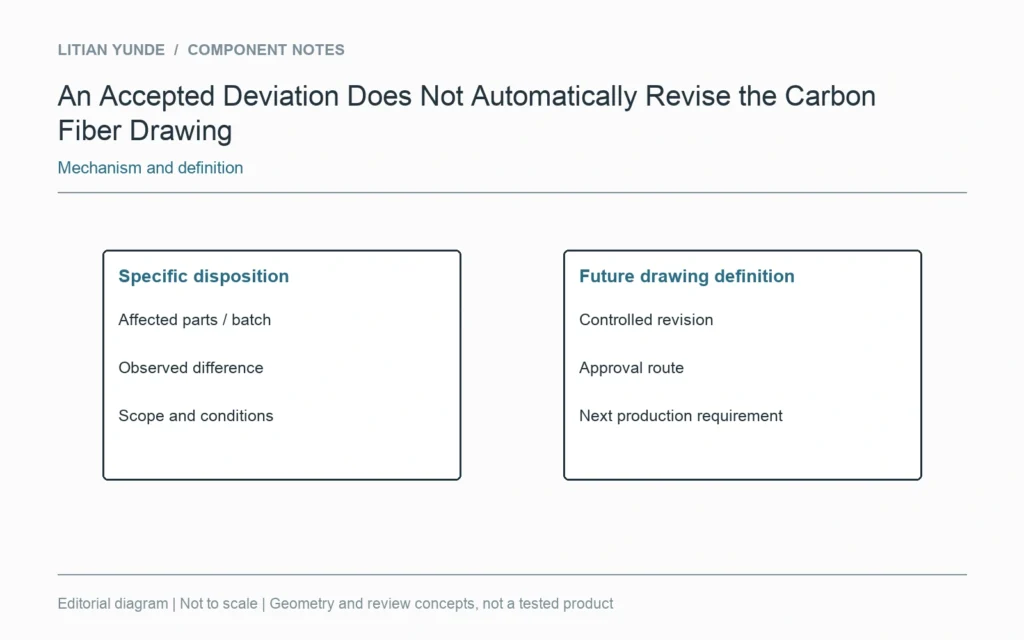
A decision to accept a specific deviation should identify the affected parts and requirement. It does not automatically change the drawing for future production. Keep the disposition of existing parts separate from the controlled definition used for the next order.
Record the part identity, drawing revision, location and evidence. Use the actual measurement or observation rather than a broad statement that the batch is “close enough.” The responsible parties need a defined issue to review.
Bound the acceptance decision
If acceptance is granted, record which parts, quantity or batch it covers and any conditions. Keep the approval with those parts’ history. A decision about one observed condition should not silently become permission for unrelated changes or a different customer order.
Decide what controls the next release
Future production may still need to follow the original requirement. If a permanent change is intended, process it through the agreed revision and approval route. At reorder, check both the current drawing and any specifically applicable dispositions. This avoids two teams each relying on a different interpretation of an old approval message.