
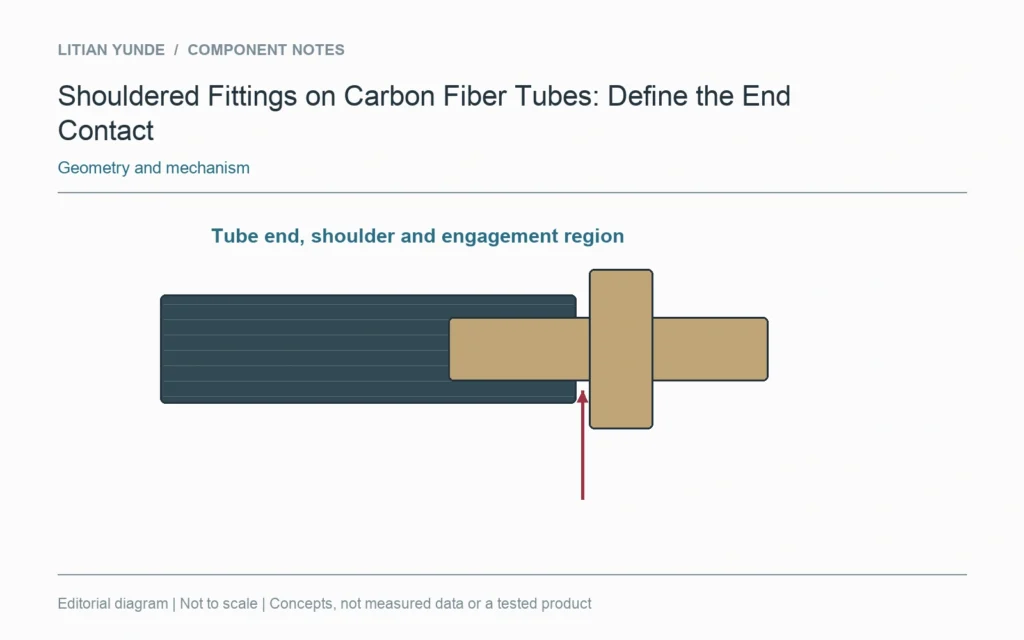
A shouldered fitting can contact the end of a carbon fiber tube while another part of the fitting engages inside or outside it. Define that end contact separately from the engagement length. The visible shoulder does not establish how the complete joint carries its loads.
Provide a section of the fitting and tube at the intended assembled position. Identify the tube-end condition and the faces intended to meet. If a gap is required, show it explicitly. An insertion mark alone does not explain whether the shoulder is seated or deliberately clear.
Keep contact and retention separate
A shoulder can establish an axial position, while an adhesive, clamp or other feature provides retention. Describe the proposed arrangement rather than assigning every function to the shoulder. Review any local tube-end loading against the actual construction and hardware through the responsible engineering process.
Use the represented fitting for the sample
Keep the fitting reference and revision with the assembled sample. Record the seated position and any agreed dimensional or functional check. If the supplier changes the shoulder geometry or the tube-end preparation, review the affected interface instead of carrying over an unrelated fit approval. The handover should make clear which parts, joining operations and final assembly checks are included in the quotation.
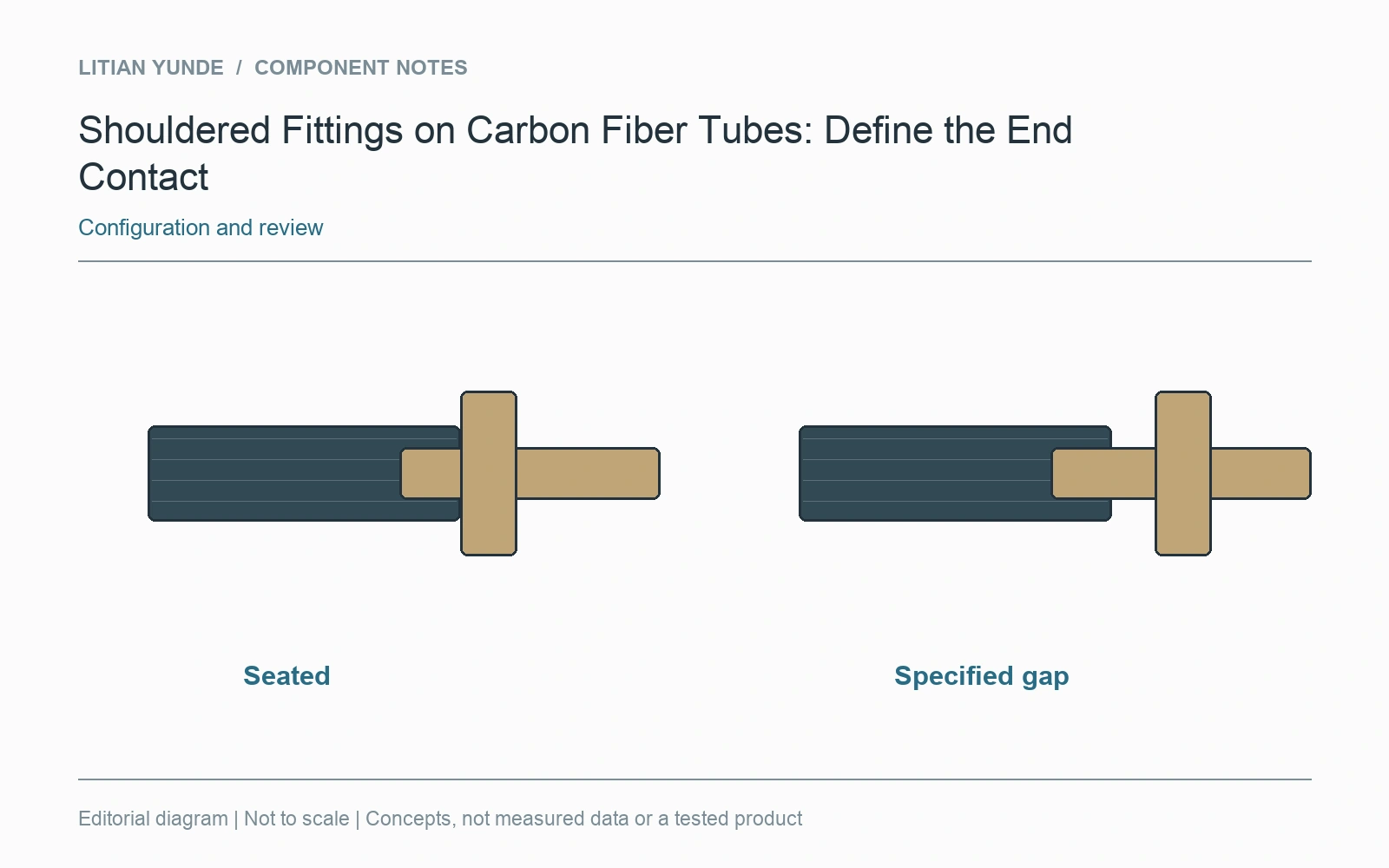
For the project review: fitting section and controlled reference; intended contact faces or gap; engagement and retention arrangement; tube-end condition and sample check.