
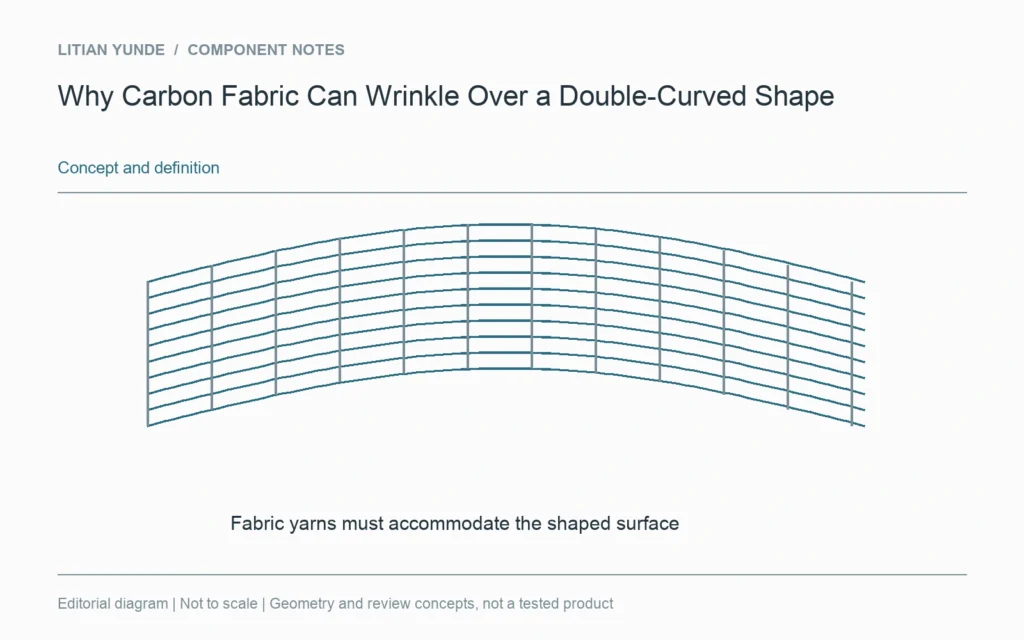
A piece of fabric that lies flat on a table does not automatically follow every double-curved surface without changing its yarn arrangement. Tight corners and changing curvature make forming a practical design question, especially where a continuous visible weave is requested.
Follow the fabric over the whole surface
Look beyond a single section through the part. A surface can change curvature in two directions, while the reinforcement still has to fit around adjacent features. Drape, fabric architecture and the forming route affect what can be achieved. Pulling a visible pattern into place is not evidence that the intended reinforcement orientation remains unchanged.
Discuss the proposed ply boundaries
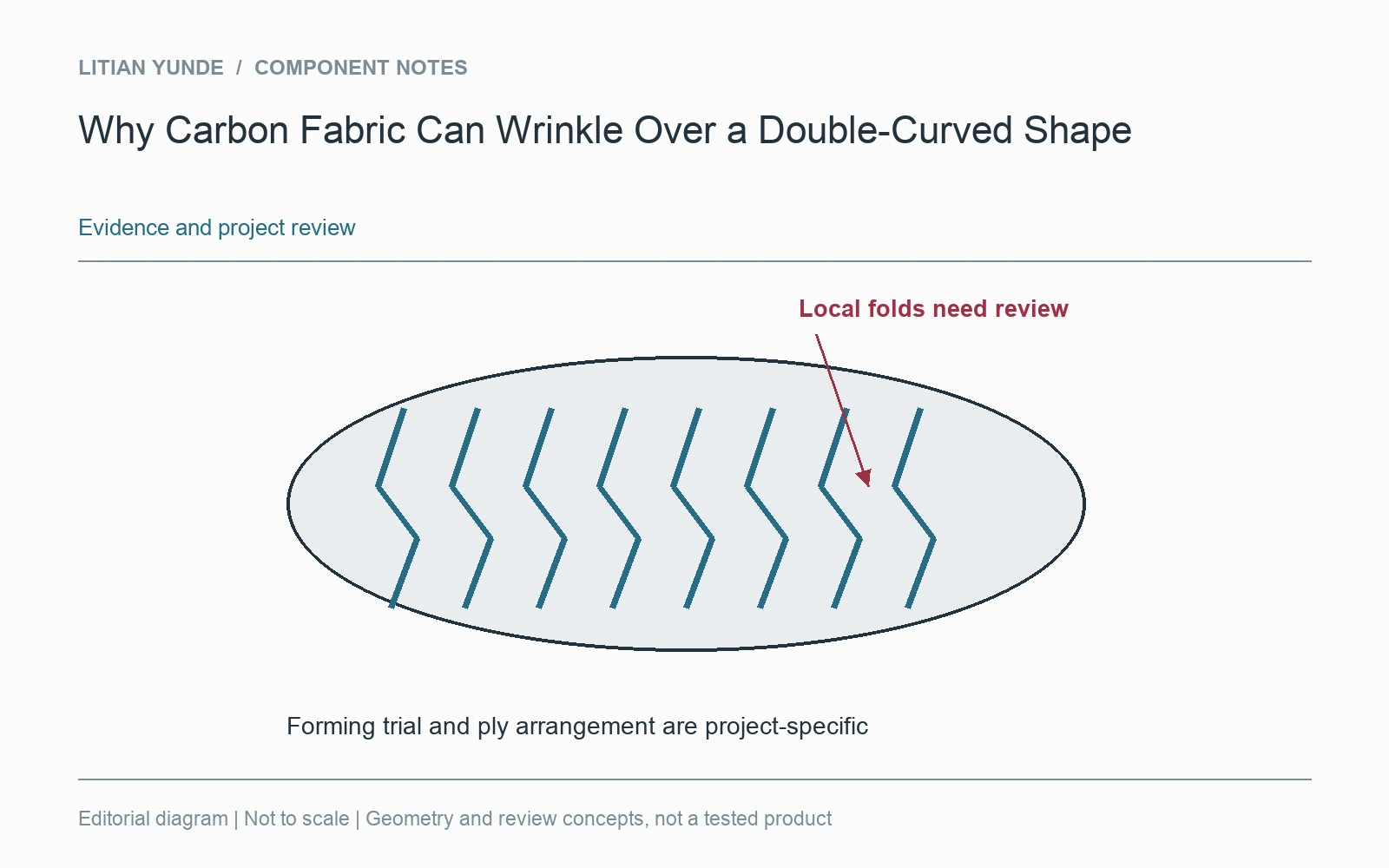
A different fabric, revised local geometry or a controlled ply arrangement may be considered during development. If cuts or overlaps are proposed, review their location and engineering role as well as appearance. A surface photograph cannot establish the condition of underlying layers. Keep any cosmetic continuity request separate from the structural construction requirements.
Use a forming review before judging a final finish
An early sample can help examine yarn distortion, local forming difficulties and the proposed boundaries. Record the construction and processing route represented by that sample. If the shape or fabric changes, revisit the relevant areas. The useful outcome is a feasible, controlled definition, not a promise that every complex shape can show an uninterrupted decorative weave.
Further reading: Gurit: prepreg processing guide.