
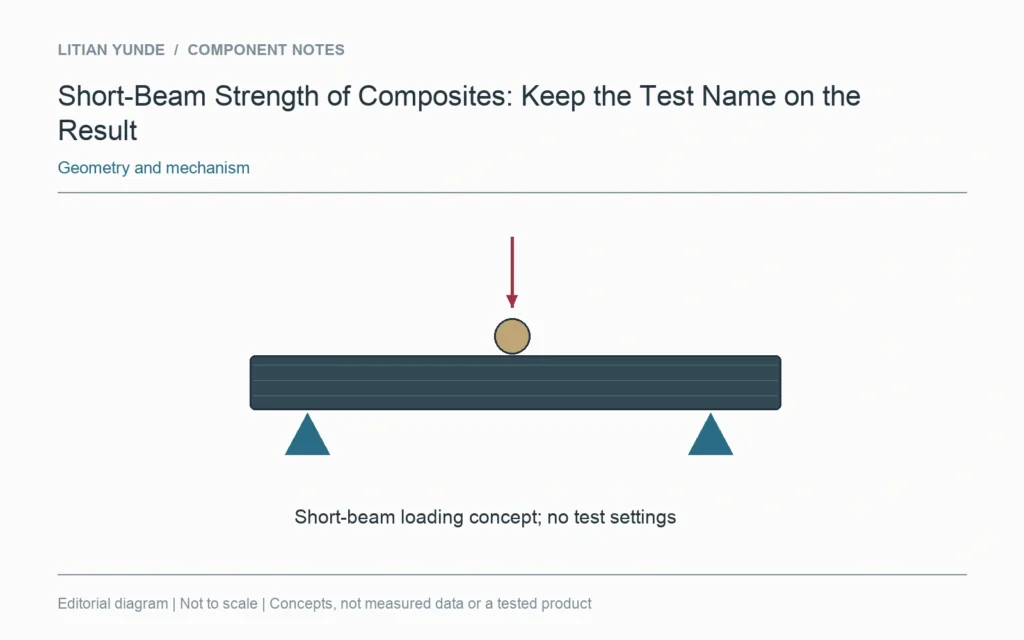
A short-beam result should keep its test-method and specimen labels. It is not a general shear modulus or a universal material strength. The loading arrangement, laminate construction and observed failure mode matter when deciding what the reported value can support.
Use the reported property name
ASTM D2344 identifies the result as short-beam strength. Its public significance statement explains that the internal stresses and possible failure modes prevent a general relationship to any single material property. Do not shorten a report label to an unqualified shear number in a quotation table.
Keep the specimen context
Retain the laminate identity, stacking sequence, dimensions, conditioning and method revision used by the laboratory. The load arrangement should remain identifiable with the report. This article does not specify fixture dimensions, a loading rate or an acceptance value; the applicable method and agreed laboratory scope control those details.
Compare like results
Check whether the specimens failed in a comparable mode before using results for a material or process comparison. A different outcome can change what the apparent numerical difference means. Keep the original report with any summary spreadsheet, including observations that do not fit a simple ranking. A coupon result can support a defined review, but applying it to a finished component needs its own engineering basis.
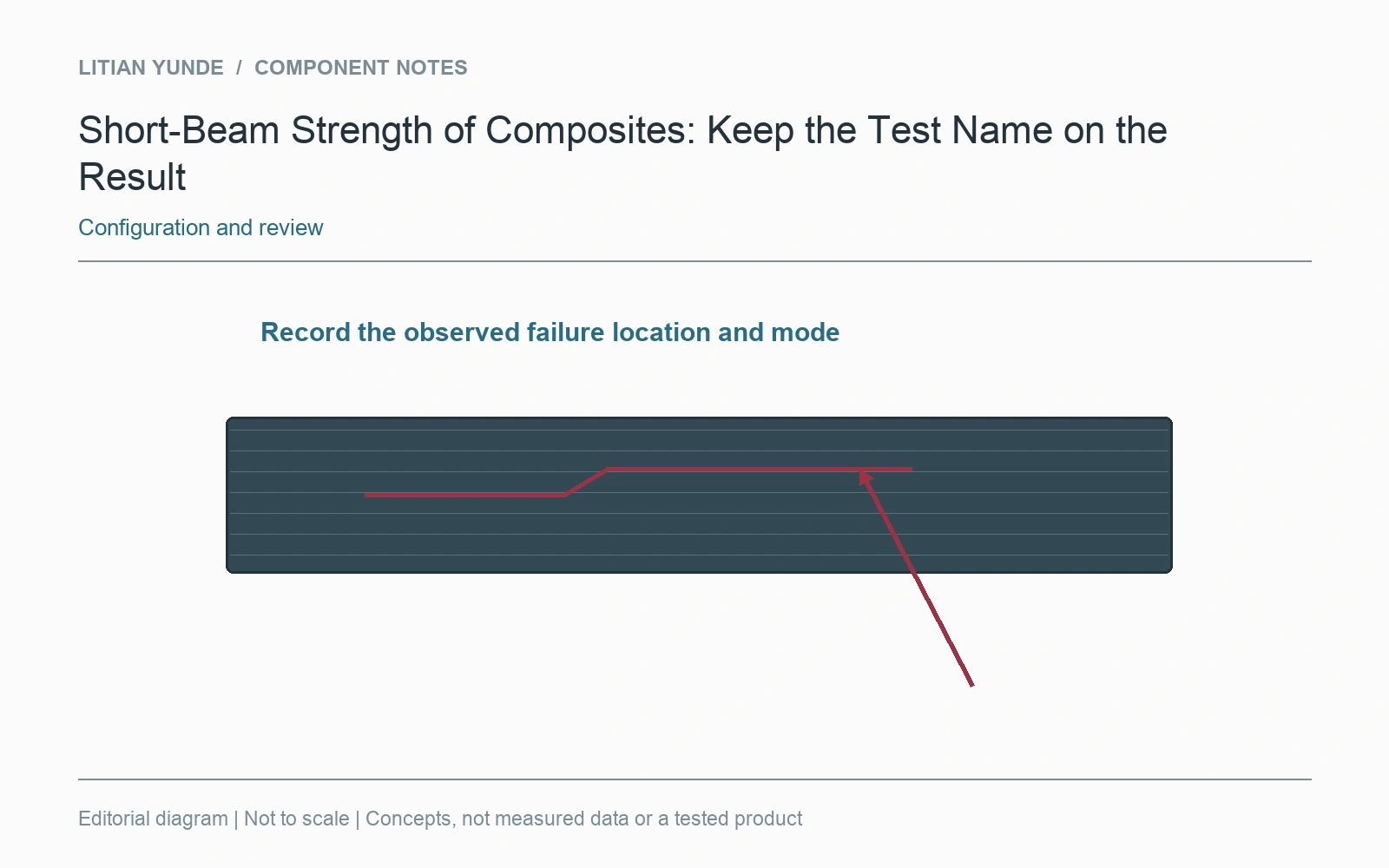
For the project review: original property name and test method; laminate and specimen definition; conditioning and loading configuration; observed failure mode and comparison scope.
Further reading: ASTM D2344: scope and significance of short-beam strength.