
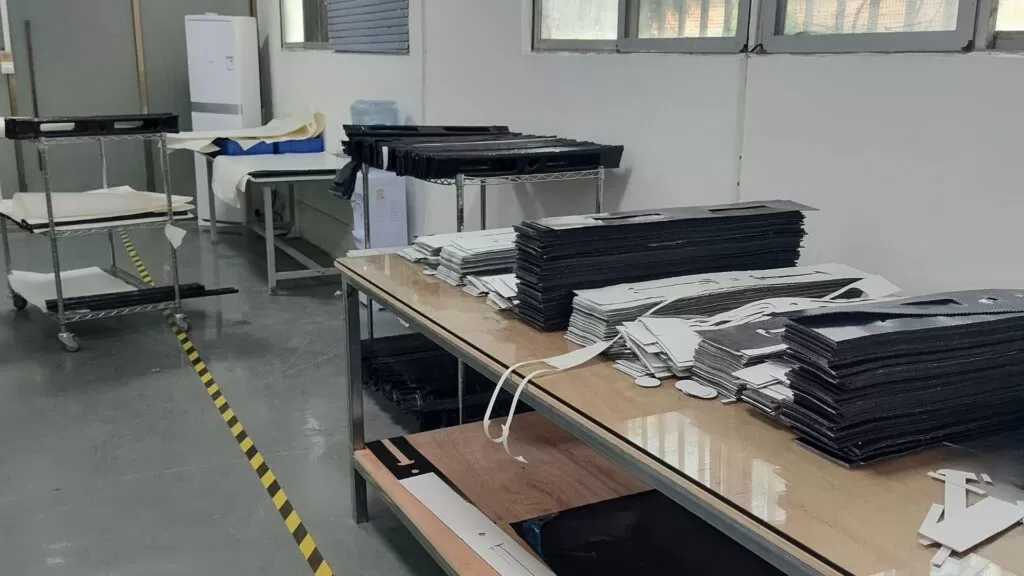
Existing workshop photograph of reinforcement material on a cutting table.
A manufacturing-waste claim needs a defined input and output record. Measure the actual material stream before describing a process as low-waste or comparing it with another production route.
Define what enters and leaves the process
Separate purchased material, usable cut pieces, process scrap and finished parts. State whether the record includes packaging, trial runs and rejected parts. Use the same boundary and period for both sides of a comparison so a process change is not confused with a change in accounting.
Use the record to identify an actionable loss
Record where scrap arises and which form it takes. This can support a discussion about cutting layouts, handling or recovery options without inventing a universal saving. If a recycling partner is involved, keep acceptance and collection evidence distinct from a plan to recycle.
Example scenario
One yield record excludes setup scrap while another includes it. Reconcile the measurement boundary before comparing the percentages. Keep setup, cutting offcuts and rejected finished parts visible so a proposed improvement can be traced to the correct stream.
Points to record
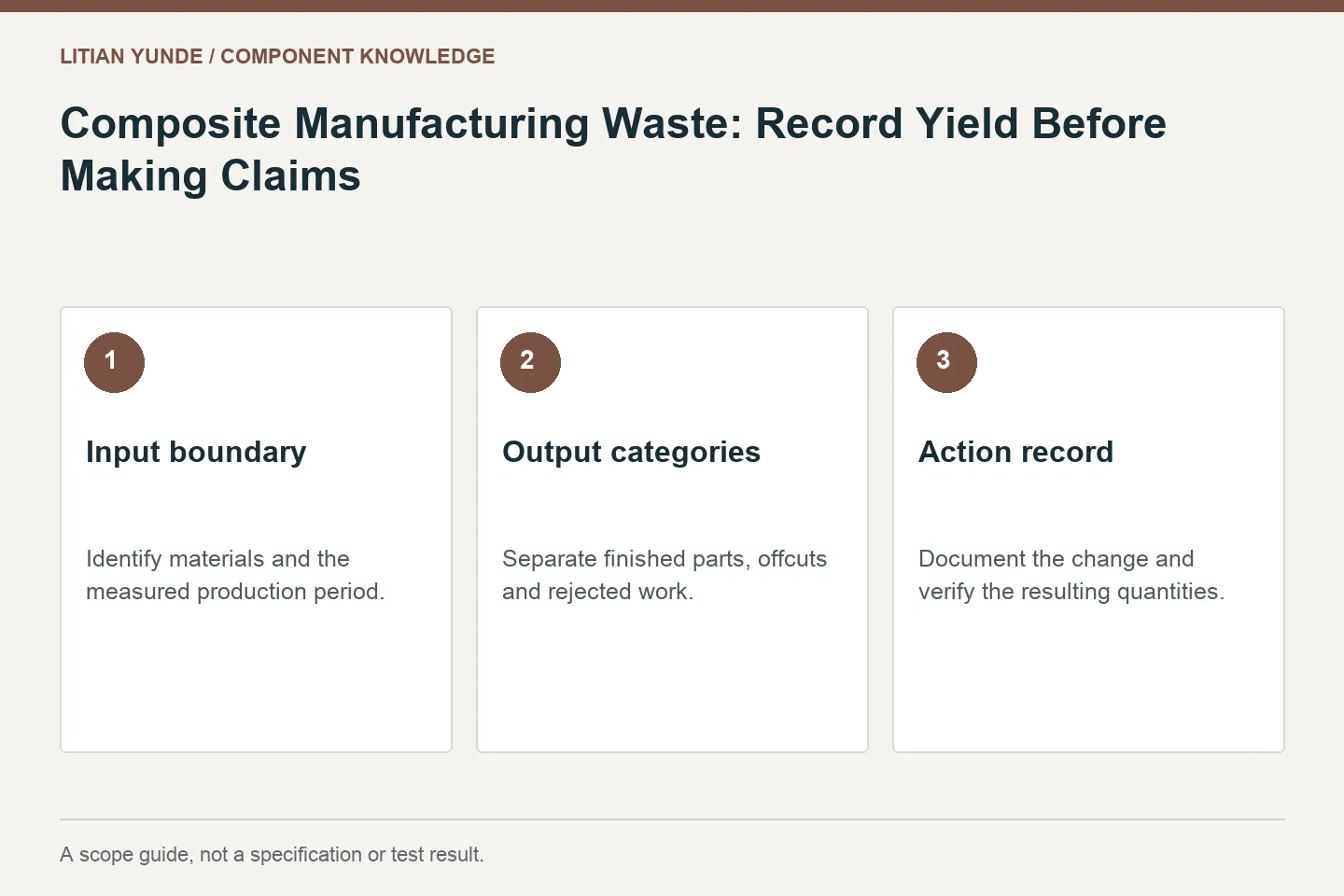
| Input boundary | Identify materials and the measured production period. |
|---|---|
| Output categories | Separate finished parts, offcuts and rejected work. |
| Action record | Document the change and verify the resulting quantities. |
Related reading
- Residuos de fibra de carbono: separar el tejido seco, el prepreg y las piezas curadas
- Afirmaciones sobre la sostenibilidad de la fibra de carbono: pregunta cuál es la base de comparación
Background reference: Composites UK — What Can I Do with My Waste?.
Discuss the component requirements
Send the part drawing and the requirements relevant to this guide for a scope review.
Ponte en contacto con Litian Yunde