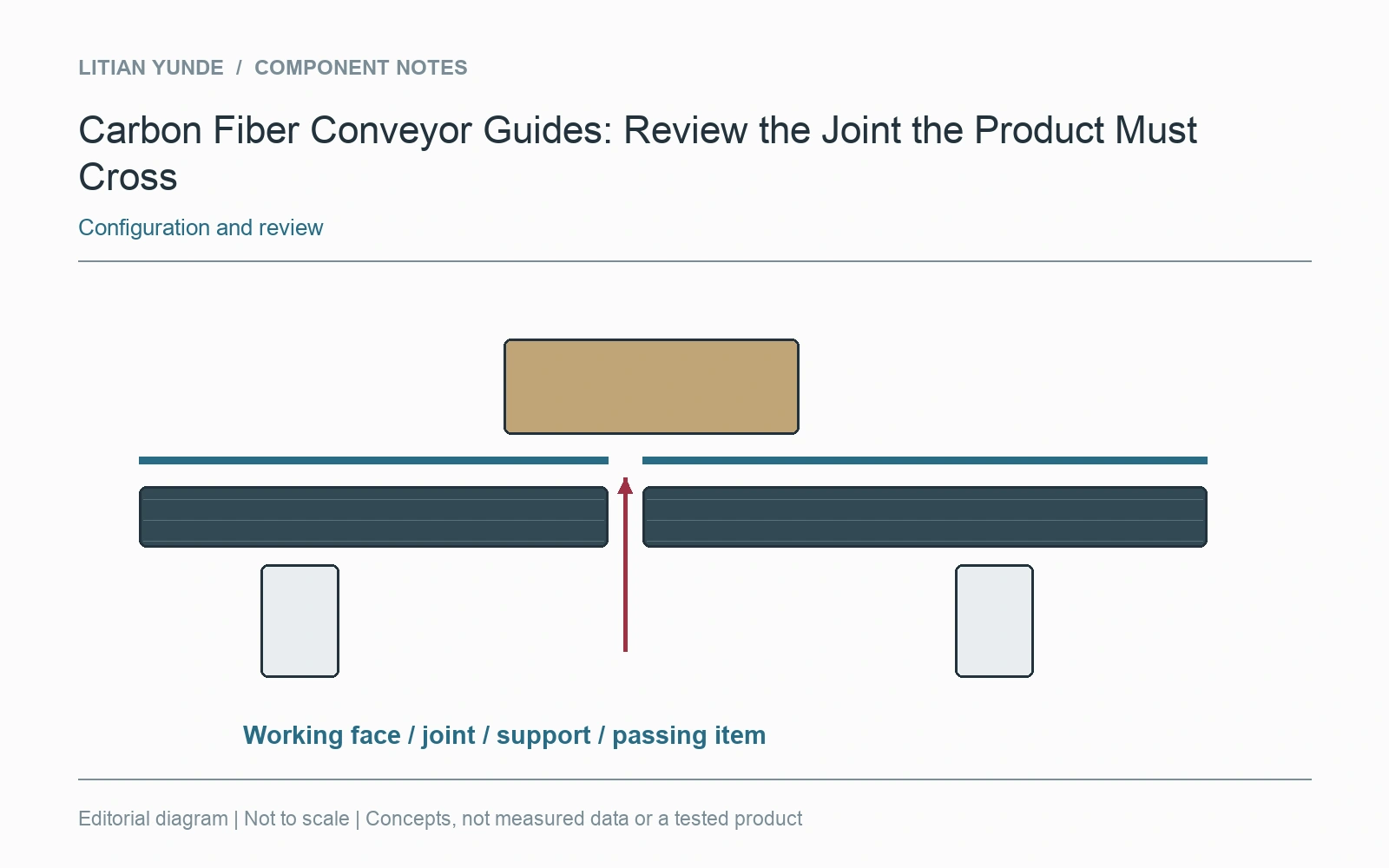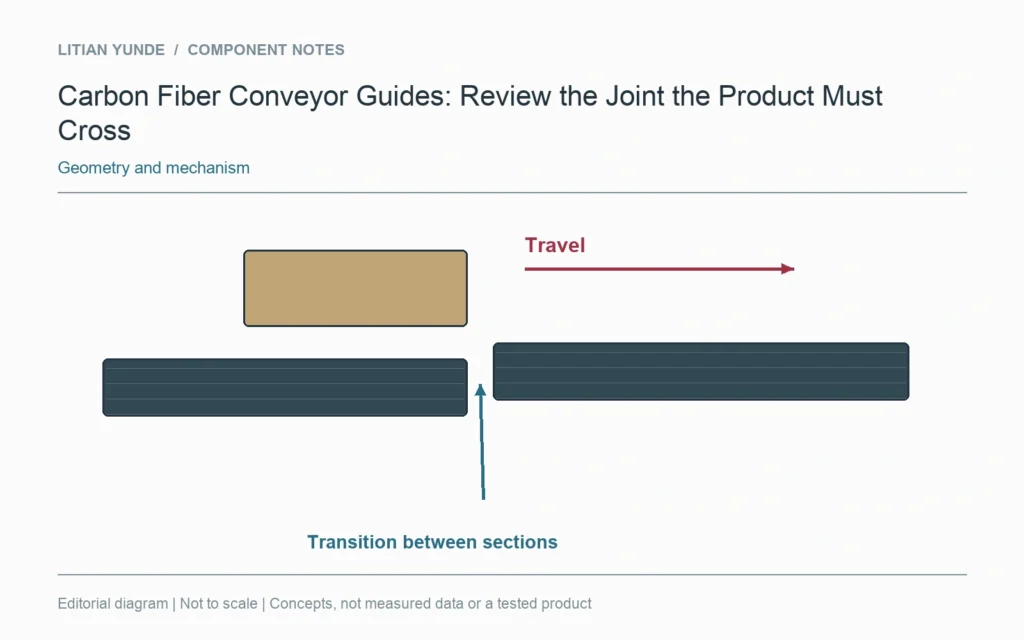
A conveyor guide made in separate sections needs a review at each transition. The transported item encounters the installed joint, not just the finish on one loose component. Identify the direction of travel, adjoining parts and local geometry at the transition.
Draw the crossing condition
Show which edge leads into the next section and how the guide is supported. Include any replaceable contact strip in the installed section. A plan view alone may hide a step or a protruding fixing at the working face.
Use representative operating context
Review the relevant product or carrier geometry and the proposed movement through the joint. State which clearances are adjusted during installation and which are part requirements. Avoid transferring a successful hand-pushed check to every line speed, item shape or operating condition.
Agree who sets the transition
If the carbon component supplier does not install the complete line, make the interface and adjustment responsibilities explicit. Retain the installed joint configuration with any trial result. A smooth-looking carbon surface does not establish conveying performance. The acceptance scope should connect the supplied guide sections to the actual transition and the relevant operational check.