
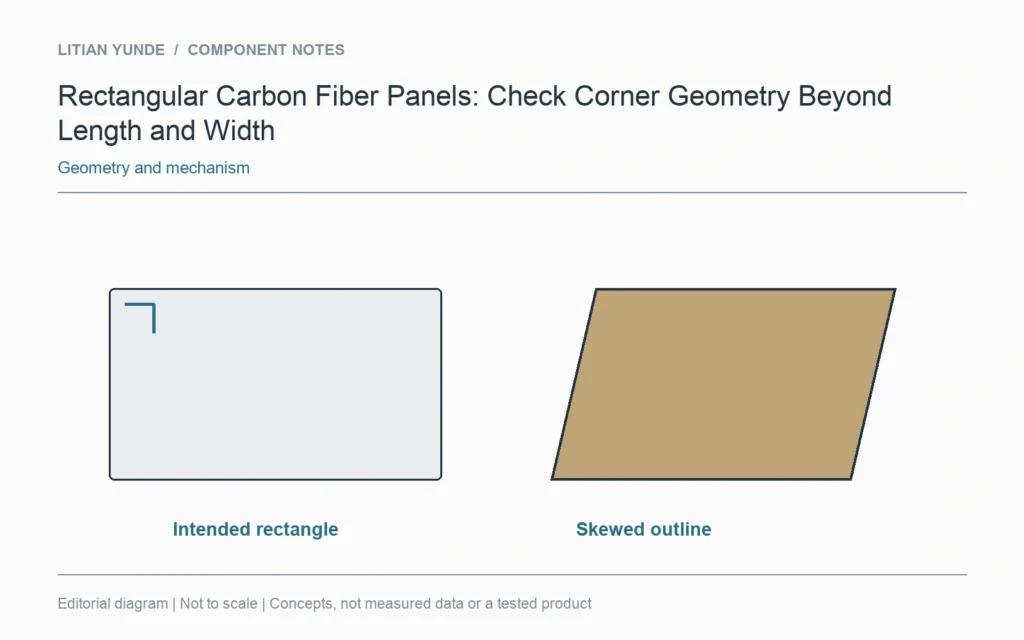
Length and width alone do not fully describe the corner geometry of a rectangular panel. If squareness or diagonal checks matter to the assembly, include them in the agreed definition. Do not invent an acceptance tolerance by measuring an unscaled drawing.
Start from the controlled geometry
Identify the intended edges, corners and measurement references. Keep any corner radius distinct from the theoretical intersection used in the drawing. A panel with similar side measurements can still present a different relationship between adjacent edges.
Use diagonals in their stated role
Diagonal measurements can support an agreed check, but their endpoints and contact method need definition. Equal diagonals alone are not a complete proof of every requirement for an arbitrary four-sided shape. Retain the side geometry and any explicit perpendicularity or profile requirement as well.
Connect the check to the installation
For a panel fitted inside a rectangular opening, identify which edges locate it and where clearance is required. Do not pull a flexible panel into an unspecified fixture and report that condition as its free geometry. The inspection record should say what was supported, where measurements were taken and which drawing requirement the result addresses.
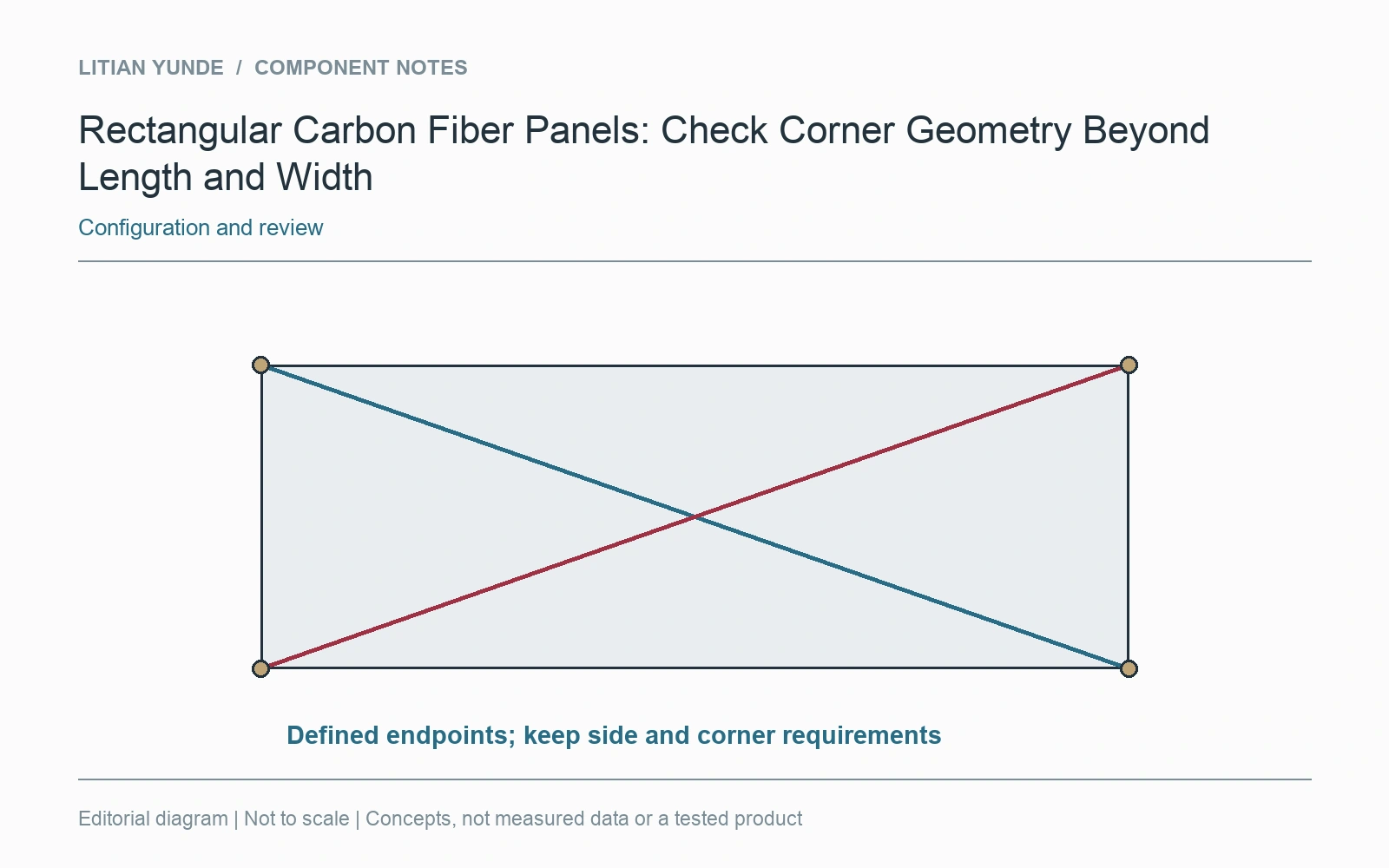
For the project review: intended edges and theoretical corners; defined diagonal endpoints if used; relevant corner or profile requirement; support condition and installation clearance.